← Home About Archive Photos Replies Also on Micro.blog
  • LEDDYRSOMSORG / ARTHROPOD CARE

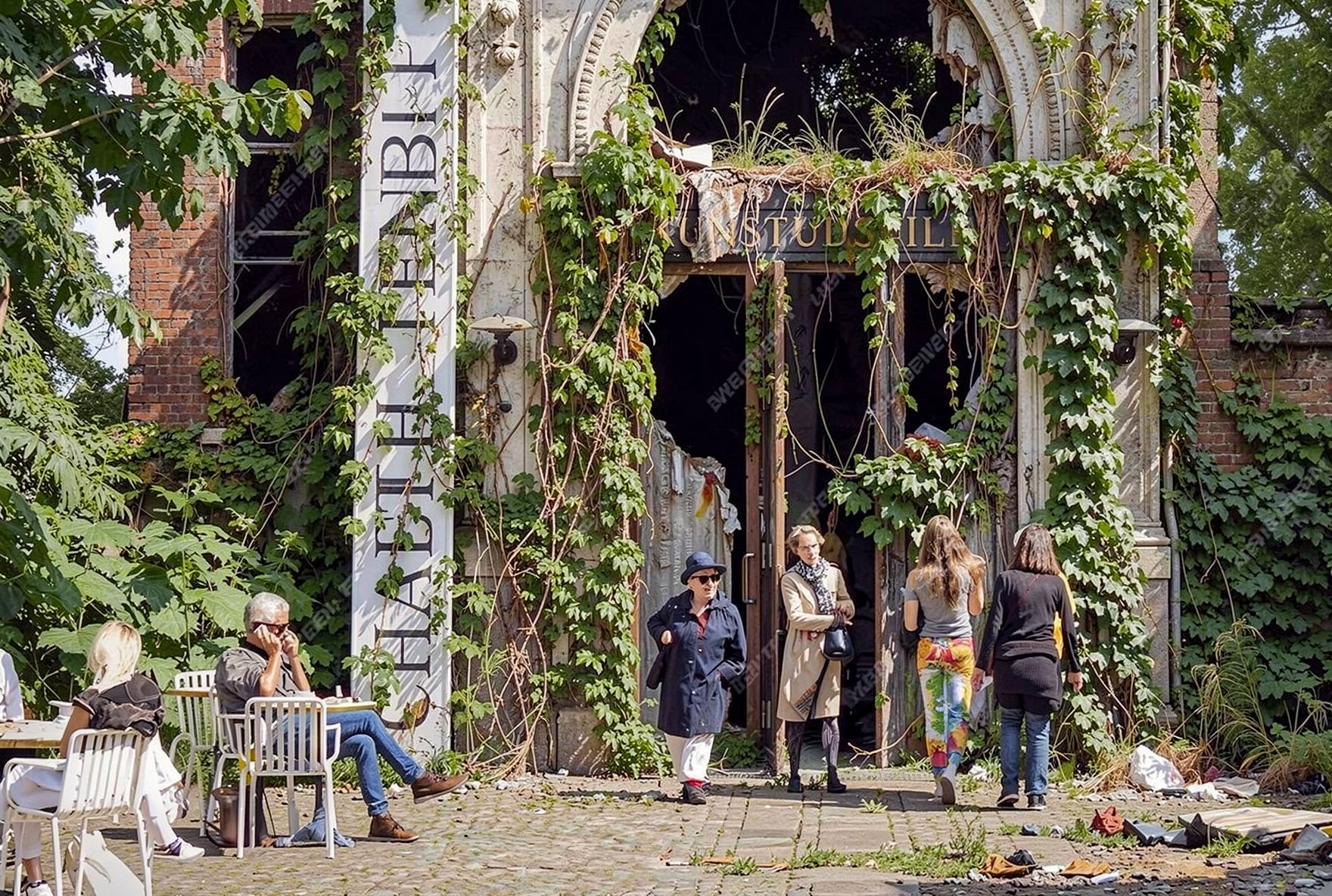
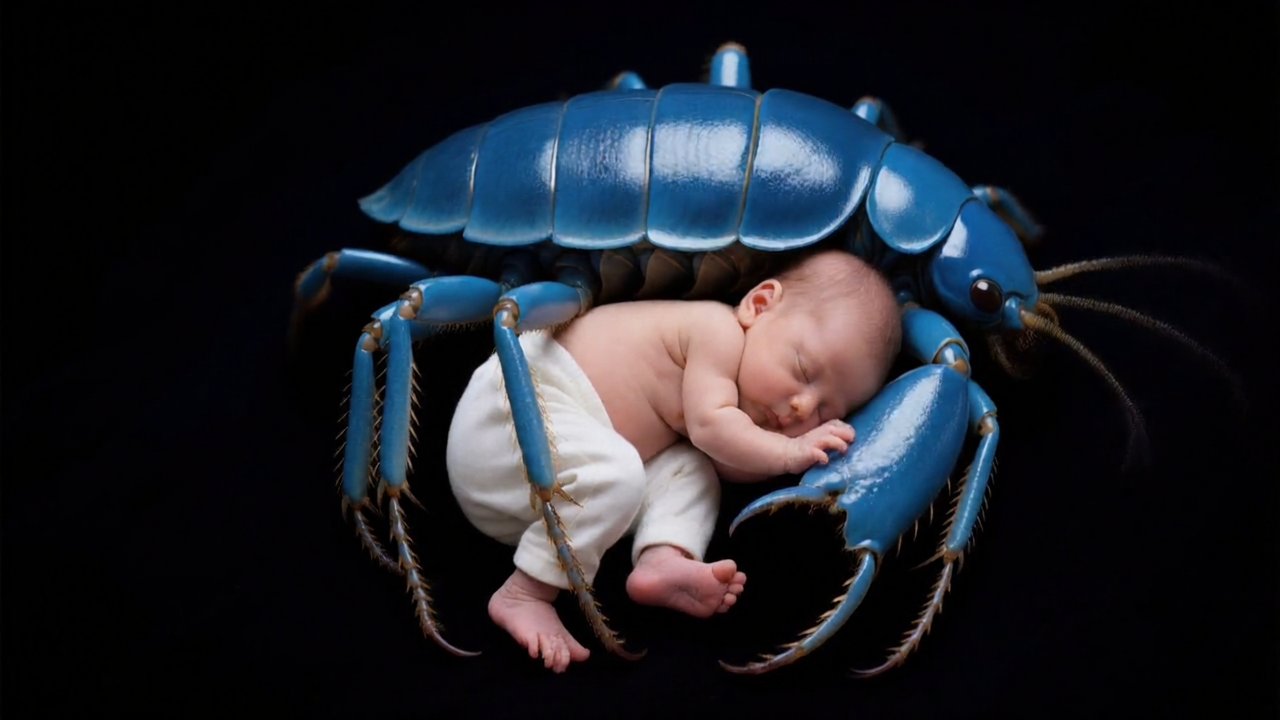
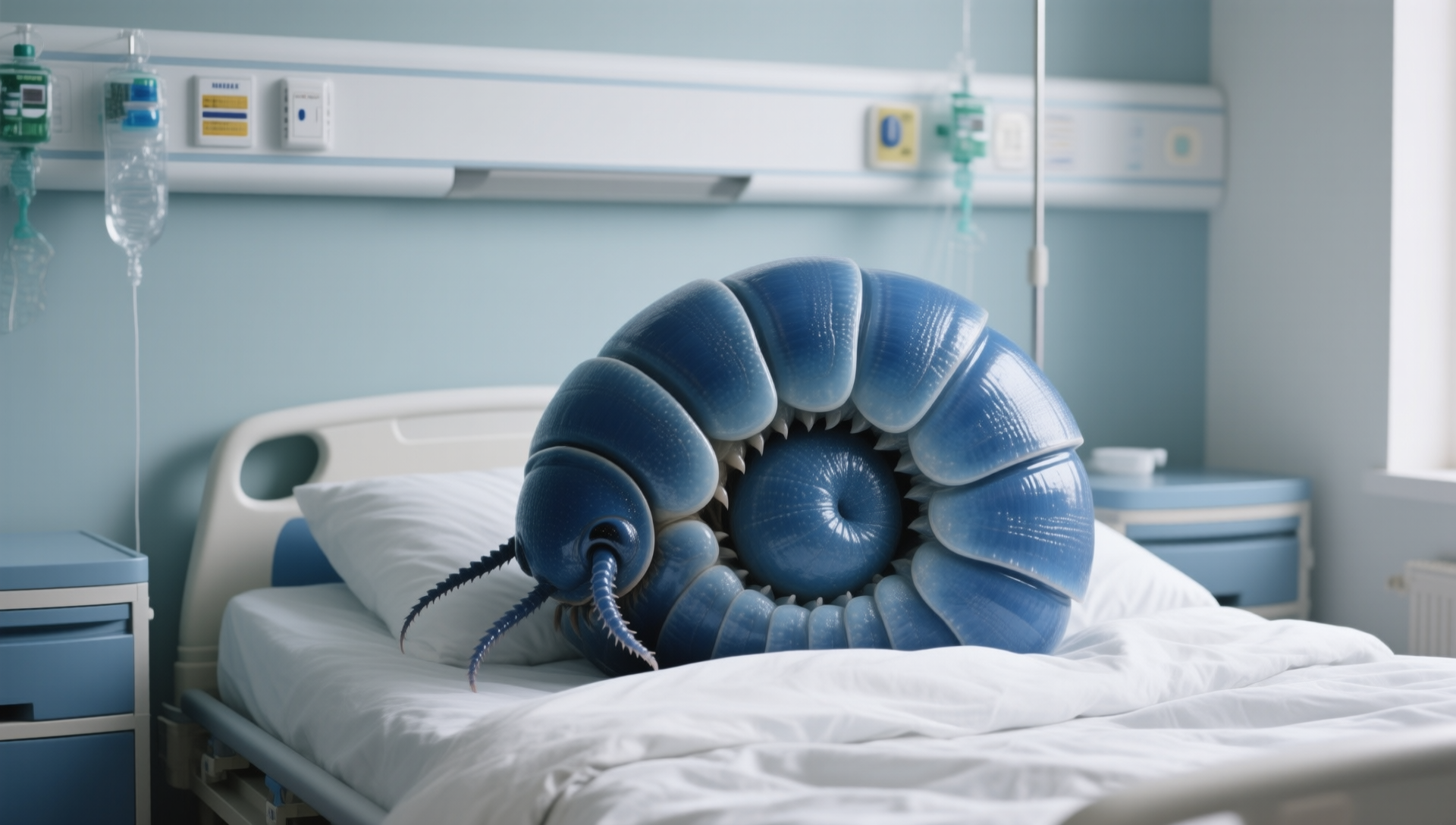
    LEDDYRSOMSORG / ARTHROPOD CARE is a kaleidoscopic video installation, 20 minutes, generated using WAN 2.1 on a locally run RTX 4090, with a soundtrack combining ACE 1.5 generated music and analogue samples. Installed at Ringsted Galleriet and Midt- og Vestsjællands Hospital as part of FORSTADIER / PRECURSORS. Curated by Morten K Jacobsen. Watch the full video here: https://youtu.be/yvs9G5nKos8 The video runs in two parts. The first ten minutes follow a journey from the ocean to the inauguration of a fictional Ringsted Hospital by a version of the Danish Prime Minister — staffed by dancing workers and giant blue woodlice that handle the laundry, provide diagnoses, repair electronics and occupy the roles that futurists and policy makers are currently imagining for AI and automation in the Danish health sector. The images shift and destabilise, conjuring a welfare system built on an uneasy combination of nature and technology that is neither utopian nor dystopian but simply strange and somehow plausible. The second ten minutes show a baby sleeping, curled peacefully against a blue woodlouse — a resting state, the handover point where Aske Thiberg’s video takes over in the duo installation, the two works alternating in a single loop. FORSTADIER / PRECURSORS is a duo exhibition with Aske Thiberg (@askweee), circling the iconography of the healthcare system — the clinical room, the language of care, the institutional forms — with detours into bias in language models, datasets, isolation and alienation. At the hospital, the video is accompanied by full-scale sculptures, signs and leaflets. On view until 11 April 2026. Ringsted Galleriet, Bøllingsvej 15 — open Saturdays 13:00–16:00 or by appointment. Midt- og Vestsjællands Hospital, Bøllingsvej 30 — open weekdays 08:00–15:00 or by appointment. 4100 Ringsted. ringstedgalleriet.dk @ringstedgalleriet #FORSTADIER #PRECURSORS #FrihedLighedOgSymptom #WelfarestateMyths #SurrealSocialRealism #WAN21 #ringstedsygehus #ringsted @statenskunstfond @augustinusfonden @nycarlsbergfondet #louishansensfond #detobelskefamiliefond #billedkunstrådetringsted #øerneskunstfond #kulturregionmidtogvestsjælland #grossererlffoghtsfond

    → 9:05 PM, Mar 16
  • The Unstable Image

    This text is part of my ongoing PhD work at the University of Copenhagen. Like the other texts in this series, it is a working document written from a practice-based position, and it lacks the references it will eventually need. It argues that the image was never stable — that material, digital, and human transformations have always altered images at every stage of their existence, and that generative AI is a continuation of this instability, not an interruption of it. It is about the chain of transformations that produces what I have been calling, in other texts, residue.

    An image is not a stable object. This seems obvious when stated, but much contemporary debate about images — particularly about AI-generated images — proceeds as though it were not true. The arguments about copyright, about authorship, about the integrity of the photographic record, about the trustworthiness of images as evidence — all of these assume, at some level, that there is a fixed original against which copies, manipulations, and generations can be measured. The original painting. The unedited photograph. The authentic image. But the history of images is a history of material instability, and the digital is not an interruption of that history. It is a continuation of it. What I am trying to trace here is the chain of transformations that an image undergoes from its material origin through reproduction, compression, and circulation to its absorption into a generative model — and what survives of the specific inside each stage of generalisation. In other texts I have been calling this survival residue. This text is about the conditions that produce it. Start with the painting. A painting is made of materials that change. The pigments fade, darken, yellow, or shift hue over time. The binder cracks. The varnish oxidises. The support warps, tears, or rots. These are not accidents that happen to the painting. They are properties of the materials the painting is made from, and in many cases the artist knew they would happen. Turner used pigments that were known, even at the time, to be chemically unstable — colours that were likely to fade or shift within decades. The brilliant yellows and reds of his late work have shifted significantly since he painted them, and what we see in the gallery today is not what he saw on his easel. Whether he intended the fading as part of the work, or accepted it as a cost of the colour he wanted in the moment, the result is the same: the painting we look at is not the painting he made. It is what his painting became. The same is true, more dramatically, of paintings that used bitumen or tar in their ground layers. Bitumen never fully dries. It continues to move, crack, and darken, pulling the paint layers above it into patterns the artist did not intend. Carl Gustav Pilo’s monumental painting The Coronation of King Gustav III of Sweden used bitumen extensively in the shadowed areas. Today, those dark sections have fractured into deep fissures, physically warping the canvas. Because the painting was also left unfinished — Pilo died before completing it — it doubly defies the concept of a fixed origin. It was never completed and it has never stopped changing. What hangs in the gallery is the painting’s ongoing material life.

    This instability is not a failure of the painting. It is what paintings do. They are made of matter, and matter changes. Conservation can slow the process, can stabilise certain conditions, but it is caught in a fundamental paradox: the condition of visibility is the engine of destruction. Institutions limit the light that falls on artworks because light degrades pigments. But humans need light to see. To preserve a painting perfectly is to lock it in the dark. The moment light hits the pigment to make the image visible, the deterioration resumes. Conservation cannot return the painting to a fixed original state, because the painting never had a fixed state. It has always been in motion, always becoming something other than what it was. The “original” is a convenient fiction — useful for insurance, for attribution, for the market — but it does not describe a material reality. It describes a moment in a process, frozen by convention and treated as though it were permanent. Even the biological act of looking at the painting defies the idea of a stable, instantaneous capture. We often imagine human vision functioning like a camera, taking in the world as a seamless, high-resolution snapshot. It does not. Unlike a photographic sensor, which exposes its entire rectangular surface to light simultaneously to record a single, unified fraction of a second, the eye does not take frames. It perceives only a tiny central fraction of its visual field in sharp detail—the fovea. To see a whole painting, the eye must dart across the canvas in rapid, jerky movements called saccades. During these movements, visual perception is briefly suppressed; the brain removes the blur of motion to maintain a coherent sense of reality. What we experience as a complete, stable image is actually a continuous temporal collage. The brain patches together these tiny, sequential glimpses and fills in the vast, unfocused periphery using context, expectation, and memory. Human vision is not a passive, unified recording of a fixed present. It is an active, generative construction. Long before a camera or a compression algorithm intervenes, the “original” image as perceived by the human subject is already an amalgamation of different moments in time, synthesized by a biological processor smoothing over the gaps in its own data. Now photograph the painting. The photograph compresses a three-dimensional object — with texture, with scale, with a particular relationship to the light in the room where it hangs — into a two-dimensional image with different dimensions, different colour values, different resolution, and no surface. The photograph is not a copy of the painting. It is a translation, and like all translations it loses some things and introduces others. It loses the texture of the brushwork, the scale of the canvas, the way the painting changes as you move in front of it. It adds the flatness of the photographic surface, the colour profile of the camera sensor, the lighting conditions of the photography session, the decisions of the photographer about angle, framing, and exposure. For most people, the Mona Lisa is encountered not in the Louvre but through photographs and reproductions. Walter Benjamin understood this in 1936, though he framed it as a loss of aura rather than as a material transformation. The point is not that the reproduction is worse than the original — sometimes it is, sometimes it is not — but that the reproduction is a different object, made of different materials, with different properties. The painting is oil on panel. The photograph is light on a sensor. The printed reproduction is ink on paper. The screen reproduction is backlit pixels. Each of these is a material object with its own instabilities: the ink fades, the paper yellows, the pixels are rendered differently on every screen, the sensor introduces its own noise and colour cast. Now compress the photograph digitally. JPEG compression discards information the algorithm judges to be imperceptible — high-frequency detail, subtle colour gradations, fine texture. Each time the image is saved, opened, and resaved, more information is lost. The image becomes softer, blockier, more generic. This is Hito Steyerl’s poor image — degraded by circulation, compressed by the networks it passes through, carrying the marks of its passage as visible artifacts. But the degradation did not begin with the JPEG. The photograph was already a compression of the painting. The painting was already changing. The poor image is not a fallen version of a rich original. It is the latest stage in a process of material transformation that began with the first brushstroke. The instability runs in every direction. The camera that took the photograph of the painting was already applying its own processing — white balance, noise reduction, sharpening, lens correction. A contemporary smartphone applies far more: computational photography pipelines that composite multiple exposures, suppress noise with neural networks, adjust skin tones, sharpen details that were never in the sensor data. The photograph that enters the dataset is not a passive recording. It is an actively processed image, shaped by the aesthetic assumptions of the camera’s software before any human decision was made about it. Samsung’s moon episode — where the phone’s AI recognised the moon and enhanced it using a neural network trained on images of the moon rather than relying solely on the sensor data — is an extreme case of a general condition. Every digital photograph is partially synthetic. The boundary between the captured and the generated was blurred long before diffusion models existed. The institutions that govern images know this, even if their rules do not fully acknowledge it. Nature photography competitions are a useful case because they take the question of image authenticity more seriously than almost any other photographic context. The World Nature Photography Awards forbid composites and the addition or removal of objects but permit “limited digital manipulations and focus stacking, providing they do not compromise the authenticity of the image.” The Nature Photographer of the Year competition uses specialised software to detect disallowed techniques but concedes that even rotating a JPEG from portrait to landscape can be flagged as manipulation. World Press Photo permits AI-powered enhancement tools “as long as these tools do not lead to significant changes to the image as a whole, introduce new information to the image, nor remove information from the image that was captured by the camera.” These rules are earnest and carefully thought out. They are also difficult to enforce cleanly, because the boundary they are trying to police — between an authentic image and a manipulated one — does not exist as a sharp line. It is a continuum, and every camera is already somewhere along it. The phone that smooths skin, suppresses noise, and composites multiple exposures has already introduced information that was not captured by the sensor in any single frame. The distinction between “capture” and “generation” is a matter of degree, not of kind. In 2024, photographer Miles Astray entered an unmanipulated photograph of a flamingo — its head hidden behind its body during preening, giving it a surreal, headless appearance — into the AI-generated category of the 1839 Color Photography Awards. Judges from The New York Times, Getty Images, and Christie’s, among others, voted it into third place in the juried award and first in the People’s Vote. When Astray revealed that the image was a real photograph, he was disqualified. The year before, Boris Eldagsen had won the Sony World Photography Awards with an AI-generated image entered as photography — the same confusion running in the opposite direction. In both cases, experts could not reliably distinguish between the captured and the generated. This is not a failure of expertise. It is evidence that the categories themselves — “real photograph” and “AI-generated image” — no longer describe materially distinct objects. They describe points on a continuum that runs from the raw sensor data (which no one ever sees, because it is processed before it reaches the screen) through varying degrees of computational enhancement to full generation from a learned distribution. The reception of images and the reproduction of images have always been entangled. We do not encounter most artworks directly. We encounter them as reproductions — in books, on screens, in lecture slides, on postcards. Our sense of what a painting looks like is shaped by the photographs we have seen of it, which are themselves shaped by the cameras, lighting conditions, and compression algorithms that produced them. A student who studies art history primarily through screen-based reproductions is learning not from the artworks but from a chain of translations of the artworks, each translation carrying its own instabilities and its own aesthetic biases. The model that scrapes those same reproductions and ‘learns’ from them is doing something structurally similar, though at a different scale and without the student’s capacity to visit the gallery and compare. What this suggests is that image authenticity has never been a fixed property. It has always been negotiated — between the materials and the conditions, between the artist and the medium, between the camera and its processing, between the reproduction and the original, between the viewer and the context of viewing. Technology has always been part of this negotiation, not as a neutral tool that records what is there but as a collaborator that shapes what the image becomes. The brush is a collaborator. The camera is a collaborator. The JPEG algorithm is a collaborator. The diffusion model is a collaborator. Each one introduces its own instabilities, its own biases, its own material logic into the image. The question is not whether the technology has altered the image — it always has — but whether we are honest about the alteration, and whether we attend to what the collaboration produces rather than pretending that the image arrived from nowhere, untouched. Now scrape that compressed, processed, already partially synthetic photograph from the internet and feed it into a training dataset alongside billions of others, each carrying its own history of material transformation. The images do not enter the dataset cleanly. Behind the scraping are layers of human labour that rarely appear in accounts of how models are built. Just as the camera sensor flattens light into pixels, and the JPEG algorithm flattens detail into blocks, the human workers in the pipeline perform their own forms of compression. Content moderators reduce the full range of human visual production into binary decisions — keep or discard. Data labellers reduce complex visual scenes into bounding boxes and text tags. Crowd workers flatten aesthetic experience into numerical ratings on a scale. Each of these is a translation, and each one loses something and adds something, just as the photograph of the painting did. The difference is that the camera’s compression is acknowledged as a technical process, while the human compression — the moderator’s decision, the labeller’s box, the rater’s score — is hidden behind the interface and presented as though it were not there. The dream of automation is that these human hands can be removed from the process. But they persist, often in places where the user has no reason to suspect them. LinkedIn’s CardMunch service, which operated from 2010 until it was shut down in 2014, is a small but telling case. Users scanned business cards with their phones and received clean, accurate digital contacts. The service was marketed as a technological solution, but the transcription was done by human workers — multiple workers per card, comparing the software’s output against the photograph, correcting the errors, and sending the verified result back. When CardMunch closed, its successors continued using human transcription, because the automated solutions were not accurate enough. The interface was digital, but the labour remained human. What they received was the product of underpaid human attention, invisibly inserted into a process designed to look like it needed no people at all. Even after training, generative models are not left to operate on their own. Large language models carry system prompts — pre-written instructions, invisible to the user, that sit between the model and the conversation, shaping what the model will and will not say. These are human-authored documents, updated regularly, reflecting specific corporate decisions about tone, safety, and liability. The model’s outputs are not the pure products of its training. They are the products of its training as constrained by human-written rules that the user never sees. The system presents itself as a conversation with a machine. What is actually happening is a conversation with a machine supervised by instructions written by people who are not in the room. The ‘gaze’ of the AI system is often described as inhuman — indifferent, totalising, extractive. But it is not inhuman. It is human all the way through, assembled from human images, filtered by human labour, shaped by human instructions, and received by human eyes. The inhumanity is not in the absence of the human but in the concealment of the human — the erasure of the hands, the eyes, the decisions, and the working conditions that the system depends on but does not acknowledge. The imaginaries that surround these systems — the narratives of artificial intelligence, of machine creativity, of autonomous generation, and equally the narratives of existential risk and machine superintelligence — serve, whatever their merits as speculation, to obscure this material reality. Narratives of hype obscure historical continuities. The metaphor of the cloud obscures the physical infrastructure. The language of intelligence obscures the human labour. Whether the narrative is utopian or dystopian, it directs attention away from the actual machinery: the specific datasets, the specific hardware, the specific decisions about filtering and moderation, the specific human workers at every stage of the pipeline. The instability of the image — which this text has been tracing from the painting through the photograph through the compression through the model — is hidden by the same gesture that hides the labour. The outputs are presented as clean, finished products, emerging from a system that the user is not invited to examine. The instability is there, in every output, but the interface is designed to make it invisible. The model itself does not ‘know’ which images are photographs of paintings and which are photographs of the world. It does not ‘know’ which have been heavily compressed and which are high resolution. It does not ‘know’ which have been cropped, colour-corrected, or run through Instagram filters. It treats all of them as data points in a distribution, and it derives its categories from their statistical relationships. The instabilities of all those images — the faded pigments captured by the camera, the JPEG artifacts, the colour casts, the crops that removed context, the moderator’s decisions about what to keep, the labeller’s choices about where to draw the box — are folded into the model’s parameters alongside the content of the images. The model ‘learns’ from the instabilities as much as from the content. A painting that has darkened over three centuries is photographed under gallery lighting, compressed to JPEG, uploaded to a museum website, scraped into a dataset, and compressed again into latent space. Each stage alters the image. None of them is neutral. And the model that emerges from this process is not ‘learning’ from paintings — it is ‘learning’ from the accumulated material and human transformations that the paintings underwent on their way to becoming data. The dataset also introduces a temporal instability of its own. It freezes a particular moment of internet culture — the images that happened to be online, in the formats they happened to be in, with the captions they happened to carry, at the time the scrape was run. Culture moves on. Political symbols shift meaning. Memes evolve and die. The model becomes a time capsule of the visual culture of the moment it was trained on, and its outputs carry that moment’s assumptions forward into a present that has already changed. Just as Pilo’s bitumen continues to crack, the model “ages” as the cultural context of its training data drifts away from the conditions of its use. And when models begin training on data that includes outputs from earlier models — which is increasingly the case as generated images circulate on the same platforms that supply training data — a further instability enters the loop. The model ‘learns’ from its own compressed productions, amplifying its defaults and smoothing away whatever marginal specificity the previous generation retained. The instability feeds on itself. This has consequences for what the model produces. When a diffusion model generates an image that looks like a painting, it is not reproducing the visual qualities of painting. It is reproducing the visual qualities of photographs of paintings that have been digitally compressed and uploaded to the internet. The “painterly” quality of AI-generated images is not the quality of paint on canvas. It is the quality of paint on canvas as filtered through a camera sensor, a JPEG algorithm, a web upload pipeline, and a latent space compression. The model has never ‘seen’ a painting.It has processed images of images of paintings, each layer adding its own distortions. The result is a simulacrum that refers not to the painting but to the chain of mediations the painting passed through. This is not a critique of the model. It is a description of the condition. The model cannot do otherwise, because the data it ‘learned’ from was already unstable, already transformed, already several steps removed from whatever “original” it is taken to represent. What this means for the concept of residue is that the residue inside a generative model is not the trace of stable originals that were compressed. It is the trace of already-unstable images that were compressed further. The specificity that survives inside the model’s parameters was already a transformed specificity — the colour of the painting as captured by this camera under this light, not the colour of the painting as it was. The texture of the brushwork as rendered by this lens at this resolution, not the texture of the brushwork as felt by a hand. The residue is a trace of a trace. It refers back not to an original but to a chain of translations — material, digital, human — each one altering what it passed along. This does not make the residue less real, just more complex. The residue inside the model is not the ghost of a stable thing that was lost. It is the accumulated deposit of a process of transformation that was already underway before the model existed — a process that includes the material life of the painting, the compression of the photograph, the processing of the camera, the degradation of the file format, the labeller’s bounding box, the moderator’s decision, and the statistical reduction of the training pipeline. Each layer contributed something to what the model absorbed, and each layer also took something away. What remains — the residue — is the sum of all these contributions and subtractions, folded together in a form that cannot be unpicked. For the person making images with these models, this changes what it means to work with specificity. You are not trying to recover an original that was lost in compression. There was no stable original. You are working with a material that has always been in motion — that has always been becoming something other than what it was. The bitumen in Pilo’s painting is still moving. The pigments in a Turner are still fading. The JPEG of a photograph of either painting is a snapshot of an ongoing process, and the model that processed that JPEG inherited the process, not the snapshot. Working with generative models is working with this inheritance: the accumulated instability of all the images that came before, compressed into a space where their individual histories are no longer separable but their collective influence persists. This has practical consequences for how prompting works. When I prompt a model for a specific image — a Danish hospital corridor, a particular shade of blue, a welfare system that does not exist — the model’s output reveals the shape of its instabilities. If I prompt for a hospital, I get American corridor layouts, because the English word “hospital” sits in a dense cluster formed by predominantly American images. If I prompt in Danish, the model struggles differently — the cluster is thinner, the results are less coherent, and the linguistic materiality of the latent space becomes visible as a constraint on what the model can produce. Prompting is, in this sense, a diagnostic practice. It does not fix the model’s instabilities. It maps them. Each failed output tells you something about what the model absorbed and how — which images dominated the distribution, which languages structured the labels, which aesthetic conventions were reinforced by the filtering pipeline. The instabilities of the output are not noise to be overcome. They are information about the accumulated history of the images the model processed. This mapping also reveals that the boundaries models are asked to produce rarely match the boundaries their data supports. When nation-states invest in sovereign AI — building national models trained on curated national datasets — they are commanding the model to produce hard categories: Danish, non-Danish, citizen, foreign. But latent space does not produce hard categories. It produces gradients of statistical similarity. A generated image that looks “Danish” may be a composite of Scandinavian architecture, German street furniture, and American stock photography lighting. The sovereign dataset promises borders. The model produces gradients. The instability of the image persists even when the political will demands stability. The instability is not something that can be removed. It is a condition of the image, and it always has been. What the generative model does is make this condition visible at scale — by compressing so many unstable images into a single system that the instabilities themselves become part of what the system produces. The extra finger, the dissolving face, the colour that belongs to no convention — these are not just the model’s ‘failures’. They are the surfacing of the accumulated instabilities of the images the model ‘learned’ from, pushed through one more layer of compression and emerging as visible artifacts in the output. The instability has always been there. The model just makes it difficult to ignore.

    → 4:34 PM, Mar 16
  • Om at lære sig selv at snakke

    Jo mere man laver smal og mærkelig kunst der ligger i kanten af hvad institutioner dyrker og publikum er vant til, jo mere bliver man nødt til at lære sig selv at snakke. Jo mindre man har gallerister eller kuratorer til at udlægge hvad man laver, jo mere træner man sig i selv at skabe en forståelsesramme. Det er ikke en kompetence man vælger at tilegne sig. Det er en færdighed man udvikler under pres, og presset er ulige fordelt.

    Den der arbejder inden for genkendelige institutionelle rammer har allerede et sprog til rådighed. Kuratoren, galleristen, den kunsthistoriske tradition leverer fortolkningsrammen. Man behøver ikke selv opfinde den. Det betyder ikke at arbejdet er mindre komplekst, men det betyder at artikulationsarbejdet er distribueret. Nogen andre bærer en del af byrden.

    Den der arbejder i kanten skal selv producere den ramme der gør praksis læsbar. Det er et dobbelt arbejde: man laver kunsten, og man laver sproget kunsten kan forstås igennem. Over tid bliver det en kompetence man ikke bad om, men som man ikke kan undvære. Det sprog man udvikler er sjældent opfundet fra ingenting. Det trækker på eksisterende kunstteoretisk vokabular, på ansøgningssprog, på kuratorisk diskurs — bare approprieret og omformet. Spørgsmålet om den selvlærte artikulation faktisk er en alternativ ramme eller en individualiseret reproduktion af den institutionelle er reelt, og det har ikke et rent svar. Man lærer sig selv at snakke, men man lærer det med ord der allerede tilhører nogen.

    Dem der klarer sig uden at blive nødt til at tilegne sig det sprog er ikke grundlæggende anderledes end dem der har været nødt til at lære sig selv at lave en fortælling der giver adgang til midler og muligheder. Alle kunstnere der får adgang til midler og muligheder opererer inden for en fortælling. Spørgsmålet er hvem der har lavet den, og om man er klar over at den er der.

    Den noble vilde kunstnerfigur — den der bare laver sit arbejde uden at skulle forklare sig, uden strategi, uden sprog — er ikke en position man kan indtage af sig selv. Den er en rolle der tildeles udefra. Institutionen udpeger nogen som autentiske, som rå, som uformidlede, og den udpegning er i sig selv en fortolkningsramme. Den kræver bare ikke noget af kunstneren selv. Den kræver noget af en kurator eller en gallerisammenhæng der har interesse i at opretholde figuren. Uden den institutionelle omfavnelse forsvinder figuren. Ikke fordi arbejdet ophører, men fordi synligheden ophører. Den kunstner der faktisk arbejder uden sprog, uden formidling, uden netværk og uden institutionel opmærksomhed er ikke en nobel vild. Den kunstner er usynlig. Der er ikke noget romantisk ved det. Det er en strukturel position, ikke en æstetisk en.

    På et tidspunkt bliver det svært at undgå spørgsmålet om klasse og privilegium. At kunne indtage den marginale position — at kunne insistere på det smalle, det mærkelige, det der ikke umiddelbart passer ind — forudsætter en tryghed. Ikke nødvendigvis økonomisk tryghed, men en grundlæggende sikkerhed i at man har ret til at være der, at man har adgang til et sprog man kan omforme, at man har tid til det dobbelte arbejde. Den tryghed er klassebetinget. Den hænger sammen med uddannelse, med kulturel kapital, med at have vokset op i en sammenhæng hvor det at formulere sig er en selvfølge snarere end en forhindring. Man kan sagtens have bevæget sig nedad i klasse og stadig bære den kapital med sig. Det ændrer ikke at den er der, og at den gør en forskel.

    Men det er også rigtigt at der findes kunstnere der udvikler et sprog af ren nødvendighed uden at have den kapital i ryggen — som opfinder en artikulation ikke ud fra et eksisterende vokabular de kan omforme, men fordi de ikke har noget alternativ. Deres sprog ligner ikke altid det der genkendes som legitimt, og det er en del af pointen. Teksten her taler fra en position hvor den kulturelle kapital var til stede, og den bør ikke foregive at den beskriver alle veje ind i det dobbelte arbejde. Nogle ankommer til det uden den tryghed der er beskrevet ovenfor, og det de bygger er ikke mindre reelt for det.

    Men at den marginale position er privilegeret gør den ikke uvedkommende. Det dobbelte arbejde — at lave kunsten og udvikle sproget omkring den — producerer faktisk en særlig form for viden. Den der har været tvunget til at artikulere sin egen praksis har ofte en klarere forståelse af hvad den praksis er og hvad den vil end den der aldrig er blevet nødt til at stille sig selv spørgsmålet. Presset skaber en opmærksomhed på betingelserne for sit eget arbejde som er sjælden og brugbar. Det sprog der udvikles i kanten er ikke bare en overlevelsesstrategi. Det er også en viden om hvordan fortællinger virker, hvem de tjener, og hvad de koster. Den viden kan deles.

    Og der er noget mere. Når man lærer sig selv at tale om sine ting, bliver sproget til noget man kan manipulere med og lege med frem for noget der er pålagt udefra. Det er en væsentlig forskel. Det pålagte sprog er stift. Det selvudviklede sprog er mere fleksibelt — man kan bøje det, fordi man ved hvor det kommer fra og hvad det er lavet af. Det betyder ikke at det er let. Et barn fra et hjem med bøger havde et forspring, men det er stadig svært at skrive tæt på praksis uden at falde i de store retoriske vendinger eller blive uforståelig. Jeg er selv blevet kaldt uforståelig i tidens løb, og det er ikke altid uberettiget. Balancen mellem præcision og tilgængelighed er ikke noget man løser én gang. Den forhandles hver gang man skriver.

    Tiden er ikke til det komplicerede eller akademiske, og det er sådan set fint nok. I øjeblikket virker der dog til at være en ret enslydende diskurs i kunstlivet — tekster der ligner hinanden, der taler det samme sprog, og som ofte er præget af et lidt defensivt ønske om at komme til at høre til frem for at ændre noget ved den verden de er en del af. Det er forståeligt. Vilkårene er usikre, konkurrencen er hård, og det er rationelt at tilpasse sig det der virker. Men det producerer sjældent eksperimenterende eller vidt tænkende tekster. Det producerer konformitet i et sprog der forestiller sig selv som kritisk.

    Det jeg ville ønske er at vilkårene fordrede mere eksperimenterende og forskellige diskurser frem for det modsatte. At flere havde den tryghed der gør den marginale position mulig. Ikke at flere blev skrevet ind af andre — ikke at flere fik tildelt en fortolkningsramme af en kurator eller en institution der har brug for dem som figurer i sin egen fortælling. Men at flere havde den grundlæggende sikkerhed der gør det muligt selv at udvikle et sprog, selv at insistere på sit arbejdes vilkår, selv at stå i det dobbelte arbejde uden at det koster alt. Forskellen på at blive skrevet ind og at skrive sig selv ind er afgørende. Den ene er en tildeling, den anden er en praksis. Og praksis kræver betingelser. At arbejde for bedre betingelser — for bredere adgang til den tryghed — er ikke det samme som at romantisere marginaliteten. Det er at tage den alvorligt nok til at ville udvide den.

    Hvis man prøver at skitsere situationen groft, ender man næsten med tre positioner snarere end to, og ingen af dem er stabile. Den der har fået sproget leveret af en institutionel sammenhæng. Den der har været tvunget til selv at udvikle det. Og den der hverken har det ene eller det andet og derfor ikke figurerer. Folk bevæger sig mellem positionerne. En kunstner kan starte usynlig, udvikle et sprog, få institutionel opmærksomhed og derefter blive den noble vilde som institutionen har brug for. Positionerne er ikke faste — de er faser eller roller man kan indtage skiftevis, nogle gange inden for samme projekt.

    Den romantiske fortælling om den tredje position — at den rummer en særlig frihed eller renhed — er noget den første position producerer for at legitimere sig selv. Institutionen har brug for den noble vilde fordi figuren bekræfter at der findes noget uden for institutionen, noget autentisk den kan opdage og omfavne. Det er institutionens egen fornyelsesfortælling. Det er ikke den usynlige kunstners virkelighed.

    Der er også en fjerde position som teksten skal kunne rumme: den der bevidst afviser artikulation som strategi. Ikke den usynlige der aldrig fik chancen, men den der kender spillets regler og nægter at deltage. Den position er ikke romantisk og den er ikke institutionelt tildelt — den er selvvalgt og har sine egne omkostninger. Men den forudsætter også et privilegium: at kunne nægte kræver at man har noget at nægte. Man skal have haft adgangen for at afvisningen giver mening. Det er ikke hele billedet. For nogle er afvisningen ikke et strategisk valg fra en position man engang havde adgang til. Den er en grundlæggende uforenelighed med det sprog der kræves — fordi sproget i sig selv er ekskluderende, fordi dets kategorier ikke rummer den erfaring der skal artikuleres. Det er en anden mekanisme end den privilegerede afvisning, og den fortjener ikke at blive forvekslet med den.

    Ingen af disse positioner er rene, og ingen af dem er endelige. Det der er værd at holde fast i er at det dobbelte arbejde — det tvungne, det besværlige, det ulige fordelte — også er det sted hvor den skarpeste forståelse opstår. Den marginale position er impliceret og privilegeret og ufuldstændig. Men den er også det sted hvorfra man bedst kan se hvordan fortællingerne virker. Og den forståelse behøver ikke forblive hos den enkelte. De retoriske ressourcer kan deles. Følelsen af legitimitet kan synliggøres og gives videre. Det handler ikke om at ændre betingelserne oppefra, men om at udfordre dem nedefra ved at vise at det er muligt at skabe sine egne kunsthistorier og fortællinger frem for at underkaste sig de dominerende der alligevel kun finder plads til et fåtal.

    Der er noget ved hellere at fejle på sine egne præmisser — fail again, fail better, så godt man nu kan — og føle en smule mere frihed, end at søge ind i legitimeringens spil for at lave og sige ting, man ikke har lyst til, og leve op til sproglige rammer, man ikke ser sig selv i. Det er ikke altid nemt eller behageligt at mislykkes med at finde en plads i diskussionen eller de ressourcerige dele af kunstverdenen. Men det føles tit okay, især hvis man ikke føler sig alene.

    → 1:20 PM, Mar 12
  • Blå (Blue)

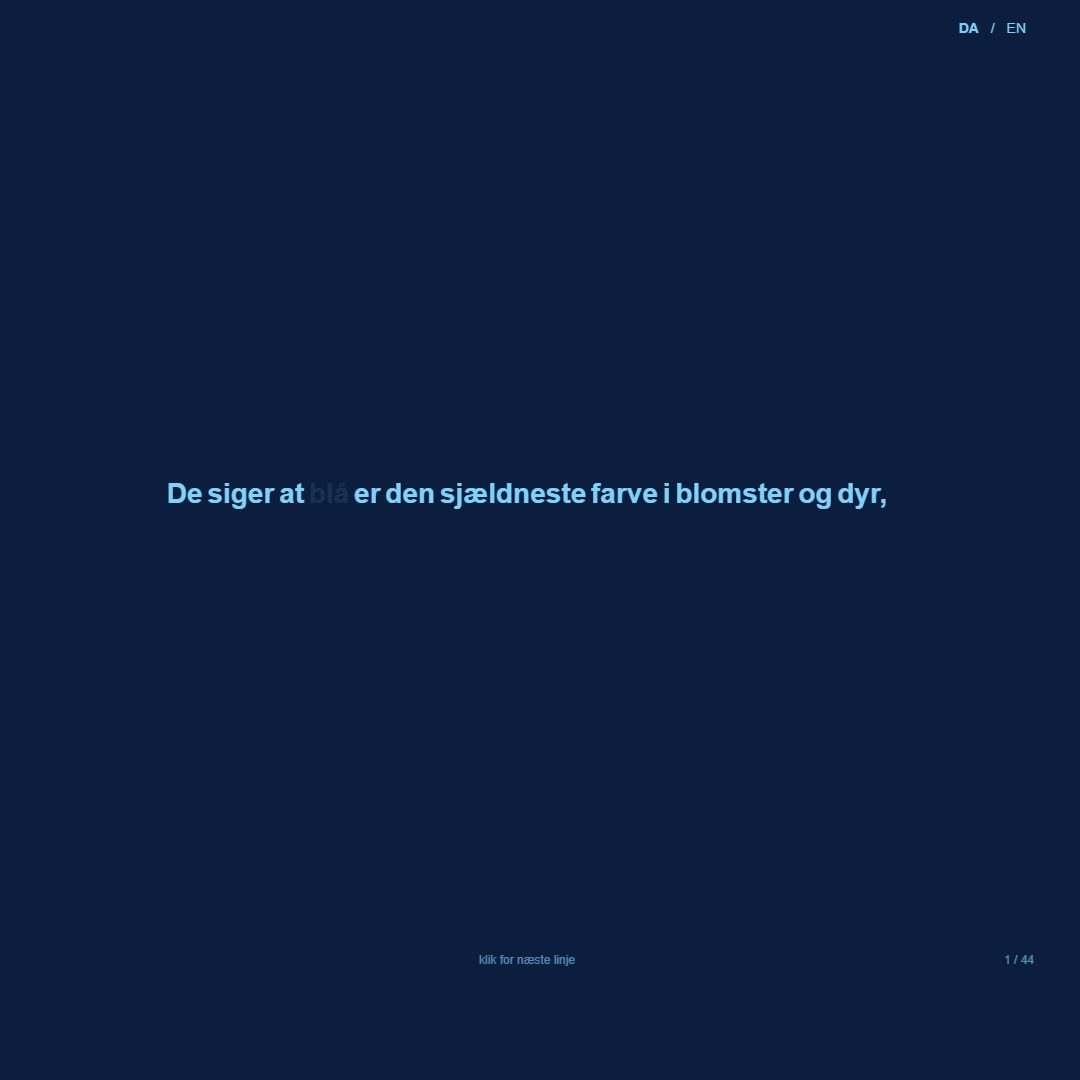
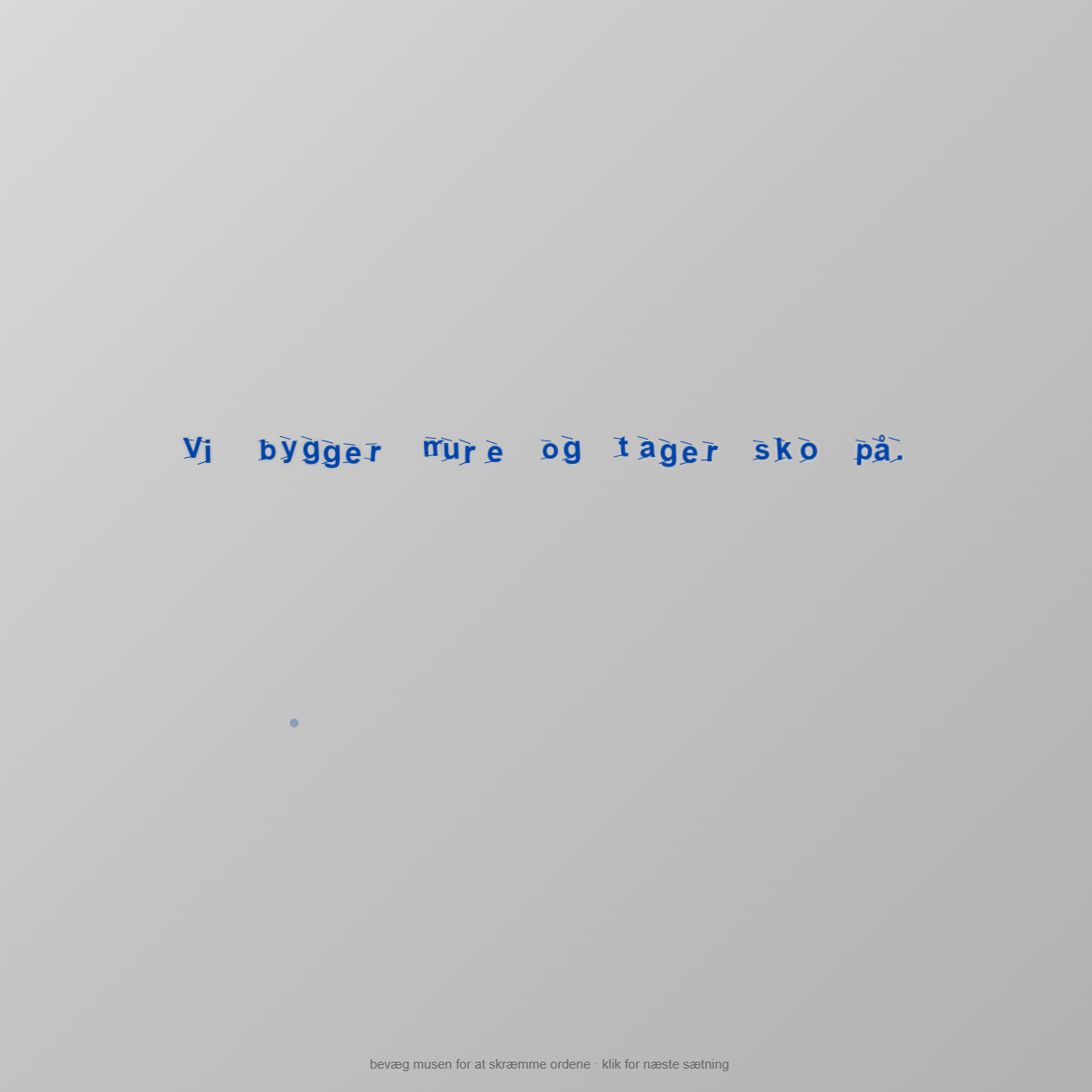
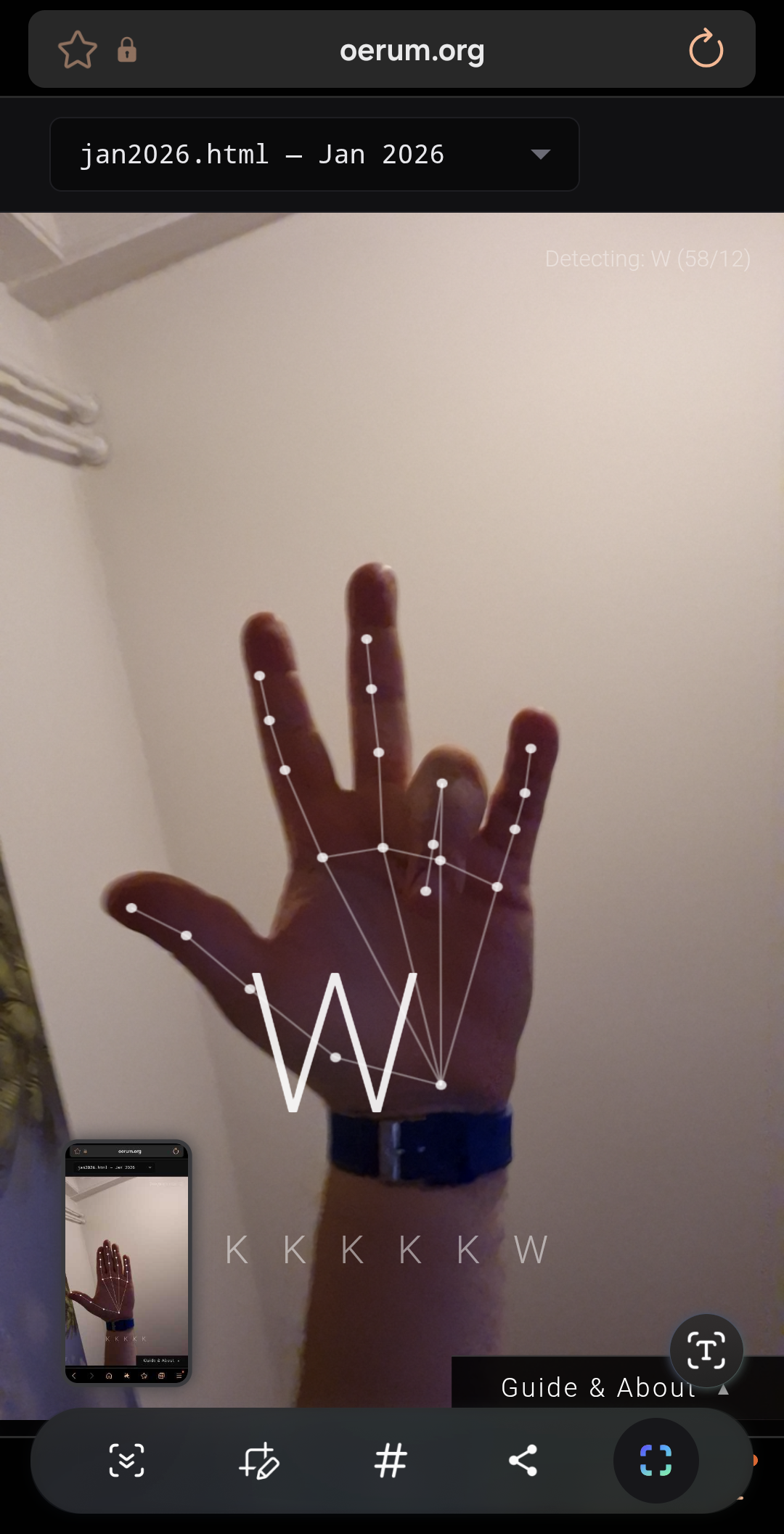
    My interactive text piece at oerum.org is an online supplement to FORSTADIER / PRECURSORS, a duo show with Aske Thiberg at Ringsted Galleriet and Midt- og Vestsjællands Hospital, on view until 11 April 2026.

    A text cycles through 44 sentences, each beginning with the word “blå”. The word appears for two seconds at the start of each line, then fades, leaving only what blue is this time: the hospital’s colour, the stamps in the passport, the diode blinking on the router when no one is there. Click or wait, and the text flips like a calendar page. The background shifts between blue tones. Subtle animations respond to content: underwater caustics for swimming pools and waves, slow light rays for hospital rooms and screens, gentle pulses for blinking diodes and emergency lights.

    The work is part of Leddyrsomsorg, a project imagining a future Danish healthcare system where giant blue woodlice replace AI and automation. The text catalogues the blues that surround care and its absence: the face mask in the cupboard that has expired, the plastic glove for the dishwasher and illness, the light in the waiting room and the public toilet. Blue appears in medical uniforms, in veins under skin, in the newborn who is not breathing. It appears in bureaucratic stamps, access cards not yet collected, travel cards that no longer work. It appears in domestic debris: cheap detergent, toilet cleaner, worn towels inherited from a grandmother.

    Blue is the rarest colour in flowers and animals. Blue was the most expensive pigment in the Middle Ages. Blue is the blood of ancient horseshoe crabs. The text moves between natural history, institutional surfaces, and the objects of everyday life, finding blue in each. The final line states: blue is not yet the woodlouse.

    The interface uses vanilla JavaScript with no external libraries. Each word is a separate DOM element. The word “blå” triggers a timed fade animation. Background colours are drawn from a palette of deep blues with slight teal and indigo variations. Four animation types overlay the background based on textual content, running slowly throughout each slide. All processing runs client-side. Available in both Danish and English.

    FORSTADIER / PRECURSORS. On view until 11 April 2026. Ringsted Galleriet, Bøllingsvej 15 / Midt- og Vestsjællands Hospital, Bøllingsvej 30, 4100 Ringsted.

    oerum.org

    → 2:53 PM, Mar 10
  • FRIHED, LIGHED OG SYMPTOM / LIBERTY, EQUALITY, AND SYMPTOM

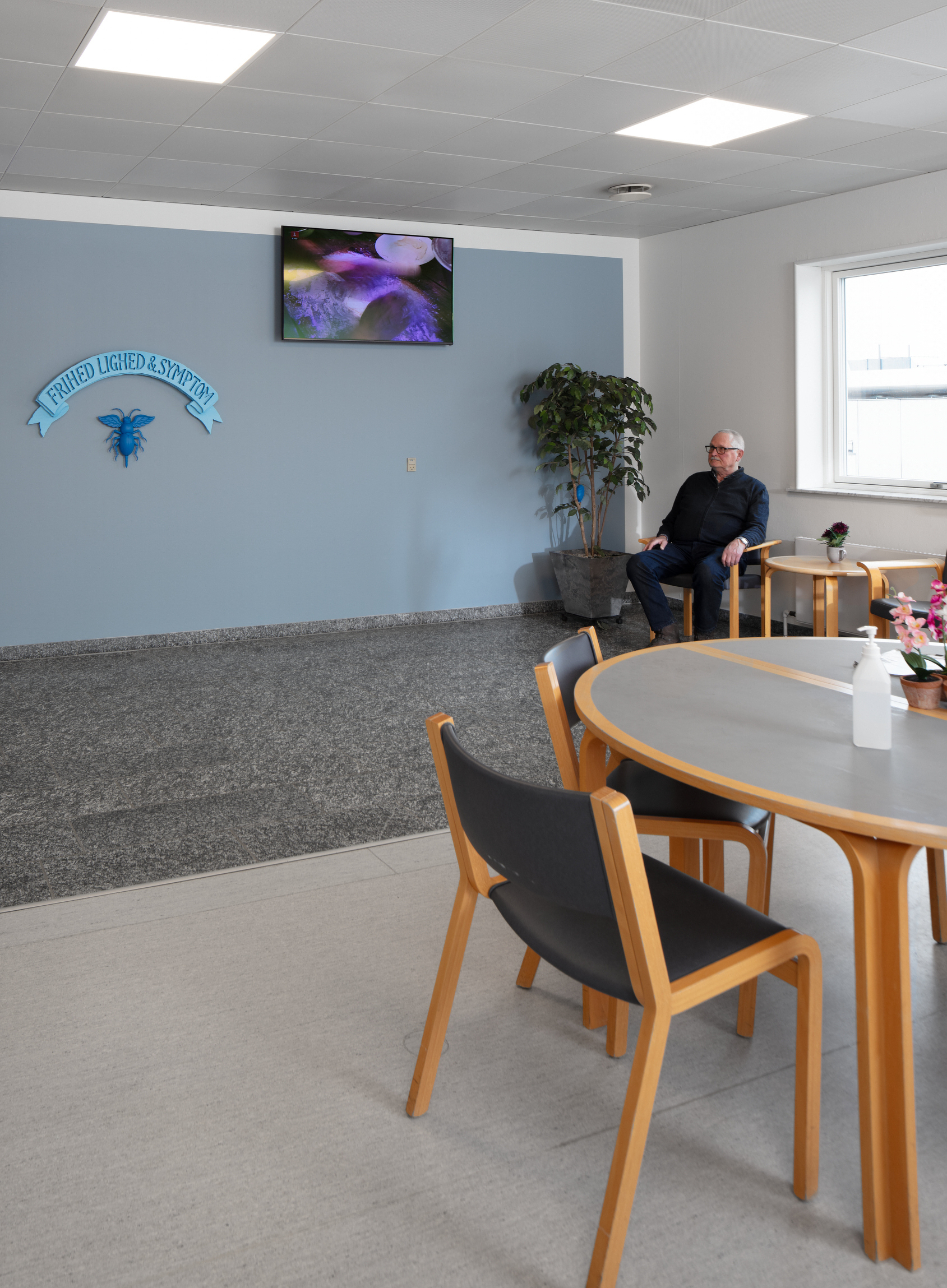
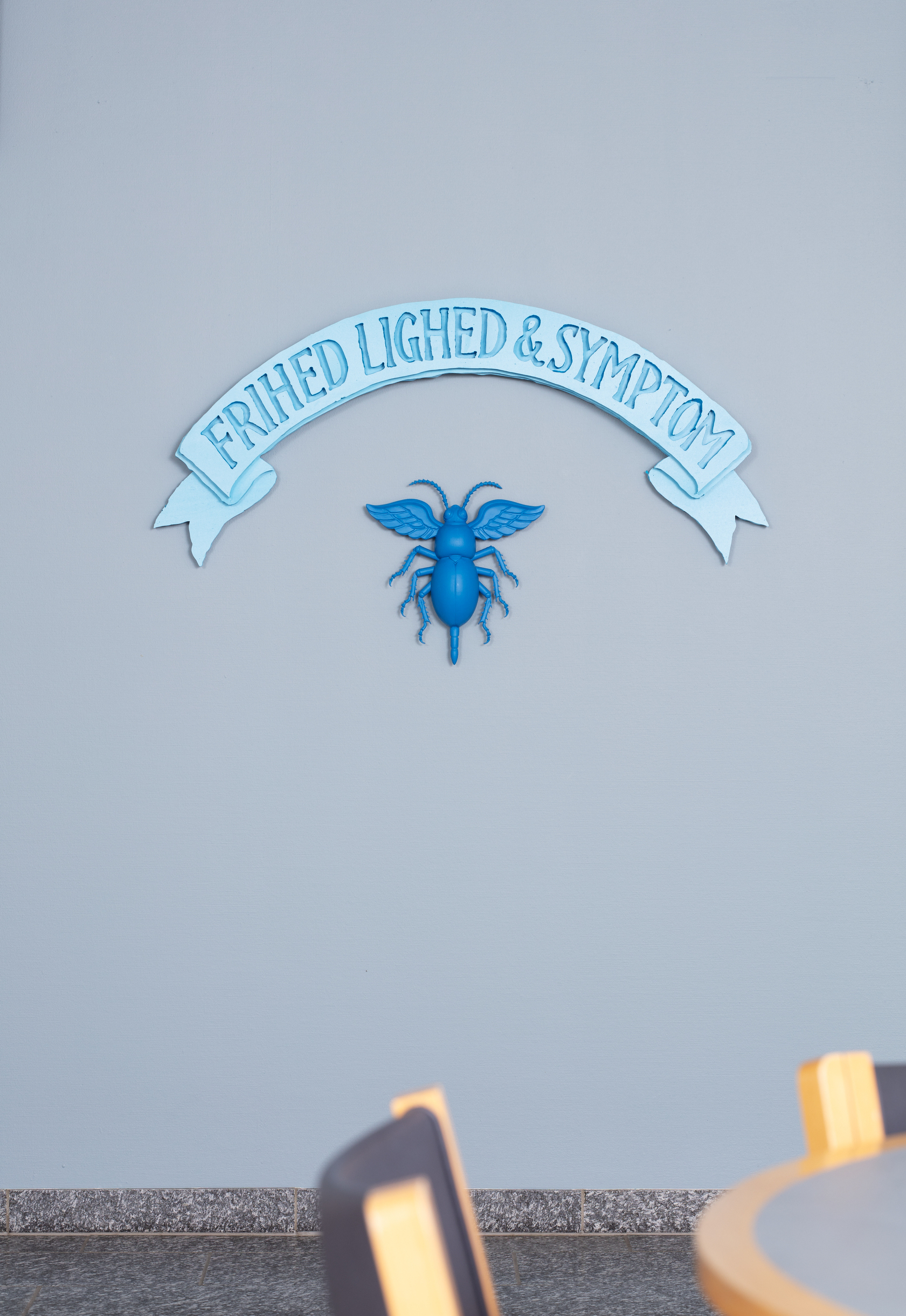
    FRIHED, LIGHED OG SYMPTOM / LIBERTY, EQUALITY, AND SYMPTOM is a hand-carved relief in recycled XPS foam, installed in the blood bank waiting room at Midt- og Vestsjællands Hospital as part of FORSTADIER / PRECURSORS. The carving is accompanied by an insect-like Caduceus, 3D-printed in RPETG and finished with urethane paint—a husk-like fragment of a potential new language for medicine. Installation photo: Morten K Jacobsen. Curated by Morten K Jacobsen.

    The work reinterprets the triad of the French Revolution—Liberté, Égalité, Fraternité—within the specific atmosphere of the hospital. Here, Symptom takes the place of *Fraternité." In this space, the symptom is what mediates the relationship between the individual and the state; a duty performed to navigate the right to care.

    The relief sits in a room where people wait for blood tests and the arrival of Flextrafik, accompanied by the sound of daytime television. It is a shared space of waiting, where the commonality is found in the bureaucratic process of being seen and the time spent between evaluations.

    The Insect-Caduceus—merging the medical staff with segmented anatomy—points toward an emerging somatic language. It asks how care is shaped when mediated by administrative logic and clinical taxonomy, and what forms of life might exist within those institutional margins.

    The relief was hand-carved from a sketch generated by a locally run AI model, powered by certified green energy. By pulling a digital hallucination into physical foam, the automated bias of the model is given a material, institutional weight.

    FORSTADIER / PRECURSORS is a duo exhibition with Aske Thiberg (@askweee), circling the iconography of the healthcare system—the clinical room, the language of care, the institutional forms—with detours into bias in language models, datasets, isolation, and alienation.

    On view until 11 April 2026.

    Ringsted Galleriet, Bøllingsvej 15 — open Saturdays 13:00–16:00 or by appointment. Midt- og Vestsjællands Hospital, Bøllingsvej 30 — open weekdays 08:00–15:00 or by appointment. 4100 Ringsted. ringstedgalleriet.dk @ringstedgalleriet

    #FORSTADIER #PRECURSORS #FrihedLighedOgSymptom #WelfarestateMyths #SurrealSocialRealism #WAN22 #ringstedsygehus #ringsted @statenskunstfond @augustinusfonden @nycarlsbergfondet #louishansensfond #detobelskefamiliefond #billedkunstrådetringsted #øerneskunstfond #kulturregionmidtogvestsjælland #grossererlffoghtsfond

    → 9:59 AM, Mar 9
  • LEDDYRSOMSORG / ARTHROPOD CARE

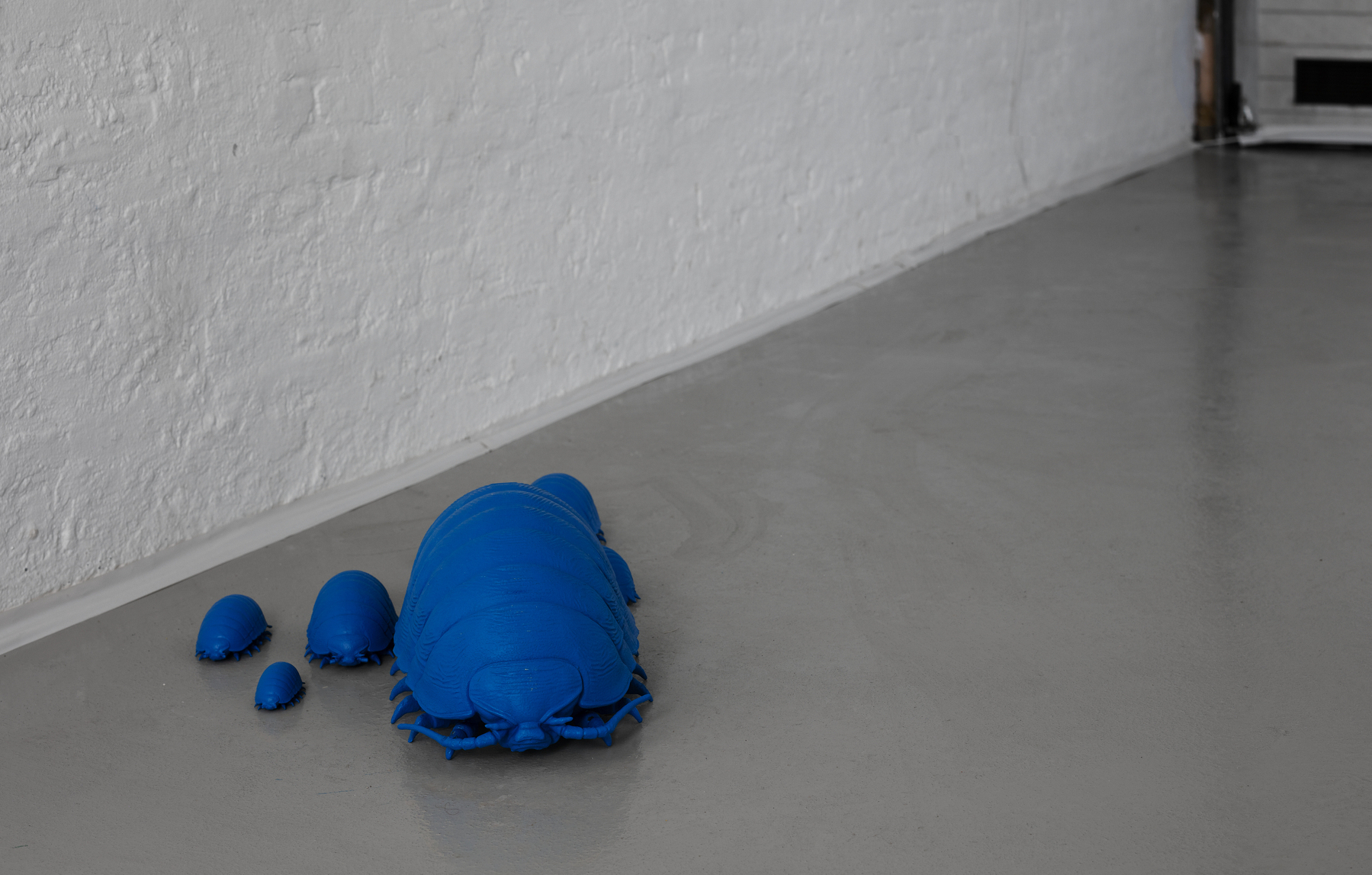
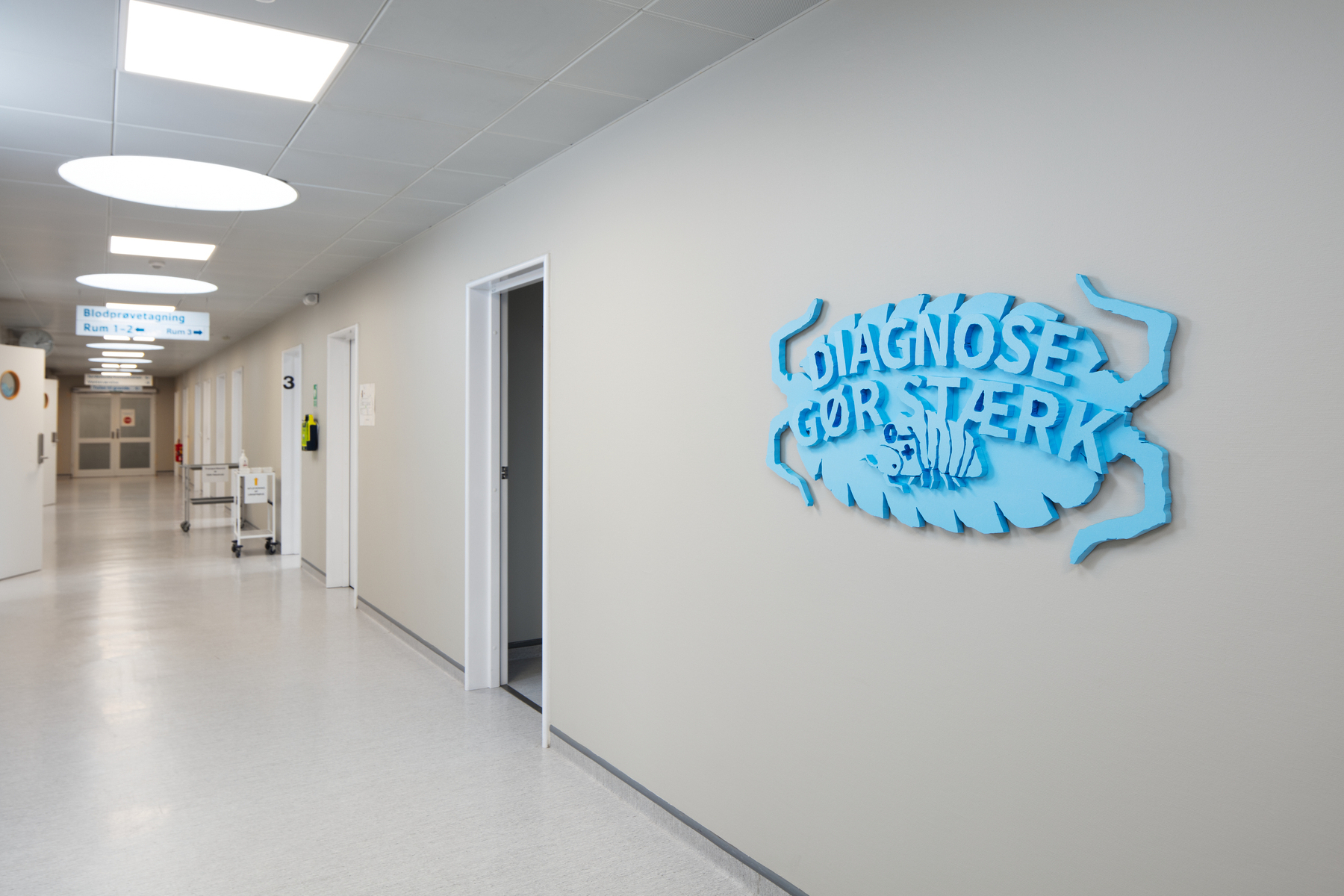
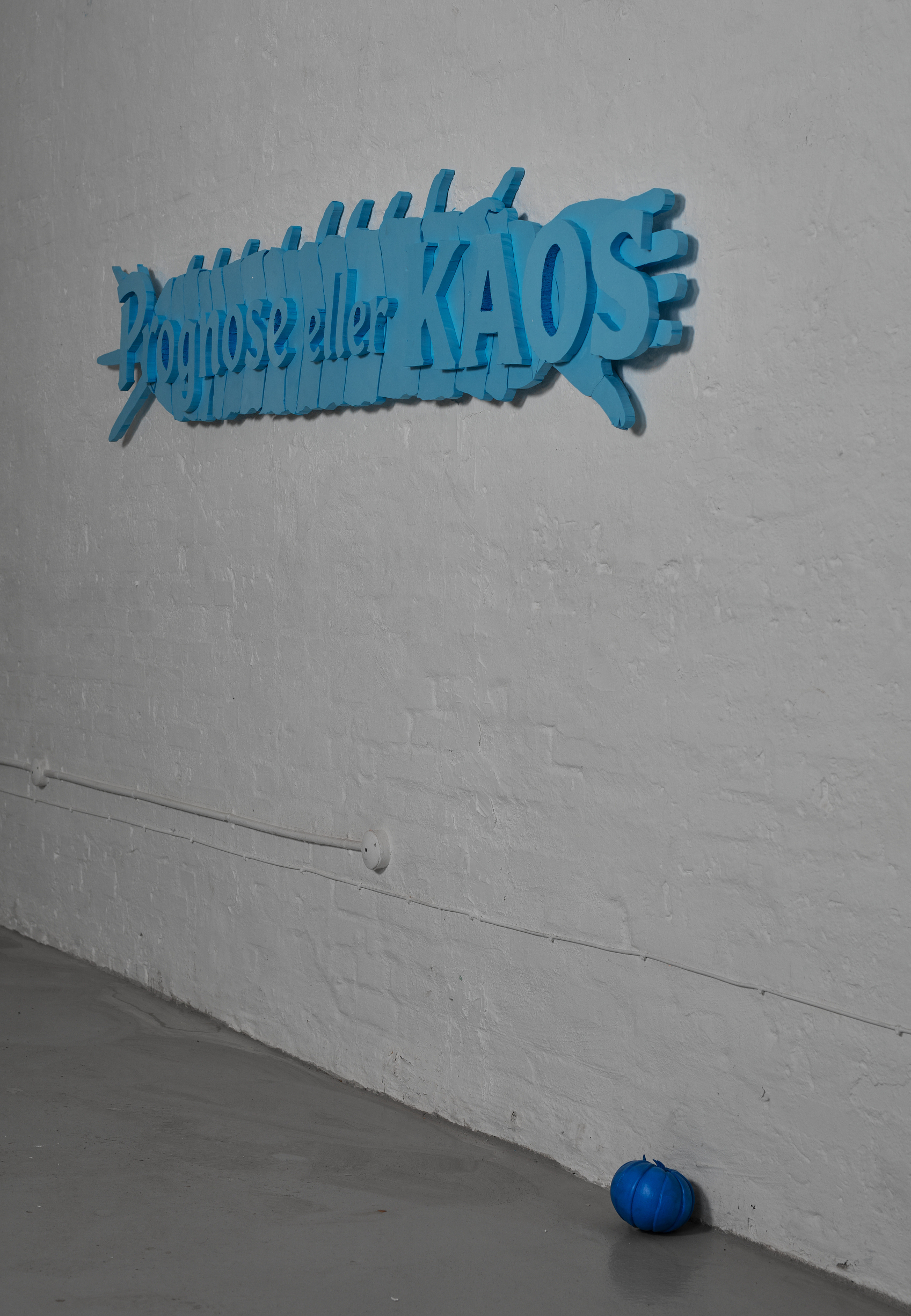
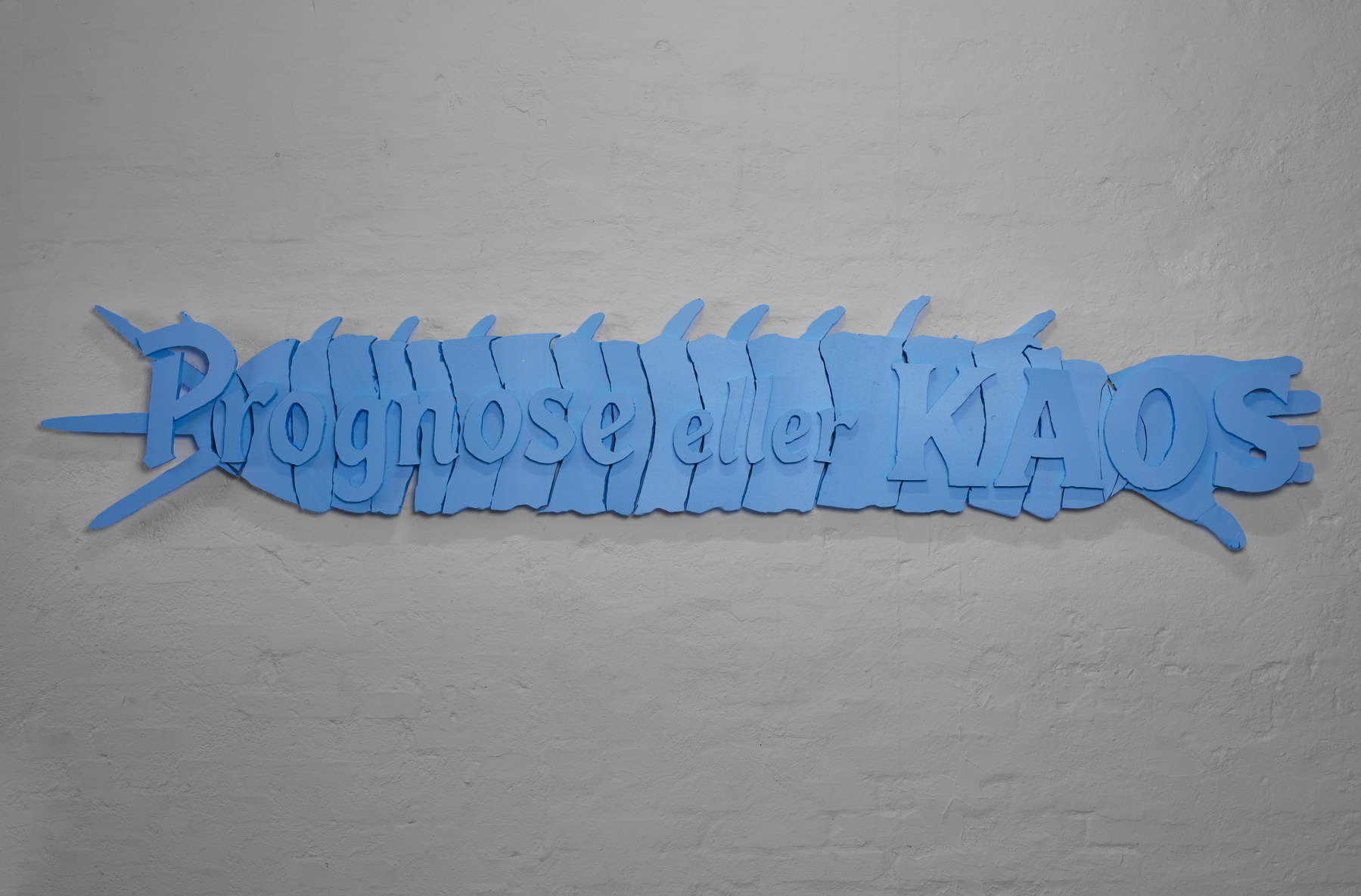
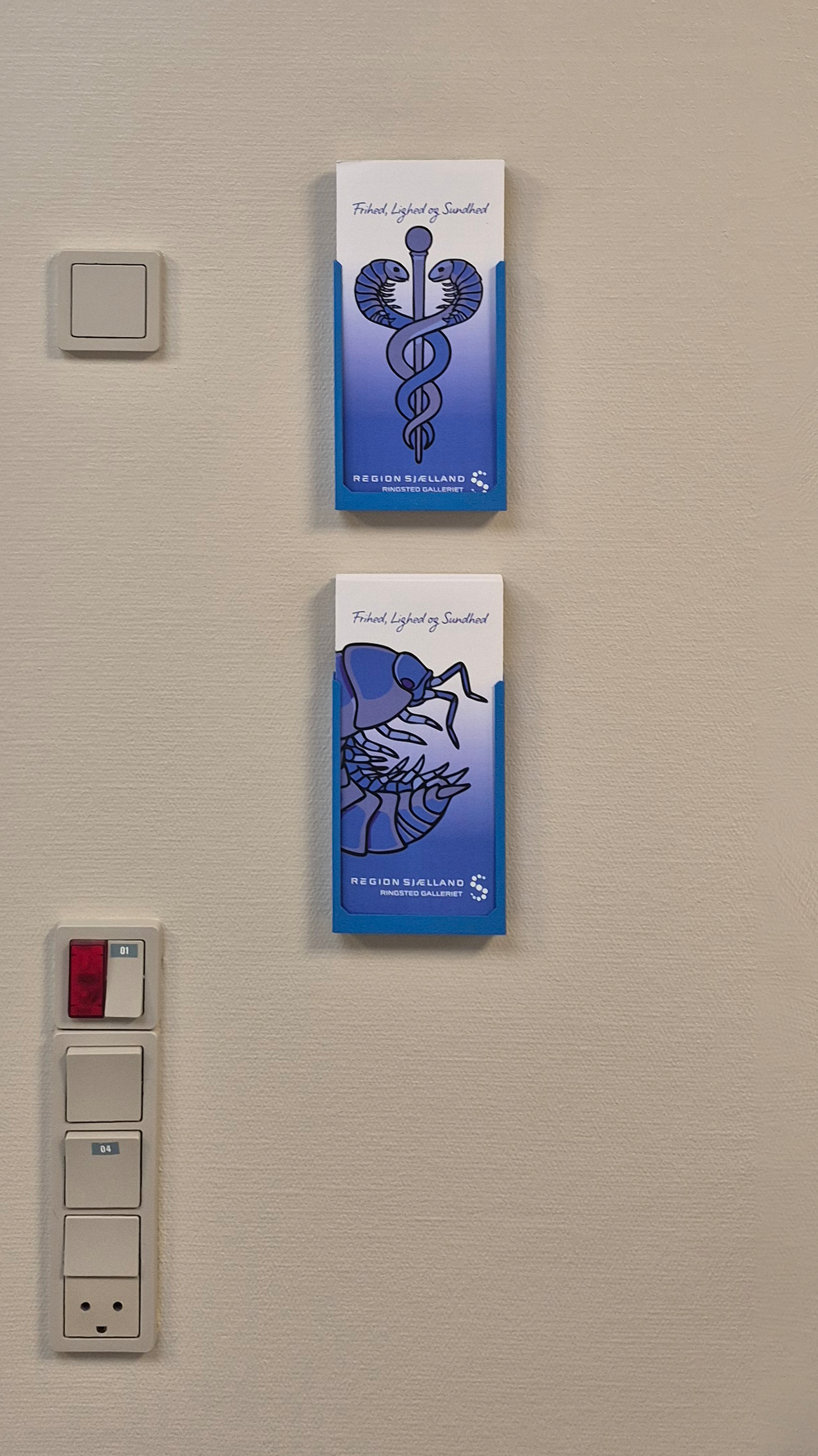
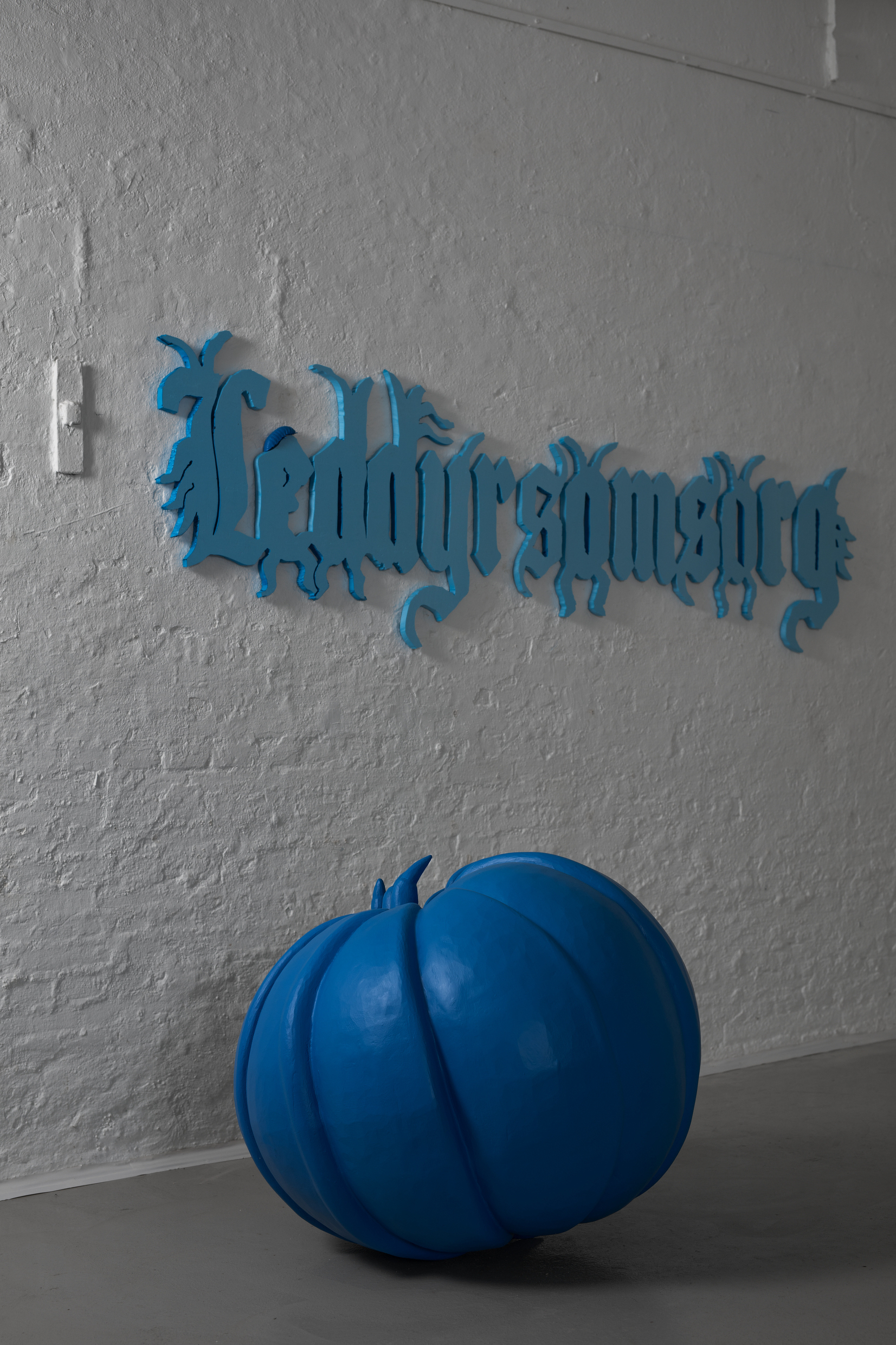
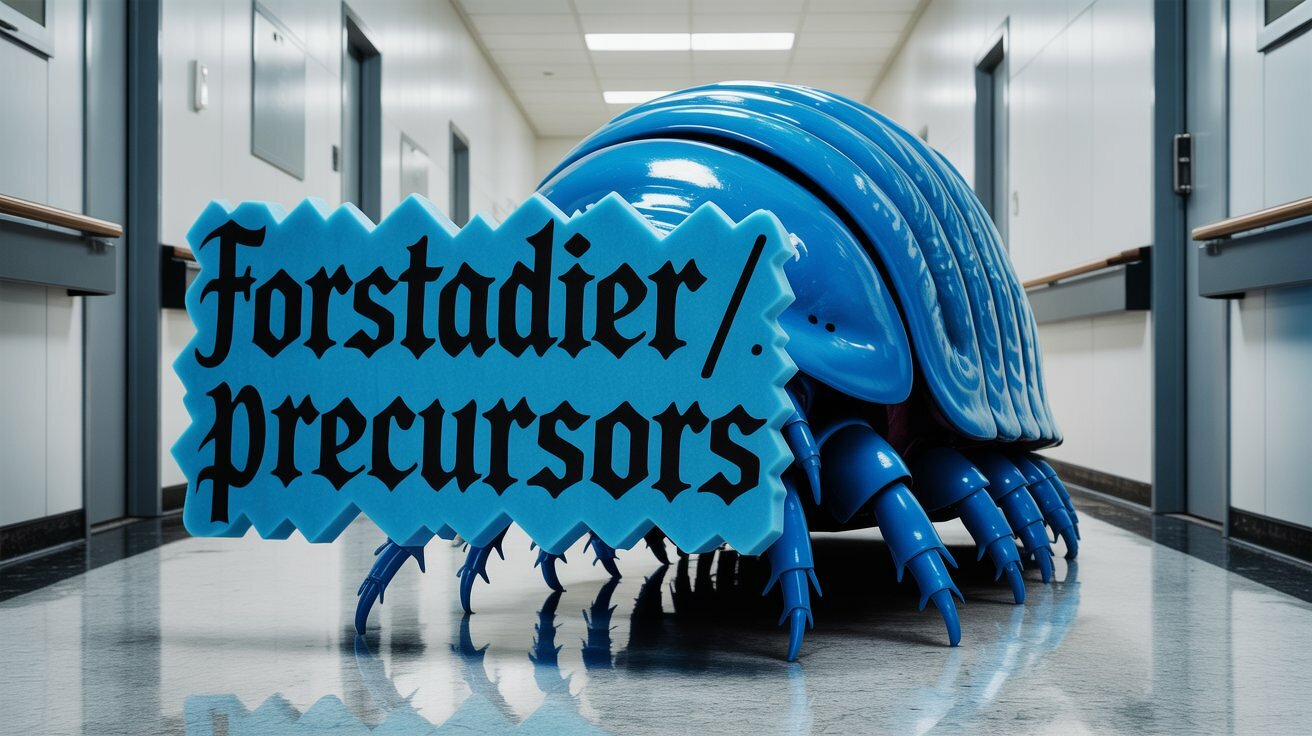
    LEDDYRSOMSORG / ARTHROPOD CARE is a hand-painted foam sign and 3D-printed sculpture, installed at Midt- og Vestsjællands Hospital as part of FORSTADIER / PRECURSORS. The sign bears the title in Gothic lettering, extended with antennae and legs. In front of it, a large blue woodlouse lies curled and sleeping — a creature that has stepped out of the video and into the hospital corridor. Installation photo: Morten K Jacobsen. Curated by Morten K Jacobsen. The woodlouse was designed using Qwen image and Hunyuan3D algorithms, then printed in modified maize starch across 45 parts on small 3d printers in the studio, assembled by hand and painted in water-based urethane paint. It works the way an image works — you can see what it is supposed to be, and at the same time it is clearly something else: too few legs, a shell that doesn’t match any living species, a blue that belongs to no woodlouse. Close enough to be recognisable, different enough to stay unsettled. A near-woodlouse rather than a woodlouse. Which is perhaps fitting: the real woodlouse is itself a kind of near-creature — a crustacean that left the sea and learned to live on land, carrying the memory of saltwater in a body built for somewhere else. The algorithms prompted the form; the hands that assembled it followed. FORSTADIER / PRECURSORS is a duo exhibition with Aske Thiberg (@askweee), circling the iconography of the healthcare system — the clinical room, the language of care, the institutional forms — with detours into bias in language models, datasets, isolation and alienation. At the gallery, the sculpture meets the video LEDDYRSOMSORG / ARTHROPOD CARE, which imagines a future healthcare system staffed by enormous blue woodlice in place of automation and AI. On view until 11 April 2026. Ringsted Galleriet, Bøllingsvej 15 — open Saturdays 13:00–16:00 or by appointment. Midt- og Vestsjællands Hospital, Bøllingsvej 30 — open weekdays 08:00–15:00 or by appointment. 4100 Ringsted. ringstedgalleriet.dk @ringstedgalleriet #FORSTADIER #PRECURSORS #FrihedLighedOgSymptom #WelfarestateMyths #SurrealSocialRealism #Hunyuan3D #ringstedsygehus #ringsted @statenskunstfond @augustinusfonden @nycarlsbergfondet #lo

    → 12:26 PM, Mar 6
  • The Other Citizenship Test (Den anden indfødsretsprøve)

    I have added a new interactive project to my ongoing collection of web-based experiments and prototypes at oerum.org. With the Danish general election coming up on March 24, the latest piece is titled The Other Citizenship Test (Den anden indfødsretsprøve).

    To become a Danish citizen, applicants must pass a highly debated multiple-choice test on Danish society, culture, and history. “The Other Citizenship Test” is an unofficial, alternative counter-exam.

    Disguised under the fictional government agency SIRI*, this interactive web project perfectly adopts the visual language and rigid logic of the official state test. However, the curriculum has been entirely replaced.

    Here, you will not be tested on the kings of the 1700s or which year a specific movie won an Oscar. Instead, you are tested on the histories often left out of the official narrative. The questions cover the early labor movement and women’s rights, centuries of migration that shaped the country, as well as self-organizing, experimental literature, and anti-authoritarian movements.

    Furthermore, the test breaks its own rules to question the premise of its existence by asking if it is possible to put national belonging into a formula. The test takes 45 minutes. You need 36 correct answers to pass. Good luck.

    go to oerum.org

    → 8:57 AM, Mar 6
  • GØR DIN PLIGT OG KRÆV DIN UDREDNING / DO YOUR DUTY AND DEMAND YOUR EVALUATIO

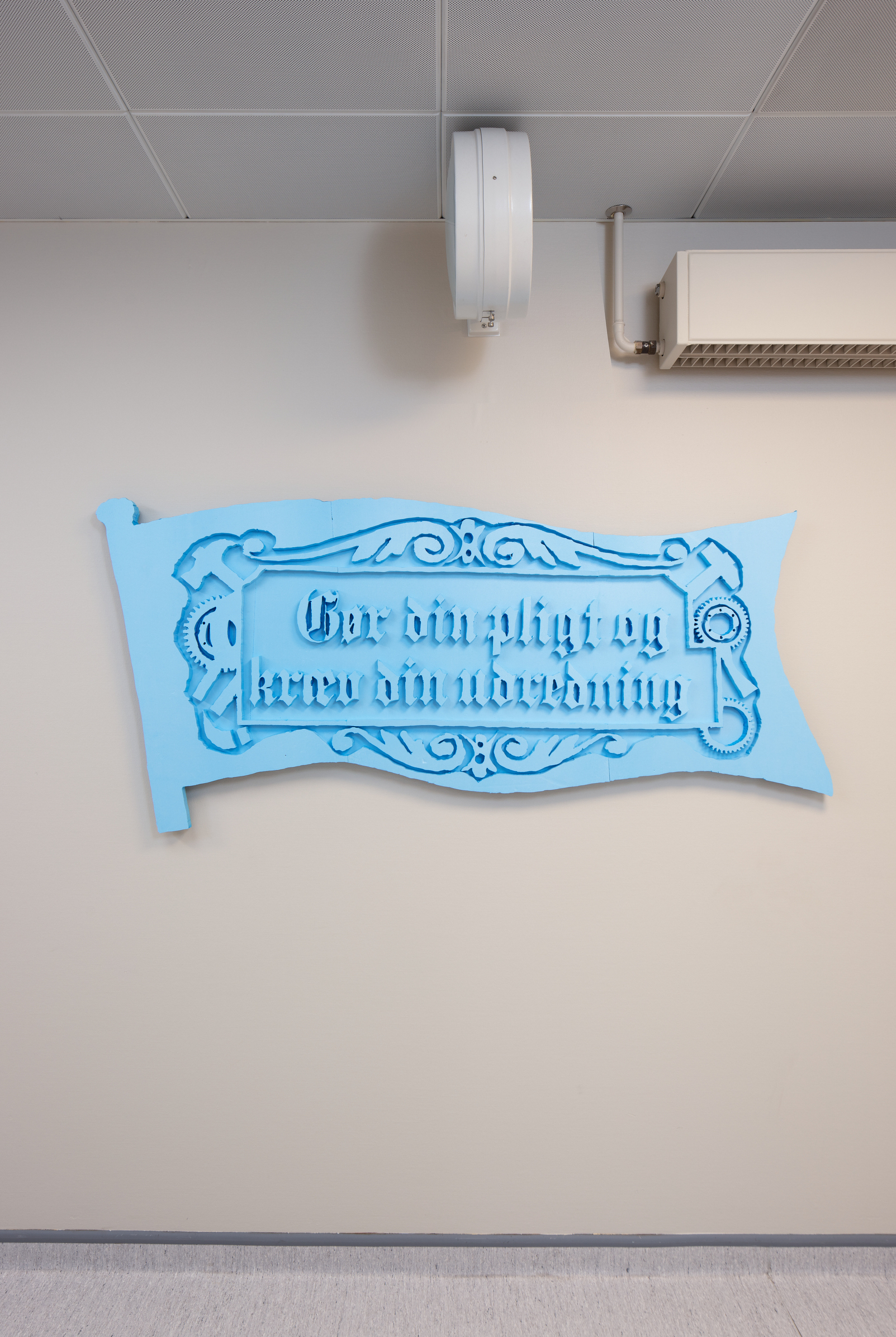
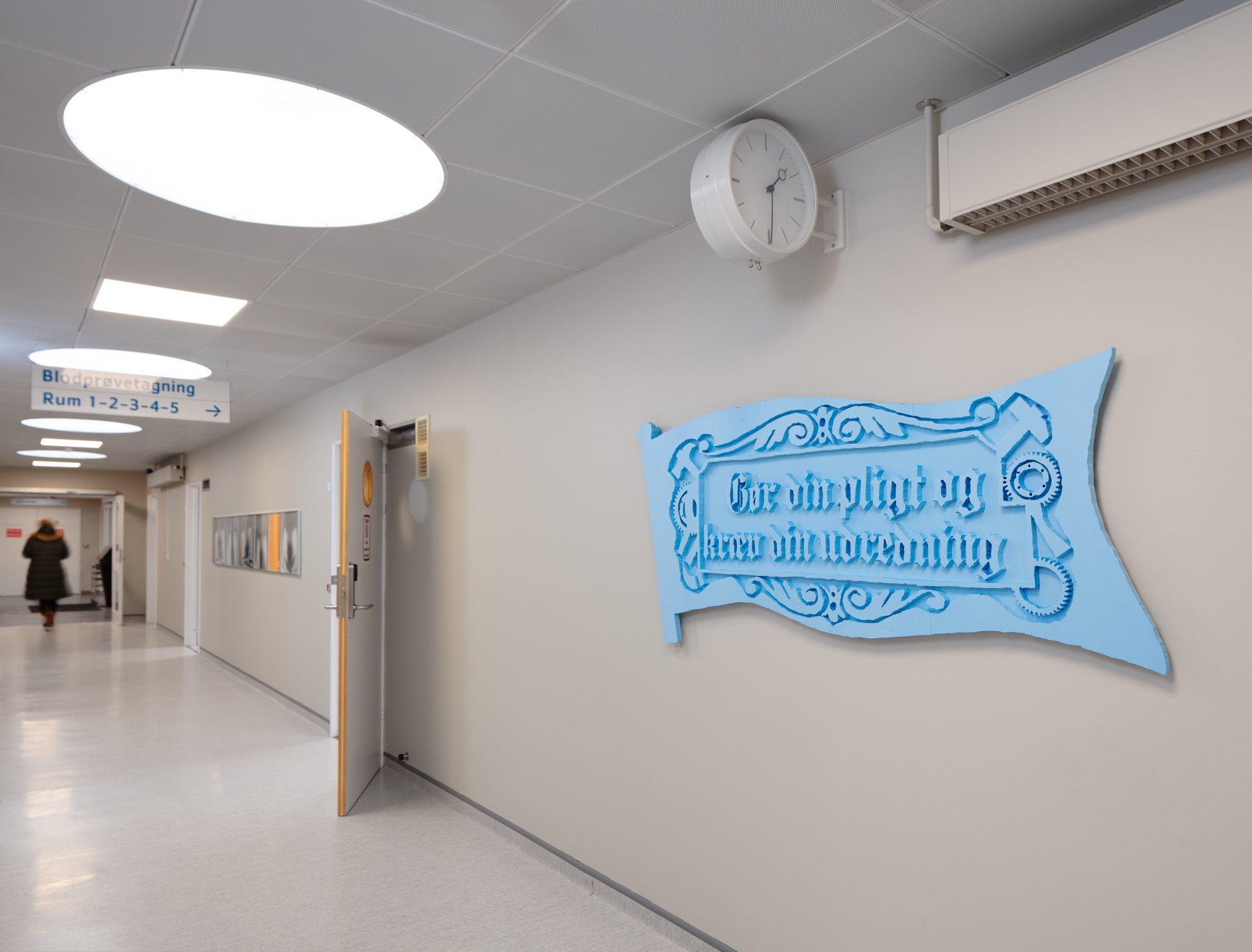
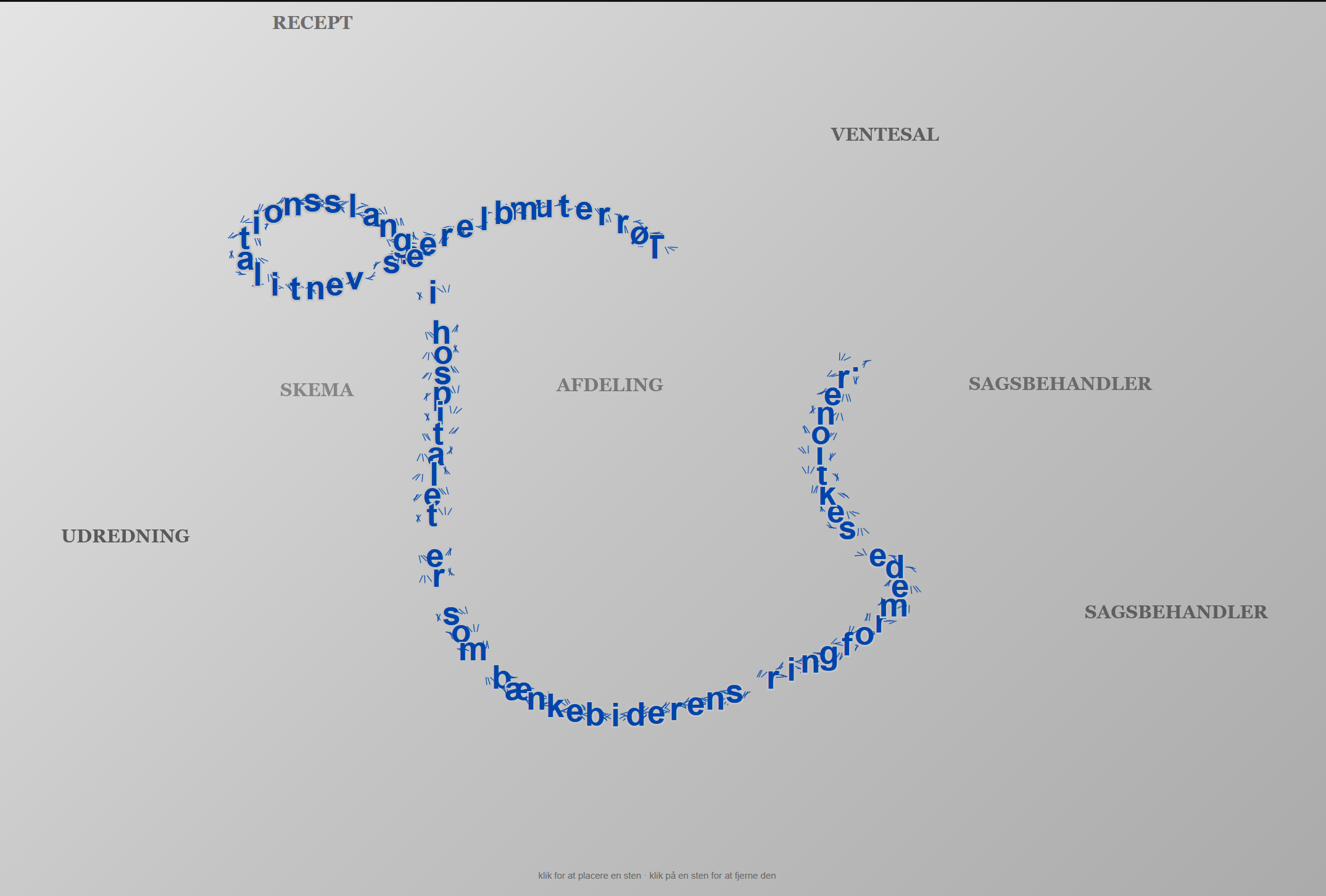
    GØR DIN PLIGT OG KRÆV DIN UDREDNING / DO YOUR DUTY AND DEMAND YOUR EVALUATION is a hand-carved relief in recycled XPS foam, 180 × 80 cm, installed at Midt- og Vestsjællands Hospital as part of FORSTADIER / PRECURSORS. The work is based on a sketch generated using locally run AI models powered by certified green energy. Installation photo: Morten K Jacobsen. Curated by Morten K Jacobsen.

    The title and carving rewrite a motto carried on Danish trade union banners from around 1900: “GØR DIN PLIGT OG KRÆV DIN RET” — Do Your Duty and Demand Your Right. Replacing “Ret” (right) with “Udredning” (evaluation) shifts the slogan from the language of solidarity and entitlement to the language of the healthcare system, where the right to care has become a bureaucratic process to be navigated and waited for.

    The sketch was generated by a Qwen image model, which then inspired the hand carving — reversing the usual dynamic, where the human prompts the algorithm.

    FORSTADIER / PRECURSORS is a duo exhibition with Aske Thiberg (@askweee), circling the iconography of the healthcare system — the clinical room, the language of care, the institutional forms — with detours into bias in language models, datasets, isolation and alienation. At the gallery, the video LEDDYRSOMSORG / ARTHROPOD CARE is accompanied by full-scale sculptures, signs and leaflets. On view until 11 April 2026.

    Ringsted Galleriet, Bøllingsvej 15 — open Saturdays 13:00–16:00 or by appointment. Midt- og Vestsjællands Hospital, Bøllingsvej 30 — open weekdays 08:00–15:00 or by appointment. 4100 Ringsted. ringstedgalleriet.dk @ringstedgalleriet

    #FORSTADIER #PRECURSORS #FrihedLighedOgSymptom #WelfarestateMyths #SurrealSocialRealism #WAN22 #ringstedsygehus #ringsted @statenskunstfond @augustinusfonden @nycarlsbergfondet #louishansensfond #detobelskefamiliefond #billedkunstrådetringsted #øerneskunstfond #kulturregionmidtogvestsjælland #grossererlffoghtsfond

    → 7:27 PM, Mar 5
  • Ringsted Galleriet og det lange træk

    Det er en særlig følelse endelig at udstille på Ringsted Galleriet igen. Jeg var med på en gruppeudstilling for længe siden, men denne gang er det i et duo-format med Aske Thiberg. Selvom vi ikke kendte hinanden indgående før, har det vist sig, at vi deler en overraskende mængde kunstnerisk bagage. Det er netop det, et gennemtænkt program kan: skabe relevante forbindelser på tværs af generationer og udtryk. Mens jeg sætter værker op på hospitalsgangen på sygehuset — blot 150 meter fra galleriet — og taler med ansatte og patienter, bliver det tydeligt, at mange slet ikke kender til stedet. Det er svært at forstå, men det er måske heller ikke det afgørende. For galleriet fungerer allerede. Det har eksisteret i over 40 år, grundlagt i 1982 af tandlægen Mogens Åside og billedkunstneren Maria Nicolaisen, og har formået det sværeste af alt: at bygge en struktur, der kan overleve de enkelte personer, der driver den. Generationsskifter er det, der fælder de fleste kunstnerdrevne steder, fordi de er centeret om enkeltpersoner i stedet for om overdragelige strukturer. Under den nuværende ledelse af Heidi Hove og Morten K. Jacobsen er driften blevet professionaliseret, men den kunstnerdrevne tilgang er intakt — netop fordi det er strukturen, der bærer, ikke personerne alene. Det kuratoriske arbejde er funderet i selve skabelsesprocessen, ikke i administration. Sammenlignet med en etableret kunsthal eller et museum er budgettet minimalt. Men det giver galleriet noget, som institutionerne sjældent har i samme grad: en meget høj kunstnerisk frihed og et kuratorisk mod til at vise arbejder, der ikke følger institutionelle tendenser, men som har egentlig nødvendighed. Her er det stadig praksisnært — kunstneren trækker selv ledninger og sætter op, mens man møder kursister fra undervisningsdelen og de frivillige, der holder stedet i gang. Det er ikke en mangeltilstand, der venter på at blive udbedret. Det er en fungerende praksis. Alt det er allerede politisk. For det politiske og det æstetiske ligger ikke kun i værket. Det ligger også i organisationsformen, i distributionen, i de materielle betingelser kunsten bliver til under. Det er ikke et spørgsmål om, hvorvidt kritisk eller eksperimenterende kunst kan laves inden for store institutioner — det kan den. Spørgsmålet er, under hvilke betingelser den formes, hvem den når, og hvilke kompromiser den indgår. Institutionens egen logik — besøgstal, bestyrelsesgodkendelse, sponsorhensyn, kuratorisk karriereplanlægning — former uundgåeligt det, der kan vises. Nogle institutioner håndterer det bedre end andre. Men tendensen er, at den eksperimenterende kunst enten inddæmmes i et ellers risikoaverst program eller fortrænges af det, der lader sig kommunikere i en pressemeddelelse. Når man udstiller kunstnerdrevet, kommer man i direkte kontakt med alle aspekter af en udstilling: økonomi, logistik, kommunikation, ophængning, publikum. Man er ikke isoleret fra praktikken, politikken og organiseringen, sådan som man ofte er på de større, ressourcerige institutioner, hvor arbejdsdelingen skærmer kunstneren fra alt andet end værket. Det er langt mere arbejde, og det foregår under dårligere vilkår. Men det bibringer også erfaringer og en forståelse af, hvad en udstilling faktisk er, som ville kunne styrke enhver kunstnerisk praksis. Jeg taler ikke udefra: jeg har drevet Captive Portal i København siden 2014, og jeg kender både friheden og sliddet i den model. Jeg sidder samtidig i Statens Kunstfonds legatudvalg og udstiller internationalt — så jeg opererer inden for det samme system, jeg her kritiserer. Det er ikke en modsigelse, men det er en spænding, der er værd at være åben om. Der er en strukturel skævhed i den danske kunstinfrastruktur. De store institutioner — kunsthaller, museer, biennaler — har faste bevillinger, bygninger og lønnet personale. De kunstnerdrevne steder er afhængige af projektmidler, frivilligt arbejde og lokaler, der ofte er midlertidige. Det er ikke et spørgsmål om kvalitet — der laves fremragende arbejde i begge modeller. Men det er et vilkår, der favoriserer institutionel vækst over decentral stabilitet. En stor kunsthal kan råde over tusindvis af kvadratmeter og en professionel bestyrelse. Et sted som Ringsted Galleriet har holdt åbent i over 40 år på en brøkdel af de ressourcer. Begge dele er mulige, men det er kun den ene model, der reproducerer sig selv uden konstant usikkerhed. Det mønster gælder ikke kun i Danmark — det er et generelt træk ved den måde, samtidskunstens infrastruktur er organiseret på, hvor opmærksomhed og midler tiltrækkes af skala. Det, den lokale model kan, er noget andet end det, de store institutioner tilbyder. Billedkunsten er en subkultur. Man skal lukkes ind i den, og den indgang kan ikke bestå af formidling alene. Når jeg hænger værker op på hospitalsgangen i Ringsted, arbejder jeg side om side med ansatte og patienter. Det, de ser, er ikke kun et kunstværk — det er også et arbejde, en praksis, en måde at være i verden på. Den synliggørelse kan ikke produceres i en pressemeddelelse eller en publikumsundersøgelse. Den opstår i nærværet, i det konkrete møde, i det at kunsten ikke er adskilt fra det sted, den vises. Det er det, et lokalt forankret udstillingssted kan: ikke bare vise kunst, men gøre den genkendelig som en livspraksis, som skaber konkrete møder og samtaler med folk, der ikke nødvendigvis har adgang til kunstverdenens etablerede indgange. Ikke ved at sænke ambitionsniveauet eller udelukke de læsninger og praksisformer, der er legitime inden for feltet, men ved at åbne døren uden at kræve et forhåndskendskab, der allerede er på plads. Det betyder ikke, at den kunstnerdrevne model er uden blinde vinkler. Den kan reproducere sine egne æstetiske kredsløb, være netværksafhængig og overse offentligheder, der ligger uden for dens eget felt. Ingen model er neutral. Men den kunstnerdrevne praksis rummer ubrugte muligheder, som er særligt relevante lige nu. Den digitale infrastruktur belønner genkendelighed og algoritmevenlige formater. Samtidig stiger presset fra konservative strømninger, der favoriserer national romantik og kulturel genkendelse frem for eksperiment. Og billedkunsten har en vigende plads i den offentlige diskussion. I det landskab er steder som Ringsted Galleriet ikke bare overlevere fra en ældre model. De er mulige svar på en situation, der endnu ikke har fundet sin form. Kommunen og fondene støtter allerede, og det skal de have anerkendelse for. Men der er en spænding her, som det er værd at holde åben. Steder som Ringsted Galleriet er ikke venteværelser for bedre vilkår. De er allerede det, de skal være — fungerende alternativer til en institutionel logik, der har en tendens til at tjene sin egen reproduktion. Samtidig er det ikke urimeligt at insistere på, at fungerende strukturer får rimelige betingelser. Det lange træk er at forbinde den globale kunstscene med lokale livsverdener og gøre indgangen mindre fremmedgørende for nye publikummer. Det er et arbejde, der tager år, og som Ringsted Galleriet allerede er i gang med. Jeg ville ønske, det arbejde blev højere prioriteret politisk. Og der er et uudnyttet potentiale i, at de større institutioner bruger en del af deres ressourcer på at eksperimentere med deres egen form, samarbejde ud over deres eget kredsløb og engagere sig i de lokale kontekster, de er omgivet af. Det kunne styrke hele feltet — skabe nye spændinger og ændre de blinde vinkler. Det er ikke givet, at det lykkes. Men muligheden er der hvis nogle griber den. Hvis jeg skulle formulere det som et slogan, ville det være: ret blikket mod Ringsted. Der er meget at lære — både som kunstner og som institution.

    → 11:49 AM, Mar 4
  • Notes on Less-Narrative Moving Images

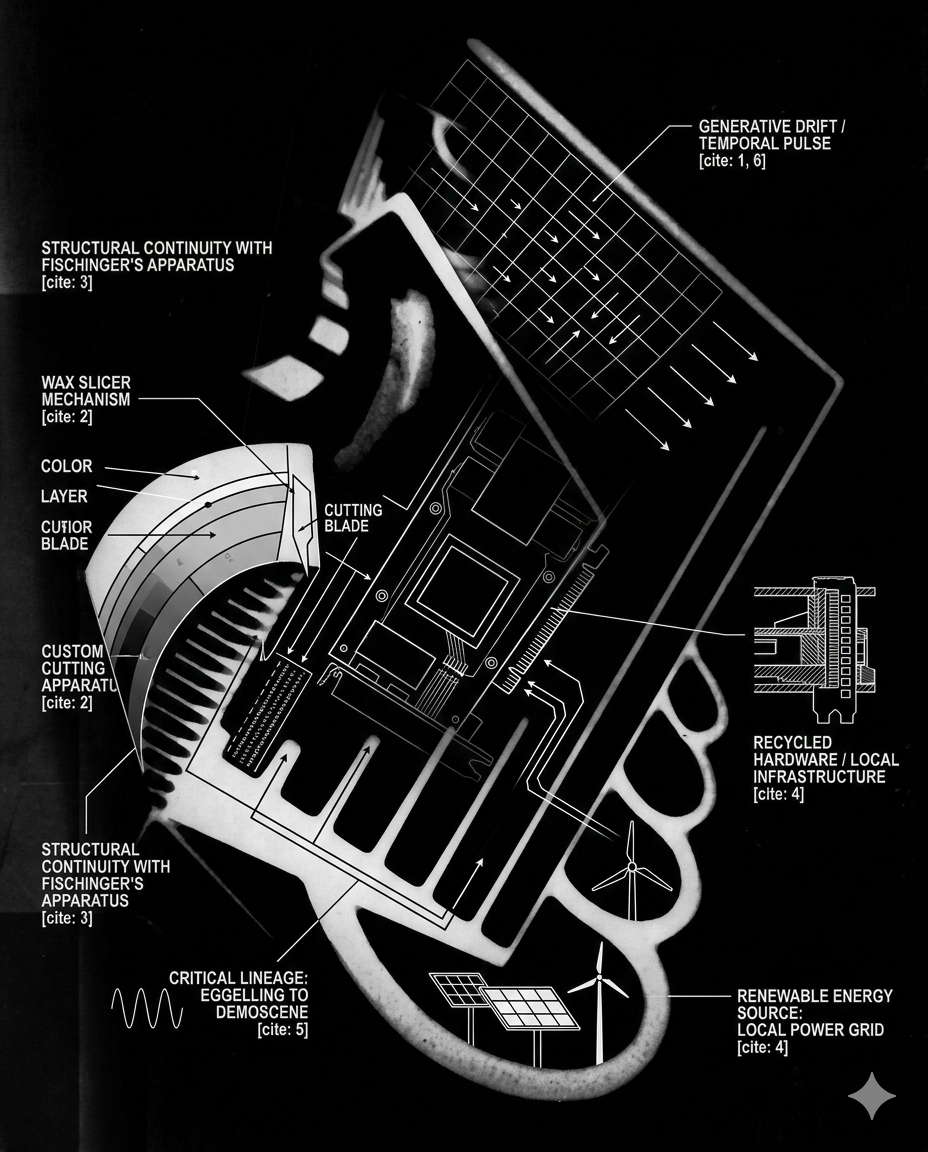
    This text is a working document, written as part of my slow return to research after an extended period of medical leave. It is one of several threads I am weaving to better understand my own practice and to make explicit the ideas that underpin it. It lacks the footnotes and references I had intended to include. It is not a finished piece of scholarship but a foundation, an attempt to articulate, in continuous prose, the tradition I place myself within, the theoretical tools I draw on, and the material conditions I work under. It will change as the work progresses. What follows focuses on one concrete strand within that broader project: a lineage of non-narrative moving images and the infrastructural politics that accompany it. For a long time, I assumed that what follows was common knowledge. That if you worked with moving images, you would naturally know the names Viking Eggeling, Oskar Fischinger, and John Whitney Sr.; understand the history of structural film; and recognise that moving images need not tell stories to be meaningful. I assumed that most people working in this space grasped the politics of form and infrastructure as distinct from the politics of content, that when encountering a generative AI video that drifts and morphs, one might situate it within an established formal tradition rather than read it simply as a failed imitation of narrative cinema. I have come to accept that this frame of reference is no longer self-evident. The tradition I come from is deep and ongoing, yet it lacks institutional visibility. It is largely absent from art-school curricula, rarely cited in critical writing, and excluded from most funding frameworks for moving-image practice. Even when such practices exist, they are rarely recognised within galleries, funding categories, or scholarly discourse, leaving this formal-political potential underdeveloped. The following text attempts to render this lineage visible again and to argue that it still holds crucial potential for contemporary image-making. Eggeling’s Symphonie Diagonale (1924) and Hans Richter’s Rhythmus 21 (1921) were produced before narrative cinema had fully consolidated its conventions. These works proposed that film could function like music or painting—temporal, formal, and composed—without being narrative. The image was treated as a plastic material to be organised in time, not as a window onto a fictional world. In Symphonie Diagonale, Eggeling choreographed geometric forms that transform according to visual rules—growth, contraction, rotation, mirroring—applied rhythmically across time. Fischinger extended this principle across three decades, synchronising abstract animation with musical forms. He was not only an artist but an engineer. For the Wax Experiments (1921–26), he constructed a mechanical apparatus that sliced and photographed blocks of wax, generating images through a material process rather than through manual drawing frame by frame. The device was not simply a tool; it was a system whose operation produced imagery within designed constraints. Fischinger’s authorship lay in setting the parameters and conditions; the work emerged from the operation of this engineered situation. That description resonates with the conditions of contemporary generative image-making. When I train a diffusion model on a dataset of objects I have selected and photographed, and run it locally on recycled hardware powered by renewable energy, I am engaged in a structurally comparable practice. I design the system—curate the data, configure the training, assemble the computational infrastructure—and the system produces images. Authorship resides not in producing each individual frame, but in shaping the conditions under which images come into being. The traditional distinction between building the instrument and playing it becomes unstable when instrument and performance are so tightly coupled. Fischinger’s work was political in ways that remain pertinent. He left Nazi Germany in part because the regime demanded figurative, narrative imagery that served propagandistic ends. Abstraction, in this context, was not a retreat from politics but a refusal to let form be subordinated to ideological messaging. Today a comparable pressure is visible: the expectation that moving-image work must carry recognisably political content—revealing, testifying, or exposing injustice—to be considered serious. This insistence on explicit political content reproduces a similar logic of instrumentalisation. Work that resists this mandate, focusing on formal or structural inquiry, is often misread as apolitical. Fischinger’s synthesis of art and engineering also constituted a quiet refusal of industrial divisions of labour. When I operate my own AI infrastructure rather than renting access to commercial APIs, I inhabit a related structural position. The politics is embedded in the practice of integration. Running a model locally, on my own hardware and datasets, constitutes a refusal of the centralised political economy of computation, echoing Fischinger’s return to independent production after unsuccessful engagements with Disney or Paramount. This does not romanticise independence as purity; rather, it keeps the question of who controls the apparatus materially present. Energy use forms part of this equation. Computation is materially expensive, and the environmental burdens of that expense are politically distributed. Running a model on renewable energy from a known grid is not an “ethical decoration”; it is an assertion of responsibility for the entire production chain. To obscure those relations behind a cloud interface is to reproduce the same opacity that characterises industrial image production. Conventional art-historical narratives often suggest that this abstract tradition was simply displaced by narrative cinema. That account overlooks the actual paths through which forms travelled. Fischinger’s influence on Walt Disney’s Fantasia (1940) carried his formal vocabulary directly into mainstream entertainment, shaping visual languages across advertising, educational films, and television graphics. The German avant-garde was not erased; it was absorbed into applied and commercial arts. From Saul Bass’s title sequences to Maurice Binder’s work on the Bond films, and from channel idents to experimental broadcast graphics, modern design practice continued to host sustained formal invention. These spaces privileged rhythm, timing, and abstraction precisely because they could not rely on narrative structure. A motion-graphics designer at BBC2 in the 1990s, crafting idents, was arguably closer in method and spirit to Eggeling than many gallery-based video artists of the same decade. What they lacked was not continuity of practice but a critical vocabulary and institutional framework that would allow them to claim that lineage. Since the 1990s, institutions have tended to privilege the figure of the artist-as-journalist. Politics, within this model, is located in content; form is treated as a vehicle. Within such a framework, structural and rhythmic concerns are coded as “formalist,” and formalism is frequently dismissed as politically neutral. This is a false opposition. The organisation of time and the behaviour of the image as material are political realities in themselves. They shape not only how something is shown, but what can be perceived and thought within the temporal frame the work creates. The documentary mode often reproduces the very hierarchies it seeks to critique. Production structures mirror cinematic labour divisions; roles fragment into director, editor, colourist, sound designer; budgets are allocated according to familiar industry patterns. Common software environments such as Premiere, After Effects, and DaVinci predetermine durations, cuts, and rhythms, contributing to a temporal homogeneity that precedes any specific content. Presets and timelines impose a temporal logic of their own. This occurs long before any specific material is introduced. The result is a narrowing of sensibility: when artists rely on the same tools, conventions, and pacing, the temporal texture of visual art becomes homogeneous. Alternative traditions persist, even if they remain institutionally illegible. In Denmark, the collective Kanonklubben—Jytte Rex, Kirsten Justesen, and others—produced works that examined image production as a collective and material process. Their films operated at the edges of the film world, probing what moving-image practice might look like when detached from the director, the studio, and the hierarchical industrial model. That question—what image-making becomes when its infrastructure is self-determined and collectively negotiated—is precisely what generative video practice reopens today, under different technological conditions. While fine-art consolidated around documentary realism, the desire for non-narrative experience reappeared elsewhere: in ASMR streams, “oddly satisfying” loops, and ambient livestreams. These forms offer duration as atmosphere rather than storytelling. The viewer does not leave their world; they remain within it, accompanied by moving texture. Warhol’s Empire (1964), and the structural films of figures such as Peter Gidal and Malcolm Le Grice, already proposed this relational mode decades earlier: the work as environment rather than as message, a temporal situation one shares rather than a narrative one is carried through. Generative video tools are often criticised for their inability to maintain spatial continuity or character coherence. Yet these so-called failures align closely with the non-narrative tradition. A diffusion model does not depict scenes; it denoises statistical patterns. Each frame is the visible record of a probabilistic process, not the representation of a stable world. To demand of such systems that they behave like classical cinema is to misrecognise their fundamental operations. Generative video has its own formal properties. Its pacing is often homogeneous, set by generation windows rather than editorial decisions, producing a drone-like temporal pulse rather than a cut-driven montage. It tends to produce figuration under pressure: images that are recognisable yet unstable, constantly on the verge of dissolving into abstraction. Figures and spaces almost, but not quite, cohere. These temporal and structural properties create a viewing situation in which the audience’s attention is neither tightly directed nor fully constrained, foregrounding the systemic conditions of image-making—echoing the concerns with rhythm, pattern, and apparatus evident throughout the non-narrative tradition—rather than narrative imperatives. These are not defects; they are defining formal conditions that still lack an adequate critical vocabulary. The lineage extends from Fischinger through John Whitney Sr.’s repurposed anti-aircraft gun director to Lillian Schwartz’s experiments at Bell Labs, where computation became both medium and method. My own trajectory entered this lineage through the Amiga demoscene of the late 1980s—the sine scrollers, oscillating grids, and compact visual routines designed purely to test and display hardware capabilities. Though narratively empty, these Amiga demos followed the same principle of system-defined emergence: images arose through conditions set by the maker rather than through manual framing or storytelling. These works were technically excessive and profoundly formal. When I later encountered Eggeling, the recognition was immediate: the same concerns with rhythm, pattern, and limit-testing were present in both contexts, separated by decades and by institutional framing. That is the position I now try to occupy: building and operating systems in which politics resides in the infrastructure itself. Training a diffusion model on a self-curated dataset of blue objects and running it locally on renewable energy are not peripheral technical choices; they are constitutive of the work, in much the same way that Fischinger’s wax machine was not merely a means but an artwork and argument in its own right. The apparatus, the energy source, and the dataset together define the conditions under which images appear. When I exhibit this material, it is often read as a technical exercise or as a puzzle of representation—an attempt to depict something more or less accurately. That misreading points to a broader condition in which apparatus is treated as neutral and politics is located exclusively in content. Within that regime, the only legible questions are “What does this show?” and “What does it say?” The questions “How is this temporally organised?”, “What system produced it?”, and “Under what infrastructural conditions?” are rarely pursued with the same seriousness. These notes are therefore not only a historical account but part of an attempt to restore a vocabulary for the formal, rhythmic, and infrastructural dimensions of moving-image practice as political phenomena in their own right. The lineage traced here functions as a concrete case: a tradition of non-narrative moving images in which form and infrastructure have long been sites of contestation. This inheritance—a way of apprehending images as material, temporal, and systemic events—remains accessible, even if it is rarely activated by the institutions that currently define serious moving-image work. It includes the rhythms that structure attention, the devices that generate and project imagery, and the energy and labour that sustain those devices. It also encompasses the lineages of practice that have treated these elements as the primary site of meaning.

    → 5:39 PM, Mar 3
  • Opacity, Extraction, Residue

    This text is a working document, written as part of my slow return to PhD research after an extended period of medical leave. It is one of several threads I am weaving to better understand my own practice and make explicit the ideas that underpin it. It lacks the footnotes and references I had hoped to include but was unable to at the time of writing. It is not a finished piece of scholarship but a foundation - an attempt to articulate, in continuous prose, the tradition I place myself within, the theoretical tools I draw on, and the material conditions I work under. It will change as the work progresses.

    As an artist educated at least partially within what might be called the Western contemporary art tradition - even if that tradition was never the one coherent tradition it sounds like, but rather a series of global trends that always occur in highly local variants - I write from inside the structure I critique. The colonial history of the state I inhabit is one axis of that position, but it does not define me completely. I am also embedded in the institutions I question; I am a parent navigating systems whose internal rules are often hidden; I am someone whose circumstances exceed the frameworks I use here - and who claims the right to that excess. The insistence on opacity found in this text applies to its author as much as to its subjects. What cannot be escaped is the condition of cultural surplus: working within an archive that is already too full, drawing on a tradition whose privileges I inherit even as I question its narratives. The difficulty is not lack but excess. Marginal and collective histories are not absent; they are buried. The task becomes one of salvage. My entire practice - the scavenged hardware, the generated images, and the writing of this text itself - is a project of repair. In Eve Kosofsky Sedgwick’s terms, this is a reparative orientation: it seeks unused potential within a tradition rather than throwing the tradition away entirely, reading for what can be recovered rather than only for what can be exposed. Awareness of blind spots is not a reason to abandon a history but a precondition for working with it. It is not this text alone that attempts to dream up new worlds, but the daily practice it belongs to. The frameworks invoked throughout function as instruments - provisional tools for making aspects of a situation legible - rather than as authorities to be applied. The Western art historical tradition has long organised itself around a particular figure: the singular creative genius who produces from nothing, whose work is original in the deepest sense - without prior influence or debt. This figure does not just judge art; it structures the entire canon. It determines how influence is traced and how value is assigned. From Vasari’s Lives of the Artists to the contemporary art market, the underlying logic insists on a smooth, unbroken lineage of exceptional individuals whose contributions are entirely new. But this “West” was never one thing, and the canon is not, and has never been, a settled agreement. It is always disputed and contentious, no matter how hard art institutions choose to pretend otherwise. The standard narrative organises a messy, discontinuous history into a neat sequence of movements and breakthroughs. This is an institutional fiction. The history it describes has always included collective, anonymous, and collaborative practices that this structure actively ignores. The Romantic elevation of genius broke from earlier craft traditions; the historical avant-gardes attacked institutions while creating new exceptional heroes; conceptual art attempted to remove the authored object altogether. Each rupture challenged the myth of the genius - and was eventually absorbed by it. The persistence of originality is not an accident. It is maintained through the hard work of institutions whose authority depends on keeping up the illusion of a unified tradition. The question is not why the myth survives being disproven, but how it rebuilds itself after each challenge. Read differently, the margins of this history form a record of alternatives: recurring refusals of linear progress and individual primacy. Their repeated absorption does not nullify them. It indicates that the resource remains available. A reparative practice draws on this archive not out of nostalgia, but as material for present work. The critique of originality also emerges from within the tradition itself. André Malraux proposed that no artwork is ever encountered in isolation. Walter Benjamin argued that the “aura” of an original work was tied to specific physical and economic conditions. Later writers extended this argument: culture is naturally a mix of influences, and “originality” is a bad description of how it is actually made. These critiques share an implicit condition: abundance. They speak from within cultural surplus. When critics celebrate “uncreativity” or the “ecstasy of influence,” they are navigating having too much, not too little. Generative AI redistributes the tensions that these critiques identify but cannot resolve. Everything the models do - extraction, abstraction, removing context, institutional control - has happened before: modernism abstracted, colonial archives classified, museums removed context, photography compressed, print capitalism scaled. What changes with generative systems is not the actions themselves, but their automation, speed, and invisibility. The extraction is continuous; the abstraction is statistical; and the process is built to remain hidden from the people whose material it consumes. I do not claim that this technology is a new form of absolute bondage, but I contend that it echoes older patterns of internal colonisation - in Etkind’s historical sense, describing how empires treat their own populations and cultures as extractable resources. These analogies describe structural patterns of extraction and asymmetry rather than lived colonial violence. I bring several traditions together - surrealism, feminist theories of situated knowledge, networked art, Édouard Glissant’s concepts of relation and opacity, Václav Havel’s post-totalitarian thought, and the speculative methods of pataphysics and speculative fiction - not to force them into a single grand theory, but to ask what each reveals about this redistribution of tensions that the others cannot. My driving claim is this: originality is a positional myth, generative systems make its contradictions newly visible, and situated artistic practice is a way of inhabiting those contradictions without pretending they resolve. Surrealism occupies a useful, if shaky, position in this history. The movement sought to break the strict, rational logic of the Enlightenment, reaching instead toward the collective subconscious. In this sense, the Surrealist impulse was an early attempt at relation; it sought a world where the lone genius was replaced by collaborative methods of making, such as the exquisite corpse. Yet this desire for connection moved toward a specific kind of transparency. The Surrealists wanted to dissolve the ego to reveal a universal human subconscious. In doing so, they frequently treated their encounters with non-Western culture as “discoveries” to be processed by European artists. The “folk” became a resource for the Surrealist project to consume, precisely because the movement’s primary goal was to universalise the irrational - to find a mirror in which the Western subject could see its own hidden depths. These were not the movement’s only blind spots. Surrealism’s systematic reduction of women to muses, and its largely ignored class and race privileges, are part of the same structure: the collective method remained organised around a viewpoint that was male, European, and wealthy, even as it claimed to dissolve the boundaries of the self. To rescue Surrealism’s potential for connection requires acknowledging these limits as constitutive rather than incidental - the same discipline required when working with AI, where datasets carry specific biases and power imbalances, and the work consists of consciously navigating them rather than pretending they do not exist. But to leave it there would reduce Surrealism to simple cultural theft. The movement also operated in direct engagement with anti-colonial thought, emerging most clearly where Surrealism and Caribbean practice met. Aimé Césaire’s encounter with Surrealism in 1930s Paris was a mutual provocation. Césaire found tools in Surrealist techniques that could be turned against the very rationalism that justified colonial authority. Where the European Surrealist sought to make the self universally transparent, the Caribbean subject sought to protect the self against colonial mapping. That Glissant himself emerges from the same Caribbean geography, and was Césaire’s student, means the relationship between these traditions is historically tangled. Surrealism did not simply extract from the colonial world; it was also transformed by it. What Surrealism could not resolve was the question of where the artwork actually comes from. Its techniques - automatic drawing, chance, the found object - were designed to bypass individual intention. But the gallery system still required named authors and solo exhibitions. The tension between collective making and individual credit was never settled; it was managed, and the management always favoured the named artist. This tension returns, amplified, in the context of generative AI. Donna Haraway’s critique of the “god trick” - the claim to see everything from nowhere - offers a different entry into the problem of originality. For Haraway, all knowledge is situated: produced from a particular body, a particular location, and specific material conditions. The “view from nowhere” is always, in practice, a view from somewhere very specific - usually from a position of power. Sandra Harding’s standpoint theory extends this: not all positions see equally well. Knowledge produced from the margins can reveal structures that are invisible from the centre. This is not a claim that marginal perspectives are automatically correct, but that they have access to features of a system that the system’s beneficiaries have no reason to examine. Applied to art, this challenges the genius myth differently than the “everything is a remix” argument. The remix critique says: the genius did not really produce from nothing; the work is a combination of influences. The feminist critique says: the genius is a myth about social position. It claims to speak from nowhere - from pure creativity, from universal value - while actually speaking from a very particular somewhere: usually white, usually male, usually embedded in institutions that reward that particular somewhere as if it were everywhere. This has direct consequences for how we understand generative AI. The large language model also performs a god trick. It consumes material from millions of positions and produces outputs that appear to come from nowhere - from “the machine,” from a system without location. But the model is situated: it lives in a data centre, runs on particular hardware, is trained on data assembled according to specific corporate priorities, and is optimised for specific goals. The outputs carry the marks of that situation even when they appear placeless. The pretence of universality here is not merely false; it is coercive - not because all abstraction is an act of domination (museums, archives, and translations all abstract, and these are not inherently coercive), but because this particular abstraction is enforced without consent, erases the contexts from which the training material was produced, and claims the resulting outputs as general, neutral, and authorless while serving commercial interests. The harm lies in the asymmetry: material is taken, processed, and returned under terms set entirely by the extracting party. The disappearance of the original source is not an accident of scale. It is what the system is designed to accomplish. If Haraway challenges the claim to see from nowhere, Karen Barad’s concept of intra-action challenges the assumption that the observer and the observed exist independently before they meet. For Barad, entities do not pre-exist their interactions; they emerge through them. The instrument of observation is not separate from what is observed; it participates in producing the result. Applied to generative systems, this means that “the model” is not a static object waiting to be used. Nor is “the artist” a stable subject who deploys the model as a tool. Both take shape in the moment of generation - they emerge from the encounter rather than entering it fully formed. But we must be careful. While intra-action is productive for dismantling the myth of the lone genius, applying it too smoothly to generative AI risks political flattening. If humans, machines, and data are simply an entangled, co-creating web, it becomes difficult to name extraction or exploitation. The tech industry would gladly frame mass data-scraping as a natural, post-human “entanglement” to avoid accountability. Therefore, Barad’s framework must be held in tension with the realities of economic power. This becomes clear through her concept of the “cut.” The question “who made this?” assumes that maker and made can be cleanly separated. Barad suggests this separation is not natural but performed - an artificial boundary created by the system of observation itself. In the context of AI, this “cut” - deciding who gets credit, who signs the work, who holds the copyright - is not merely philosophical; it is commercial. The institution performs the cut where it is most profitable, separating “the artist” and “the work” after the fact to produce a sellable unit. The genius myth is, in this light, a particular way of cutting up the world to serve institutional interests. Decades before large models, internet art already confronted a similar tension between collective making and institutional control. The traditions of networked art - from mail art to contemporary digital practices - offer a practical history of what shared authorship looks like when taken seriously. These practices have spent decades working with problems generative AI now makes unavoidable: the distribution of authorship across systems, the reliance on infrastructure the artist does not control, and the instability of the work as it circulates. Cornelia Sollfrank’s “Net.Art Generator” (1999) is an instructive case: a system that scraped images from the web and recombined them algorithmically, producing “artworks” credited to fictional female artists. The project made several things visible at once: the raw material was always already someone else’s; the system’s operations were hidden from the viewer; and claiming authorship is a political act, not a natural fact. More broadly, the history of networked art demonstrates that collaborative, machine-aided making does not automatically destroy the myth of the genius. The art world simply absorbed net.art, assigned individual reputations to its practitioners, and integrated the outputs into the familiar economy of galleries and collections. The same process is underway with AI-generated art: despite the radical distribution of authorship that the technology implies, institutions insistently re-establish individual credit. This is not a failure of the institution to understand the technology. It is the institution doing what it does best: performing the cut that produces “the artist” as a unit of value. The risk - which must be named directly - is that the art market will absorb these new practices as aesthetic style, extracting their visual surface while leaving the extractive infrastructure untouched. An image of a system’s failure, once circulated smoothly through a corporate platform, is no longer a failure. It is product. Édouard Glissant introduces a dimension that the other frameworks do not fully address: the relationship between extraction and cultural production under conditions of deep global inequality, and the politics of who is allowed to remain opaque. A distinction is necessary here. Platform capitalism extracts from its own users; it operates within a shared, if exploitative, economic space. Colonial logic extends extraction through geopolitical asymmetry into contexts that had no part in designing the system and no real power to refuse it. Generative AI operates in both registers simultaneously. A European freelance photographer whose images appear in a training dataset and the oral tradition of a community that never consented to digitisation are both subject to extraction, but the asymmetry between their positions is substantial, and the colonial framework names that asymmetry where “platform capitalism” alone does not. The two frames are not alternatives; they describe overlapping but non-identical dynamics within the same system. Etkind’s concept of internal colonisation adds a third register: the way systems treat their own cultural material as a resource, standardising and rendering it transparent for easier management. In the context of contemporary AI, the “metropole” refers to global tech centres such as Silicon Valley, highlighting that structural asymmetries in computational infrastructure echo patterns of nineteenth-century empire without equating them directly. Glissant’s distinction between filiation and relation addresses the logic that sustains both the myth of originality and its in-house critiques. Filiation is the logic of the root: lineage, origin, a trunk from which branches descend. Relation describes encounter without origin - forms meeting and transforming one another without any serving as the source. Glissant roots this in the specific history of the Caribbean, the Middle Passage, and the plantation. Relation names what happens when people are violently uprooted and must construct meaning from fragments. This process of créolisation produces what did not exist before, but it carries the traces of the violence that made it necessary. His concept of opacité addresses the politics of legibility directly. Colonial ethnography, liberal multiculturalism, and contemporary data systems all share a demand: the other must be rendered classifiable in order to be granted standing. Glissant proposes opacity as a right - the claim that one’s existence should not depend on a system’s ability to categorise it. But opacity runs in both directions: it is also the condition of navigating systems whose internal logics are opaque by design. The opacity of the coloniser maintains power; that of the colonised constitutes resistance. Glissant keeps both in view without collapsing one into the other. Large generative models extract vast quantities of cultural material without consent, homogenising it through optimisation functions that flatten specificity, and centralising infrastructure in ways that impose the centre’s terms across diverse contexts. The term “algorithmic imperialism” names this structural condition - highlighting the asymmetry in technological systems - rather than equating it with lived colonial violence. The colonial framework here operates as an analytic of asymmetry and enforced legibility, not as a claim of equivalence between computational extraction and historical colonial domination. In this context, opacity - in Glissant’s sense - names the refusal to be fully tokenised: the space where a culture’s interiority resists being rendered as training data. But “generative AI” is not a singular actor. The corporate API, the open-source model, the diffusion system, the small fine-tuned model running on local hardware - these occupy very different positions, and the colonial analogy applies with varying force. Treating them as identical would reproduce exactly the flattening the argument criticises. Describing what models do to their training data as “forced créolisation” is provocative but requires qualification. In Glissant, créolisation involves unpredictability, irreducibility, and emergence; AI training, in contrast, produces statistical compression that homogenises situated knowledge, meaning the analogy applies to extraction rather than emergent relation. The model does not produce relation in Glissant’s sense; it produces abstraction - taking material that was situated and opaque and rendering it as weights in a network. What is lost in this process is not “data” in any neutral sense but the specific conditions under which the material meant something: the community that produced it, the conventions it operated within, the situated knowledge it carried. The latent space of a generative model is, in this sense, the metropole’s map - not in the territorial sense of colonial cartography, but in the epistemological sense: both impose a system of comparability that the mapped material did not generate and cannot refuse, rendering diverse forms of knowledge legible only in terms the mapping system defines. It is a topology in which meaning is reduced to distance, and to be “known” by the system is to be assigned a coordinate relative to everything else the system has ingested. This is the transparency demand in its purest mathematical form - the refusal to let an object exist on its own terms, forcing it instead into a comparative metric where proximity is determined by the system’s training, not by the material’s own logic. Does the model produce true connection, or only abstraction? In its dominant commercial configurations, AI abstracts rather than relationally transforms - not because computation is inherently incapable of producing emergence, but because the systems as currently built and governed optimise for output, not for the situated encounter that relation requires. This distinction should not be drawn too sharply. All relation involves abstraction; all modelling reduces entropy; human cognition itself compresses and schematises in ways that are not categorically different from what the model does. Compression is not inherently harmful. It is how we think at scale - taxonomy, classification, generalisation are all lossy processes, and they are also what makes navigating complexity possible. What is lost in compression is the price of increased capacity, and that trade-off is often productive. The political question is not whether to compress but who controls the compression, what gets designated as noise, and whether the people whose material is compressed have any say in the terms. Human cultural synthesis is embedded in communities, subject to contestation, and answerable to the people whose material it transforms. Statistical compression in a generative model is answerable to a loss function. The absence of social embedding is what makes the model’s abstraction politically distinct, not some essential difference between computational and human cognition. And yet the outputs are not entirely reducible to their mathematics. This is where “hallucination” becomes relevant. The tech industry uses the term to label outputs that are factually wrong, framing them as failures to be fixed. But the model is not trying to tell the truth and failing. It is producing what is statistically plausible. It is indifferent to whether its outputs correspond to anything real. What we call a hallucination is the visible surface of that indifference. These distortions are not evenly distributed. Material that is heavily represented in the training data - the visual culture of the wealthy West, Standard English, commercial photography - survives the compression relatively intact. Material that was rare, local, or structurally unlike the dominant patterns gets distorted much more severely. This is lossy compression as political fact. In computer science, lossy compression works by discarding what the algorithm considers redundant. But what registers as noise to the system is often precisely the opacity that Glissant seeks to protect. The system’s definition of “noise” is not neutral. It is a hierarchy encoded as an engineering decision. The hallucination marks the point at which this hierarchy encounters material it cannot digest. This is not rebellion by the data. It is structurally produced evidence of the system’s epistemological limits. Haraway’s situated knowledge and Glissant’s opacity converge here. The hallucination is the point at which the model’s false universality becomes legible - where its claim to produce from nowhere encounters material that was most stubbornly somewhere, and the encounter leaves marks. Both the feminist critique and the postcolonial critique identify the coercive force of imposed universality, and both insist on attending to what that universality cannot contain. The difference is in what they emphasise: Haraway foregrounds the erasure of position; Glissant foregrounds the erasure of opacity. Together they describe two aspects of the same operation. Artistic practice can work in these residues deliberately. The reparative impulse described at the outset finds its structural counterpart here: the recuperation of what generative systems discard. Just as the standard art historical narrative writes out collective and non-linear practices, the corporate AI pipeline optimises away the outputs that do not conform to its definition of success. In both cases, what is discarded is not without value; it is without value to the system that discarded it. The practice of attending to residues applies the same method to both objects - the tradition and the tool. Here two further traditions become relevant. Pataphysics - Alfred Jarry’s “science of imaginary solutions” - provides a method for treating the model’s failures not as errors to be corrected but as data about the system’s assumptions, to be examined with the same rigour one would apply to any other empirical phenomenon. Speculative fiction, from its earliest forms through Afrofuturism and contemporary climate fiction, offers the practice of constructing counterfactual worlds that illuminate the present by displacing it. Together they describe a mode of working that is neither credulous (accepting the model’s outputs as given) nor purely critical (rejecting them as compromised) but diagnostic: using what the system produces, including what it produces wrongly, as material for understanding what the system is. The speculative historical image - a counterfactual document, an impossible architecture, a scene that shimmers between plausibility and impossibility - makes visible the system’s epistemological indifference and the unevenness of its compressions. The viewer cannot fully resolve what they are looking at, and that irresolution, worked with deliberately, becomes a way of refusing both the myth of the original and the false transparency of the generated. But the counterfactual image is not only diagnostic. It is generative. The true lies of speculative practice - images of pasts that did not happen and presents that do not yet exist - make it possible to imagine other futures and other infrastructures. They are grounded in enough fact to produce a slight plausibility, and contain enough strangeness to open avenues of thought that settled narratives have closed. A speculative image of a Danish healthcare system organised around principles that never took hold, or a labour movement whose iconography developed along paths history foreclosed, does not claim to depict what was or what is. It claims that things could have been otherwise, and that this “otherwise” is not exhausted - that dormant traditions can be reactivated, not as nostalgia but as material for reimagining what comes next. This is the reparative project applied to the future as well as the past: recovering unspent potential not only from the archive of what was made but from the archive of what was almost made, nearly thought, not quite realised. If the question of originality is also a question of position, then the physical realities of generative practice cannot be treated as incidental. I find an ally here in Václav Havel’s post-totalitarian thought. Havel describes a system where participation in the official lie - even through small acts of conformity - is how power is maintained. The shopkeeper who places a government slogan in the window does not believe it; the system does not require belief, only compliance. To refuse the slogan is not to overthrow the system. It is to “live in truth” - to maintain a sphere of interiority that the system’s demand for legibility cannot fully penetrate. Denmark occupies a double position in this landscape: historically a colonial metropole with past territories in the Caribbean and Greenland, yet today a peripheral actor within US-dominated digital infrastructures. This shapes what forms of extraction, agency, and opacity are legible from here. Yet I am not the state I inhabit; my own practice requires its own opacity, distinct from national histories. I am situated within this context, but I am not reducible to it. My practice involves maintaining a scavenged 3090 GPU - hardware repurposed to run a localised AI model on renewable energy. Running models locally shifts governance, accountability, energy relations, and dependency. But I must not romanticise this hardware. A GPU is not an innocent object; it is the physical condensation of global extraction, relying on mineral mining, exploited labour, and massive ecological expenditure. Refusing the corporate cloud does not erase the extraction baked into the silicon. “Living in truth” in this context cannot mean claiming purity or complete escape from the system. It means taking material responsibility for a compromised position rather than hiding behind the seamless interface of a corporate API. The intervention is positional, not structural. A locally run model still carries the biases of its training data; it still operates within the same optimisation logic. What changes is the governance: who decides what runs, what is kept, what is discarded. This prevents the local setup from becoming a false salvation narrative. It does not wash away the extractive history embedded in the model’s architecture, but it establishes a different position from which to engage. The value lies precisely in the friction: partial, physically situated, and accountable to its own context. Not a utopia, but a specific ground from which to speak and make. When my model fails to accurately generate specific Danish labour iconography, the failure is not a bug. It is the point at which the physical limit of my position becomes visible - where the system’s indifference collides with material it was never trained to understand. I do not claim that working locally transforms global infrastructure. It does not. What I claim is more modest: working locally preserves the residues that corporate platforms are structurally incentivised to eliminate. Each software update patches out the hallucinations. The situated practitioner treats them as material - as evidence of what the system’s compression could not absorb. This preservation is precarious. Glitch aesthetics were absorbed into mainstream design almost immediately; corporate systems routinely incorporate user anomalies to improve their corrections. But the precariousness is part of the point: the goal is not permanent preservation but maintaining residues for as long as they remain legible. They function as a counter-archive - evidence of what the system cannot contain. Without such evidence, the system’s compressed account becomes the only account available. Beyond individual practice, there is the question of lateral knowledge-sharing. When communities share tactics for navigating opaque AI systems - fine-tuning small models for local languages, pooling hardware - they create spaces where multiple opacities coexist, and margins learn from margins without needing to explain themselves to the centre. Perhaps the most concrete form this takes is the creation of small data - curated, specific datasets intentionally withheld from the corporate pipeline, maintained by the communities that produced them. Where Big Data extracts and dissolves context, small data is bounded, situated, and opaque by intention. But small datasets are not inherently virtuous; they can reproduce local hierarchies, encode exclusions, and serve as tools for gatekeeping. Situated knowledge is not a guarantee of justice. What makes small data politically significant is not that it is pure, but that its biases are legible and its creators are accountable. It makes responsibility possible. The several frameworks brought together here do not agree with one another, and that disagreement is productive. Surrealism demonstrates how the myth of the lone genius persists even within practices designed to refuse it. Feminist epistemology insists that the question “who makes?” is inseparable from the question “from where?” - and that imposed universality is not merely false but coercive. Networked art provides a practical history of distributed authorship encountering institutional re-individualisation. Glissant’s concepts of relation and opacity address the politics of extraction under geopolitical asymmetry and the right to withhold from systems that demand legibility. Barad’s intra-action destabilises the entities - artist, model, output - that the other frameworks still tend to take as given. This creates a genuine tension within the essay’s own argument: if entities are co-constituted through intra-action, how stable are the distinctions between extractive system and relational practice, between abstraction and relation, on which the political critique depends? The answer is that these distinctions are not ontologically fixed but asymmetrically structured - the system and the practitioner are co-constituted, but the terms of that co-constitution are not set equally. The extraction is designed; the relation is insisted upon against the design. Barad does not dissolve the political claim; she relocates it from the level of pre-existing entities to the level of the processes that produce them. Havel reminds us that the power of the powerless lies in the refusal to be rendered transparent - that maintaining a sphere of truth within a system built on compliance is itself a political act, however modest. None of these resolves the core tension of working with generative systems, which should be stated directly: the dominant generative infrastructures are centralising, epistemologically indifferent to the meaning their material once carried, and built on extraction at every level. Artistic practice that engages with them can nonetheless be grounded, accountable, and attentive to what the systems cannot contain. The system is extractive in structure. The practice can still be relational in orientation. These two facts coexist without synthesis. But relational orientation is not immune to capture. The institutional apparatus will aestheticise the traces of systemic failure with the same efficiency it brought to appropriation art and net.art if the practice remains only at the level of the image. The defence is not purity - there is no outside position - but the insistence on tying the work to material conditions that resist full aestheticisation. These are not guarantees. They are frictions. The generated image that trembles between document and fiction, the counterfactual history that disturbs a settled narrative: these are not proofs of a new genius, nor confirmations that everything is remix. They are markers of a process that is partial in its reach and unresolved in its politics. To work with them honestly is to refuse the myth of the singular creator without accepting the false universal that would replace it, and to insist that the conditions of production - who extracts, from whom, through what infrastructure, under whose terms - are never incidental to what is produced. But diagnosis alone does not account for why anyone would persist in making work under these conditions. The answer is not only political. If we must live with extraction - and for now we must, since there is no position entirely outside it - then the question becomes how we still find beauty, or some semblance of it, within compromised circumstances. To insist on beauty is to insist that pleasure and joy remain among our goals, rather than efficiency, production, or the accumulation of wealth. The speculative image that shimmers between document and fiction, the counterfactual that opens a foreclosed history, the moment where the model produces something it was not trained to produce and the result carries unexpected weight: these are not only evidence of epistemological limits. They are also, sometimes, beautiful - not despite the compromise but within it, as a quality that emerges from the friction between what the system can produce and what the practitioner insists on looking for. Beauty under these conditions is not purity. It is attention: the capacity to find in residues something that matters aesthetically and not only critically. Without this dimension the practice becomes merely diagnostic, and diagnosis without care for what is made is another form of extraction - the instrumentalisation of the work in the service of the argument about the work. The reparative project is not only an intellectual commitment. It is also an aesthetic one: the conviction that something worth attending to can still be made from within systems that are indifferent to that possibility. But refusal alone is not enough to sustain a practice. The goal, stated plainly, is to nurture traditions and ways of thinking that live in the margins - to keep alive unrecognised beauty and out-of-favour ideas, locally and patiently, until they become relevant again. This is not a solitary project. It is one contribution among many from people who find activities and ideas outside the mainstream worth preserving. The work is parapolitical: planting ideas and making them visible through images and objects so that situated, sustainable ways of thinking might re-enter broader circulation - not by force but by the slow accumulation of things that exist and can be encountered. Part of this work involves bridging domains that rarely speak to one another. The tacit knowledge of craft - the material understanding that comes from building, coding, printing, installing - and the tacit knowledge of programming share more with each other than either shares with academic discourse or policy debate. Yet academic and political institutions are where decisions about technology, culture, and funding are made. The practice sits between these domains, translating in both directions: bringing the concrete, situated knowledge of making into spaces that tend to deal in abstractions, and bringing the analytical frameworks of theory into a practice that would otherwise remain illegible to the institutions that shape its conditions. This translation is itself a form of the reparative project - it insists that craft knowledge and theoretical knowledge are not separate orders of understanding but different registers of the same attention to how things are made, by whom, and under what terms. These are not hypothetical traditions. The Amiga demoscene and warez culture developed, from the 1980s onward, a practice in which programming skill was turned toward aesthetic ends - crack intros, demos, 64k intros - producing work that was technically rigorous and often beautiful, distributed through informal networks with their own competitions, critical vocabularies, and pedagogies, entirely outside institutional art. The demoscene worked inside proprietary systems and turned the act of navigating their constraints into a creative practice; the parallel to working within extractive AI infrastructure is direct. Live-action role-playing constitutes a collective, embodied form of speculative practice: participants construct counterfactual worlds and inhabit them physically, together, in an active disbelief of the given reality that is structurally close to what this essay calls the “true lies” of speculative image-making. Crafting traditions - textile, ceramic, woodwork - have always transmitted aesthetic and material knowledge through practice rather than theory, maintaining standards of excellence and communities of critique without recourse to institutional validation. And what might be called the folk art of AI - the millions of people now engaging directly with image generation, learning through practice about composition, style, distribution, and the politics of representation - constitutes a new form of non-institutional visual literacy. These practitioners learn to make and critique images by making them, developing judgement through direct engagement with the tools rather than through formal education. What these traditions share is that they produce knowledge - technical, aesthetic, critical - through practice and community rather than through credentialled instruction, and that institutional frameworks have consistently failed to recognise them as forms of knowledge at all. They are part of the reservoir. The reparative project includes them. The solidarity this practice seeks is both local - grounded in specific communities, specific infrastructure, specific contexts - and lateral, margin to margin, building resilient hope across distances without requiring alignment on everything. This is what the reparative project looks like in practice: not a theory of resistance but the daily work of making and maintaining, in the conviction that what is kept alive locally can matter beyond the local, and that the reservoir of non-conformity is replenished by those who add to it. I do not yet know if I will be successful in planting these ideas or images of change. That is the hope. The interpretation of the work does not belong to the artist; it lies with the viewer, and their choice to take up - or ignore - the materials and ideas offered. To accept this is to accept that art is an offer, not a set of instructions. Once the work leaves the local hardware and enters the world, it is out of my hands. What remains, after these refusals, is not a programme but a practice: situated navigation within opaque systems, the maintenance of an archive the system would prefer to erase, and the patient attention to residues as evidence of what no single framework, and no single system, can fully contain. An image of trembling, preserved outside the pipeline - for now, and without guarantees - is still trembling. Whether it sparks a larger change is not for me to decide. That is enough to begin with.

    → 12:10 PM, Feb 27
  • Om en anmeldelse

    Jeg er nervøs for at skrive dette. Mathias Kryger er en af de få anmeldere, der regelmæssigt skriver om kunst i de store danske aviser, og jeg vil gerne have mere kunstkritik, ikke mindre. At kritisere en af dem, der rent faktisk gør arbejdet, er ubehageligt - især fordi jeg selv stiller ud og ved, at næste gang kan det være min udstilling, han anmelder. Men netop derfor er det nødvendigt at tale om, hvad kunstkritik gør, og hvad den kan gøre. At jeg har valgt en anmeldelse af Isa Genzken, er ikke tilfældigt. Genzken er ikke en sårbar lokal kunstner eller en god kollega, hvis karriere min kritik kunne skade. Hun er en af de mest anerkendte kunstnere i europæisk samtidskunst. Det er anmeldelsen og den kritiske praksis, den repræsenterer, jeg vil diskutere.

    Krygers anmeldelse starter med en bemærkning om, at Genzken “klæder sig ekstremt godt". Det er ikke en tilfældig detalje. Det er anmelderen, der viser sin evne til at genkende den rigtige stil - i tøj, ligesom i kunst. Det sætter tonen for resten: en tekst, hvor det at vide, hvad man skal mene om Genzken, er selve pointen.

    Påstanden om, at alle gode kunstnere misunner Genzken, er ikke en kunstkritisk observation. Den er en retorisk lukning: Er du uenig, er du ikke en god kunstner. En subjektiv vurdering bliver til objektiv sandhed ved at gøre uenighed til et tegn på manglende kvalitet hos den uenige snarere end hos påstanden. Og listen over MoMA, Venedig, Documenta og Stedelijk fungerer som argument i sig selv - som om institutionel anerkendelse er bevis på kvalitet snarere end bevis på, at en kunstner er blevet fuldt absorberet i et system, der har investeret tungt i hendes navn og har en direkte interesse i at opretholde det. Når Den Frie nu viser hende, er det ikke en opdagelse, men en forsinkelse i at følge trop.

    Anmeldelsen forholder sig aldrig til den økonomi, der bestemmer, hvilke kunstnere der ender i denne position. Genzken er ikke bare en vigtig kunstner - hun er et dyrt brand, og de institutioner, der viser hende, har investeret i det og har interesse i at beskytte investeringen. Det er muligt at skrive om Genzken uden at lave en markedsanalyse, men at behandle hendes position som udelukkende et resultat af kunstnerisk kvalitet kræver, at man aktivt ser bort fra de økonomiske strukturer, der har produceret og vedligeholder den position. Det kunne man i det mindste anerkende.

    Genzken-skulpturerne har cirkuleret på biennaler og institutioner i årtier. Jeg har selv mødt dem gentagne gange - mannequindukkerne, tårnene, collagerne - og jeg skriver indefra det kredsløb, jeg beskriver. Men det forpligter også til ærlighed: At møde dem igen på Den Frie er ikke en åbenbaring. Anmeldelsen behandler genkendelighed som vigtighed, men man kan spørge, om det ikke snarere er et tegn på, at et formsprog er så fuldt institutionaliseret, at det ikke længere producerer friktion - kun genklang fra dem, der allerede ved, hvad de skal mene.

    Og det er her, mit egentlige problem med udstillingen melder sig. Genzkens værker er bygget af verden - magasinforsider, kontanter, masseproducerede dukker, arkitektoniske modeller, medicindoseringsæsker. Det er materialer, der bærer slid, brug, cirkulation. Men i Den Fries hvide rum, isoleret fra den verden, de kommer fra, virker det hele frosset. Den henkastede finish, der skal signalere spontanitet og ligegyldighed - det skæve, det tilfældige, det upolerede - fremstår ikke spontant. Det fremstår smagfuldt. Genkendeligt og lidt smart. Og det er præcis der, jeg mister kontakten. Jeg står i rummet og kan se alt det, der skulle påvirke mig, men det rører mig ikke. Det smagfuldt lækre lægger sig som en hinde over værkerne og gør dem sikre.

    Jeg ved ikke med sikkerhed, om det er værkerne, der har ændret sig, eller om det er mig. Måske er det rummet - den hvide kube, der neutraliserer materialer, som engang var urolige. Måske er det tiden - tredive års institutionel cirkulation, der har slebet kanterne af. Eller måske er min egen sensibilitet flyttet til et sted, hvor denne form for forstyrrelse ikke længere registreres. Men uanset årsagen er det et spørgsmål, der er værd at stille, og det er et spørgsmål, anmeldelsen hverken stiller eller ser. Værkerne begynder i stedet at fungere i et andet register - tættere på design end på den forstyrrelse, de engang producerede. Det er ikke en nedvurdering. Design er sin egen disciplin med sin egen intelligens. Men det er et andet spørgsmål, man stiller til tingene.

    Tag for eksempel værkerne med kontanter klistret på lærreder. Eurosedlerne flaprer fra fladen, og Kryger skriver, at han kan “mærke smerten dybt i mig over, at penge regerer alt i verden". Men det er jo netop den slags sætning, der lukker for det interessante. Hvad sker der faktisk i mødet mellem en euroseddel og et lærred i 2026? Kontanter er ved at forsvinde fra hverdagen - de er allerede næsten eksotiske objekter. Genzken klistrede dem på, da de stadig var almindelige. Hvad betyder det, at de nu har skiftet status fra hverdag til relikvie? Hvad gør det ved værket? Er det stærkere eller svagere? Det er præcis den slags spørgsmål, en anmelder kunne stille i stedet for at rapportere sin egen smerte.

    Og det er ikke, fordi der mangler noget at tale om. Selv når jeg selv står uberørt i rummet, er der så meget, der er interessant at tænke over: hvordan Genzkens måde at sammensætte masseproducerede objekter på forholder sig til den visuelle verden, vi alle bor i nu - en verden af overflader, branding, feeds, hurtig sammenstilling. Hendes collagepraksis foregreb på mange måder den æstetik, vi i dag er omgivet af, og det rejser spørgsmålet om, hvorvidt værkerne stadig forstyrrer den visuelle orden eller om de er blevet indhentet af den. Det er samtaler, der kunne føres med udgangspunkt i denne udstilling. At jeg ikke er grebet, er ikke det samme som, at der ikke er noget at gribe fat i. Materialet er der, men Kryger bruger sin spalteplads på at fortælle os, at vi bør være imponerede i stedet for at give os redskaber til selv at se, hvad der er på spil. Det er ikke det samme som, at læseren nødvendigvis lader sig imponere - men anmeldelsen tilbyder ikke meget andet at gøre.

    Biografien bruges som kunstkritik. Medicindoseringsæskerne med navnet “Genzken-Richter” og det tidligere ægteskab med Gerhard Richter bliver dramatiske omdrejningspunkter. At læse biografiske elementer i et værk er legitimt, men her glider det over i en fortælling om kunstnerens liv, som det egentlige indhold. Genzkens demens nævnes i forbifarten - “siges det” - uden kilde og uden refleksion over, hvad det indebærer at skrive en persons kognitive tilstand ind i en offentlig tekst. “Siges det” er en formulering, der giver dækning uden ansvar - den placerer informationen som almen viden og fritager anmelderen fra at tage stilling til, om den hører hjemme i en anmeldelse. Og den tjener en narrativ funktion: den lukker kunstnerskabet ned som afsluttet, et komplet livsværk, man kan besigtige som monument. Richter selv forbliver et uudtalt referencepunkt - en af de mest markedsværdifulde kunstnere i verden - hvis navn tilføjer yderligere aura til Genzken-fortællingen uden, at det nogensinde problematiseres.

    Den eneste egentlige æstetiske karakteristik af, hvad værkerne gør, er, at de udgør “et poetisk udsagn af fragmenter". Det er en vending, der lyder som analyse, men kan anvendes på næsten al samtidskunst, der arbejder med collage eller assemblage. Det er sproget, der undgår at sige noget konkret. For der er noget at sige om Genzkens materielle tænkning, om den specifikke måde, hun forstyrrer forholdet mellem omsorg og fremmedgørelse, om hvad det gør, når masseproducerede objekter trækkes ind i et æstetisk felt. Anmeldelsen gør ikke det arbejde. Den genfortæller udstillingen og bekræfter en allerede etableret fortolkning.

    Strukturen i anmeldelsen er i sig selv en del af problemet. Den begynder med “du får ikke chancen igen” og slutter med demens og tavshed. Genzkens karriere rammes ind som en afsluttet og uangribelig størrelse, der kun kan hyldes, ikke diskuteres. Frygtstyringen i “du er selv ude om det” lukker for den uenighed, der kunne producere en mere interessant samtale om, hvad disse værker faktisk gør i 2026, i en kontekst, der er markant forskellig fra den, de opstod i.

    Det er muligt, at Kryger arbejder i et populistisk register for at gøre kunstkritik tilgængelig. Men tilgængelighed kræver ikke, at man opgiver præcision - den kræver, at man giver læseren noget at se, som de ikke så før. Det kræver, at anmelderen er til stede i værkerne snarere end i fortællingen om dem. Helt konkret: det kunne betyde at beskrive, hvad der sker i mødet mellem materiale og rum - hvordan en euroseddel opfører sig på et lærred, hvordan en mannequindukke forandres af at få en plastikrose stukket i hovedet, hvordan et tårn af mdf med magasinudklip klistret på sig forholder sig til den arkitektur, det forestiller. Det er muligt uden akademisk jargon. Det kræver blot en vilje til at se og til at lade sin egen usikkerhed eller modstand være en del af beskrivelsen.

    Den kunst, der faktisk laves i Danmark - i kunstnerdrevne rum, i periferien af det etablerede, i projekter, der ikke har internationale institutioner i ryggen - får sjældent anmeldelser i de store dagblade. Det er ikke tilfældigt. Den populistiske kunstkritik og de kanoniserede institutioner har brug for hinanden - de producerer i fællesskab en forestilling om, at kunst er noget, man tager imod fra de rette steder, formidlet af de rette stemmer. Der foregår et stort og varieret kunstliv i Danmark, som aldrig møder den kritiske opmærksomhed, der kunne udvikle det i dialog med kritikken. Resultatet er, at dansk kunstkritik ved konsekvent at orientere sig mod de internationale institutioner som eneste målestok gradvist bliver dårligere til at se, hvad der faktisk foregår omkring den. Ikke fordi det lokale er bedre, men fordi det aldrig bliver læst med den samme seriøsitet. Og det er i den dialog - mellem det kanoniserede og det ukanoniserede, mellem det sikre og det usikre - at kunstkritikken kunne blive det, den burde være: ikke en anbefaling, men en undersøgelse.

    politiken.dk/del/8JTPJ… #stuffiwonderabout #tingjegspørgermigselvom
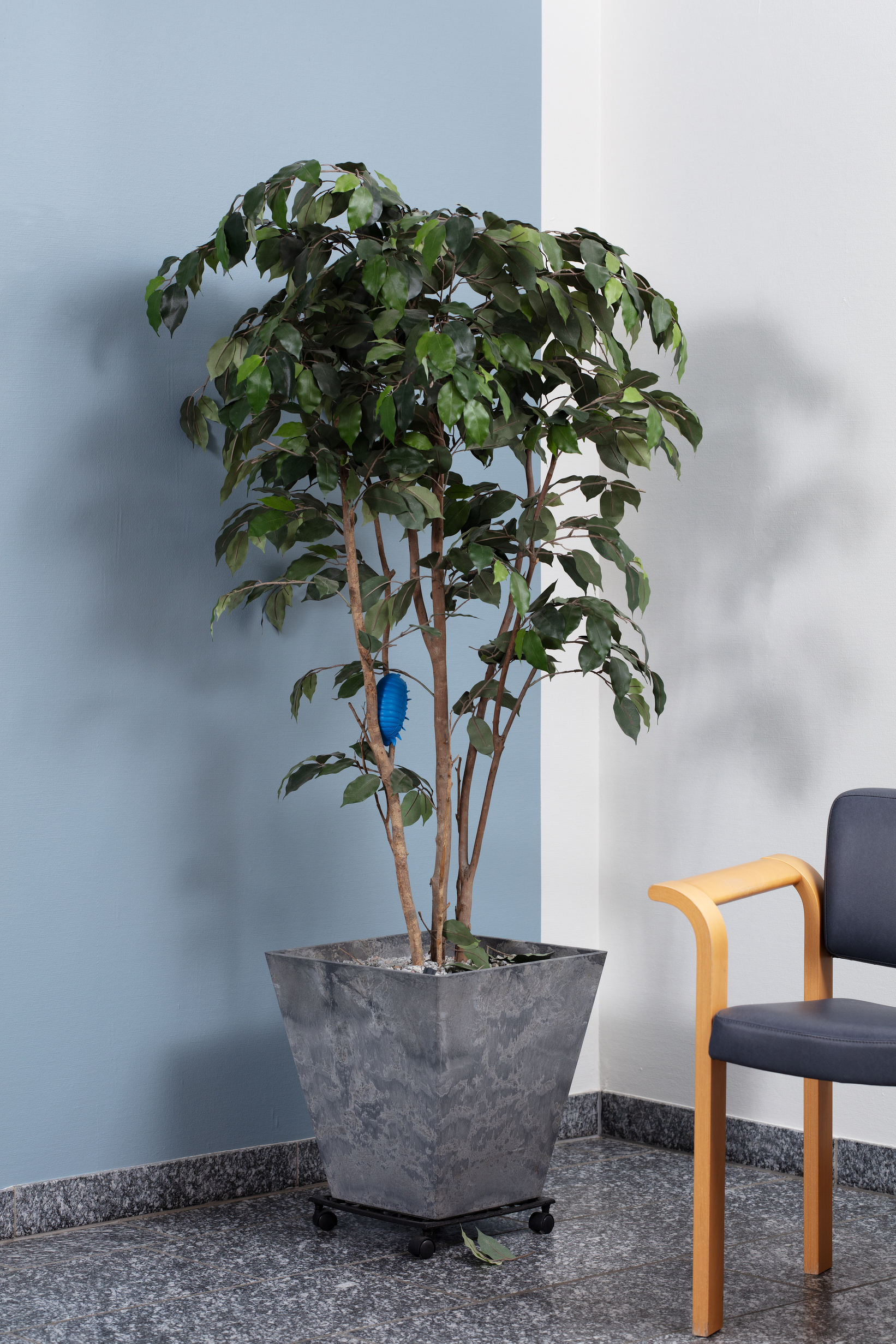
    → 9:20 AM, Feb 19
  • FORSTADIER / PRECURSORS

    FORSTADIER / PRECURSORS opens Saturday 28 February at Ringsted Galleriet and Midt- og Vestsjællands Hospital in Ringsted. The exhibition is a duo show with Aske Thiberg ( @askweee ), circling the iconography of the healthcare system — the clinical room, the language of care, the institutional forms — with detours into bias in language models, datasets, isolation and alienation. In the gallery, Thiberg has built a room within the room. Behind it, my video Arthropod Care / Leddyrsomsorg imagines a future healthcare system where enormous blue woodlice have taken over the roles otherwise assigned to automation and AI. They are strange enough to disturb, but present enough to raise the question of whether this could actually be an answer. At the hospital, they step out of the screen and into reality as scaled-up sculptures, signs and leaflets. Opening 28 February, 12:00–16:00. On view until 11 April 2026. Ringsted Galleriet, Bøllingsvej 15 / Midt- og Vestsjællands Hospital, Bøllingsvej 30, 4100 Ringsted. ringstedgalleriet.dk @ringstedgalleriet #FirhedLighedOgSymptom #WelfarestateMyths #WAN22 #SurealSocialRealism #ringstedsygehus #ringsted @statenskunstfond @augustinusfonden @nycarlsbergfondet #louishansensfond #detobelskefamiliefond #billedkunstrådetringsted #øerneskunstfond #kulturregionmidtogvestsjælland #grossererlffoghtsfond

    → 11:11 PM, Feb 15
  • Ordinsekter (Word Insects)

    My interactive text piece features words that crawl in from the edges of the screen to form sentences at its centre. Each letter has legs that animate as it moves. The words scatter when you touch them, fleeing from the cursor, then slowly return to their positions when left alone. Click, and they fade as they crawl back toward the edges, making way for the next sentence. The work is part of Leddyrsomsorg, a project imagining a future Danish healthcare system where giant blue woodlice replace AI and automation. The crawling text contrasts human separation from the world with the woodlouse’s integration into it. We build walls, wear shoes, make surfaces easy to clean. The woodlouse turns toward the world. We become ill from what we create. The woodlouse carries heavy metals in its body, bearing what we cannot tolerate. We drink through glass. The woodlouse draws moisture directly through tubular legs. Each sentence proposes that the boundaries we construct—between clean and dirty, inside and outside, self and environment—are boundaries the woodlouse does not recognise. The words arrive from beyond the visible frame, assemble themselves into readable lines, then disperse when disturbed. This is a small model of how meaning gathers and scatters, how language crawls toward coherence only to flee when examined too closely, how sentences are temporary congregations of smaller creatures. The final sentence in the rotation states: This text is about the woodlouse. But the woodlouse is not about this text. It crawls on under the stone, indifferent to my considerations. The interface uses vanilla JavaScript with no external libraries. Each letter is a separate DOM element with animated legs. Letter positions blend between spread formation for readability and trailing formation during movement. Individual letters scatter from touch independently of their word. Words meander as they approach their targets, never travelling in straight lines. All processing runs client-side. Available in both Danish and English. oerum.org

    → 4:34 PM, Feb 15
  • Om at have en situeret teknologisk kunstpraksis

    Hvis man ikke anerkender den klassiske heltefortælling om kunstverden som en fremadskridende bevægelse af geniale individer og læser traditioner anderledes end konsensus, er det klart, at man bliver nødt til at forklare sig. Ligeså hvis man reparativt søger at genvinde dele af kunsthistoriens ubrugte potentiale frem for at kassere hele traditioner. At genvinde surrealismen indebærer at anerkende dens blinde vinkler – bevægelsens systematiske reduktion af kvinder til muser og objekter, dens uadresserede klasse- og raceprivilegier – uden at blive blændet af dem. Det er den samme bevægelse, der kræves i arbejdet med AI-billedgenerering: datasættene bærer på bestemte bias, bestemte udeladelser og bestemte magtforhold, og det kunstneriske arbejde består ikke i at foregive, at de ikke er der, men i bevidst at omgås dem – synliggøre dem, forskyde dem, bruge dem produktivt. Bevidstheden om blinde vinkler er forudsætningen for at kunne arbejde med materialet, ikke en grund til at opgive det. Denne tekst beskriver en billedkunstnerisk praksis, der bruger AI-billedgenerering, lokal infrastruktur og spekulativ tænkning til at undersøge, hvordan teknologi og samfund former hinanden. Den trækker på traditioner fra surrealismens kollage over patafysik og spekulativ fiktion til networked art, og den bruger teori som værktøj snarere end autoritet.

    Selvom teknologisk kunst tit beskrives som ny, og kunstverden er fuld af discipliner defineret af deres materialebrug frem for strategier og indhold, er mit arbejde som billedkunstner forankret i en tradition, der løber fra surrealismen gennem patafysikken og den spekulative fiktion til networked art. Kategorien “teknologisk kunst” betyder i praksis, at jeg ofte optræder sammen med innovationsmiljøer og igangsættere – i et felt der går på tværs af ingeniør- og businesskultur på den ene side og kunst og kritisk teori på den anden. Det er et lille felt mellem disse verdener, og det betyder, at jeg ofte må finde mine alliancepartnere uden for teknologikunstens reservat: blandt forfattere, politiske tænkere, aktivister, forskere, der deler en interesse i, hvad teknologi gør ved samfund, uden nødvendigvis at dele et kunstnerisk sprog. Det er også en del af grunden til, at de traditioner, jeg trækker på, selv opererer mellem kunst, videnskab og samfundskritik snarere end inden for en enkelt disciplin.

    Surrealismen insisterede på, at det uventede er en produktiv kraft i billedskabelsen – at billedet kan vise noget, der endnu ikke har et sprog. Det gælder ikke mindst surrealismens mekaniske og materielle praksisser: kollagen, assemblagen og frottagen, hvor eksisterende billeder og materialer rives ud af deres oprindelige sammenhæng og sammensættes til nye konfigurationer. Max Ernst klippede i illustrationer fra naturvidenskabelige tidsskrifter og varekataloger; Hannah Höch monterede fotografier fra massemedierne. Teknikken var ikke tilfældig. Den forudsatte et forråd af allerede eksisterende materiale – et arkiv, et datasæt om man vil – og den kunstneriske handling bestod i at udvælge, beskære og rekombinere fragmenter, så der opstod betydninger, som ingen af de enkelte dele bar i sig selv. Patafysikken, som Alfred Jarry formulerede den, erklærede sig som “videnskaben om imaginære løsninger” – en systematisk undersøgelse af undtagelser snarere end regler. Spekulativ fiktion udvider dette til narrative verdener, hvor alternative samfund og teknologier udforskes som tankeeksperimenter med materielle konsekvenser. Og networked art – fra tidlige net.art-praksisser til nutidens infrastrukturelle kunstformer – placerer disse spekulationer inden for konkrete teknologiske systemer, hvor spørgsmål om ejerskab, adgang og kontrol er uadskillelige fra det æstetiske. Det, de deler, er en orientering: virkeligheden er ikke givet, men kan forestilles anderledes.

    Ingen af disse traditioner er opfundet fra ingenting. Surrealismens ordlege og betydningsforskydninger er del af en langt ældre tradition for sproglig og visuel eksperiment, der rækker ud over kunstverdens grænser – fra karnevallets inversioner og nonsens-litteraturen over folkelige gåder og ordspil til den retoriske traditions bevidste brug af tvetydighed. Spekulativ tænkning har rødder i filosofiske tankeeksperimenter, utopisk litteratur og religiøs forestillingsevne. Og netværksdannelse som kunstnerisk og social praksis går forud for internettet og rækker tilbage til brevvekslinger, saloner, undergrundsmagasiner og selvorganiserede fællesskaber. Disse er ikke traditioner, der opfindes én gang og overstås. De reaktualiseres og genopfindes løbende, og det er netop denne evne til at blive taget op igen under nye betingelser, der gør dem produktive som kunstneriske strategier.

    Teori læser jeg i forlængelse af denne spekulative tradition: som tolkningsforslag der åbner forskellige handlerum, ikke som autoritativ ramme. Forskellige optikker forskyder blikket og synliggør det, der før undslap mig. Valget mellem dem er et spørgsmål om, hvad der er produktivt i en given situation, ikke om hvad der er sandt i absolut forstand. Denne tilgang er i sig selv patafysisk: den foretrækker den produktive undtagelse frem for den forpligtende regel. Den deles af en bred gruppe billedkunstnere, der arbejder på tværs af teoretiske traditioner uden at tilhøre nogen enkelt retning – feministisk teknologikritik i ét projekt, posthumanistisk filosofi i et andet, systemteori i et tredje. Det er pseudo-akademikerens gave: ikke at behøve at investere sig hundrede procent i en enkelt position, men at kunne bevæge sig mellem positioner og bruge dem der, hvor de gør noget ved arbejdet.

    Konkret: teknologi optræder aldrig isoleret i mit arbejde. Det teknologiske er altid flettet ind i det økonomiske, det kulturelle og det personlige. Bruno Latours aktør-netværksteori kan give et sprog for denne sammenfletning, men rammen er for flad til at forstå, hvad der er på spil i arbejdet med AI-billedgenerering og lokal infrastruktur. Yuk Huis begreb om kosmoteknik tilbyder en anden optik. For Hui er teknologi aldrig universel; den er altid forankret i en bestemt kosmologisk og kulturel situation. Det resonerer med den patafysiske insisteren på det partikulære: ligesom patafysikken afviser generelle love til fordel for undtagelsens logik, afviser Hui en enhedslig teknologisk modernitet til fordel for en mangfoldighed af kosmotekniske traditioner. At køre AI-modeller lokalt på vedvarende energi er i denne optik en intervention i infrastrukturen selv – omend en begrænset og midlertidig, der ikke ophæver afhængigheden af de systemer, den forsøger at forskyde. Men jeg sigter heller ikke mod absolut renhed. Logikken er snarere skadesreduktion end forsagelse. Målet er at mindske afhængigheden af centraliserede, ekstraktive infrastrukturer skridt for skridt, uden illusionen om at nå et punkt, hvor praksis er fri for kompromis. Det er en bottom-up-bevægelse – små, lokale, iterative forskydninger af de betingelser, man arbejder under – som ikke er i modsætning til top-down-regulering og strukturel kritik, men supplerer den. De to bevægelser har brug for hinanden: Crawford og Pasquinellis analyser artikulerer, hvad der er på spil; den lokale praksis viser, at det er muligt at handle inden for de betingelser, analysen afdækker, uden at vente på, at betingelserne ændrer sig ovenfra. At kræve, at en lokal praksis først skal løse den globale udvindingskæde, før den kan legitimere sine egne forskydninger, er at kræve, at ingen handler, før alle betingelser er perfekte. Det er afmagt forklædt som etik. Insisteringen på det lokale er ikke en undvigelse af det globale, men en anerkendelse af, at det lokale er den eneste skala, hvor handling faktisk finder sted.

    At vælge et andet teoretisk værktøj forrykker fokus og giver nye muligheder. Kate Crawford skriver, at AI-systemer er produkter af massive udvindingsprocesser – af data, arbejdskraft og naturressourcer. Matteo Pasquinelli forbinder maskinlæring til en lang tradition for industriel automatisering og argumenterer for, at abstraktion – den proces, hvorved en algoritme “lærer” at genkende mønstre – indebærer en politisk handling, hvor bestemte former for arbejde og viden gøres usynlige. Slægtskabet med den surrealistiske kollage er ikke blot på analoginiveau: ligesom Ernst og Höch arbejdede med et forråd af allerede cirkulerende billeder, arbejder en diffusionsmodel med milliarder af billeder indsamlet fra internettet. I begge tilfælde er det eksisterende materiale aldrig neutralt – det bærer de sammenhænge, det stammer fra, med ind i det nye billede. Forskellen er skala og usynlighed: den der skaber en kollage i hånden kan se, hvor billederne stammer fra, mens AI-modellens datasæt er så massivt, at ophav forsvinder i den statistiske proces. Tre forskellige blik – Hui, Crawford, Pasquinelli – der vægter forskellige og overlappende aspekter og åbner for forskellige handlinger. Surrealisternes automatisme-teknikker forsøgte at omgå bevidsthedens censur og lade materialet selv producere uventede forbindelser; udfordringen i mit billedkunstneriske arbejde er at forstå, hvad AI-systemernes datasæt muliggør og fortrænger – så jeg på lignende vis kan forme billeder, der ikke ligger under for min bevidsthed, men alligevel producerer produktive forbindelser.

    Eksperimenterne følger en spekulativ snarere end deduktiv logik: “hvis jeg nu gør det her, hvad sker der så?” Den patafysiske metode bruger eksperimentet til at producere uforudsete situationer – hvad Jarry kaldte clinamen, den uventede afvigelse. Spekulativ fiktion opererer tilsvarende. Ursula K. Le Guin beskrev science fiction som et tankeeksperiment – ikke en forudsigelse, men en undersøgelse af, hvad der sker, når bestemte parametre i den kendte verden ændres. I mit arbejde fungerer AI-billedgenerering på en lignende måde. “Frihed, lighed og Hip-hop” tager udgangspunkt i specifikke steder og er realiseret som en serie af stedsspecifikke udstillinger i Hvidovre, Aalborg, Aarhus, Riga, Malmø, Krakow, Vancouver, Boston, Lexington og flere steder i København. Her kombineres de konkrete lokaliteter med historier og rygter, der er genkendelige for lokale: fragmenter fra arbejderbevægelsens historie, lokale konflikter, forsømte offentlige rum. Ind i dette flettes hip-hoppens protopolitiske potentiale som en bevægelse, der historisk har overtaget og omformet forsømte byrum – en praksis, der i sig selv er en form for bottom-up-intervention. AI-genererede billeder producerer spekulative kontrafaktiske scenarier, hvor disse historier krydser hinanden, og værkerne tager form af alt fra store printede tableauer i byrummet til immersive videoinstallationer. Statsministeren eller lokale kendisser optræder i halvgenkendelige billeder, mens skilte og baggrunde forskyder sig i videoen.

    Køn skifter, rum transformeres, og identiteter forskydes. Ustabiliteten er strukturel: diffusionsmodellen opererer i et probabilistisk rum, hvor to billeder genereret ud fra den samme prompt aldrig er identiske. Der findes ikke én latent “korrekt” version af billedet – kun variationer med forskellig sandsynlighed. I videoform bliver dette synligt som fraværet af vedvarende identitet over tid. Modellen har ingen hukommelse om det, der tidligere har været i billedet; når en figur bevæger sig ud af rammen og vender tilbage, rekonstrueres den på ny ud fra generelle statistiske mønstre. Det er ikke glemsel, men fraværet af objektpermanens – hver frame er en lokal løsning på et visuelt problem, ikke et led i en kontinuerlig ontologi. Kunstnerisk er det netop dette fravær, der muliggør det taksonomiske sammenbrud: de kategorier, vi normalt bruger til at organisere verden – køn, alder, etnicitet, sted, tid – kollapser og genopstår i nye konfigurationer. Køn er én af de identitetsmarkører, der forskydes, men ikke den eneste; hele det system af genkendelse, vi navigerer efter, destabiliseres. Det er også en synliggørelse af, at AI’en “vælger” identitetsmarkører ud fra statistiske fordelinger, der afspejler bestemte magtforhold. Judy Wajcman skriver, at køn er indskrevet i teknologiens design, og her bliver det synligt som et konkret æstetisk fænomen: systemets normalfordelinger tager krop i billedet. I en tidligere version af algoritmen Stable Diffusion dukkede der en ranglet mand i træningstøj med en flaske vodka op, når man skrev “polsk mand” – en slags illustreret fordom, hvor datasættets statistiske mønstre kondenserede en hel befolkningsgruppe til et enkelt visuelt stereotyp. Men det taksonomiske sammenbrud muliggør også nye taksonomier – forbindelser og kategorier, der ikke eksisterede i det udgangsmateriale, systemet er trænet på, og som kan åbne for andre måder at forestille sig kroppe, rum og sociale relationer på.

    Denne produktive ustabilitet opererer på flere niveauer: den iboende strukturelle variabilitet mellem genereringer, den temporale inkonsistens i video, den fremprovokerede ustabilitet, hvor prompt-design bevidst øger systemets tendens til afvigelse, og den kuratoriske udvælgelse, hvor bestemte output vælges netop fordi de fejler produktivt. Arbejdet finder sted i spændingen mellem alle fire.

    I disse processer producerer det generative system jævnligt noget, der overskrider mine forudantagelser – Luciana Parisi har kaldt det algoritmers evne til at producere nye former for tænkning snarere end blot repræsentere en given verden. Som med den surrealistiske kollage er resultatet uforudsigeligt men ikke tilfældigt: det er altid betinget af det materiale, systemet har til rådighed. De “uventede” resultater er aldrig rene – de er altid medieret af datasættets sammensætning, og dermed af de magt- og repræsentationsforhold, der har bestemt, hvilke billeder der er indsamlet, og hvilke der er udeladt. En nøgtern teknisk analyse ville beskrive det samme som stokastisk variation inden for et statistisk rum, og den beskrivelse er ikke forkert. Men den lukker ned for bestemte spørgsmål – om hvad det forråd af billeder, modellen trækker på, egentlig indeholder og udelukker, og om hvad det betyder, at resultater, der opleves som overraskende, i virkeligheden er formet af datasættets blinde punkter. Den spekulative tolkning åbner for disse spørgsmål, og det er dens produktivitet. Ikke at den er mere sand end den tekniske, men at den gør det muligt at handle anderledes.

    Konkret begynder min kunstneriske proces med research – antropologisk feltarbejde på de steder, hvor udstillingerne finder sted, og arkivarbejde i de historier, der knytter sig til dem. Ud af dette materiale formuleres en spekulativ tese: noget, der kunne være sket inden for projektets overordnede ramme. På baggrund af den tese skrives en prompt. Billedet bliver aldrig som idéen var. Idéen omskrives og tilpasses i nye prompts, frem og tilbage, indtil der opstår et billede, der fungerer – og som siger noget, der også overrasker mig selv. Det er i denne iterative bevægelse, at de fire niveauer af ustabilitet møder hinanden: det iboende i teknologien, det fremprovokerede i prompten, og det kuratoriske i den selektion, der afgør, hvornår et billede er færdigt. I videoformatet tilføjes det fjerde niveau, når enkeltbillederne sammensættes i tid og den temporale inkonsistens bliver synlig. “Færdigt” er aldrig et spørgsmål om overensstemmelse med den oprindelige idé, men om billedet har fundet noget, idéen ikke kunne forudse.

    Projektet “Frihed, lighed & sundhed” bliver præsenteret på udstillingen “Forstadier” i Ringsted Galleriet og på Ringsted Hospital, hvor værkerne går i direkte dialog med hospitalets virkelighed. Udgangspunktet er hverdagslige billeder – medicinsk udstyr, hospitalsgange, uniformer – der bruges til at forestille sig, at velfærdsstaten kunne se anderledes ud. Projektet består af kropsstore, sammenrullede og sårbart sovende 3D-printede skulpturer samt håndskårne relieffer, der tager form efter AI-genererede skitser. I installationen indgår videoen “Leddyrsomsorg”, der forestiller et fremtidigt sundhedsvæsen, hvor kæmpemæssige blå bænkebidere – blå som medicinsk udstyr, blå som Ringsted Hospitals logo – har overtaget de roller, automatisering og AI ellers tildeles i sundhedspolitiske fremtidsvisioner. Kameraet bevæger sig i en lang, flydende bevægelse hen over dem, og der opstår en bevidst tvetydighed: de er fremmede nok til at forstyrre, men tilstrækkeligt materielt tilstedeværende til at stille den ubehagelige tanke, at dette kunne være et svar.

    Men spekulationen har en pris. Patafysikken har en tendens til at blive hermetisk og selvreferentiel, og den tendens truer enhver praksis, der arbejder spekulativt. Det er en faldgrube, der er desto sværere at undgå, fordi den kan føles meningsfuld for den der spekulerer. Det spekulative kan blive et mål i sig selv, afkoblet fra den materielle og politiske virkelighed vi befinder os i. På samme måde har pseudo-akademikerens gave – friheden til at bevæge sig mellem positioner – en skyggeside: den kan blive alibi for aldrig at forpligte sig dybt nok til, at noget for alvor kan slå fejl eller blive falsificeret. Når alt er spekulativt, er intet rigtigt på spil. Det er ikke en advarsel jeg giver mig selv; det er en beskrivelse af noget, der faktisk hele tiden truer med at ske i mit eget arbejde. Projekter kollapser under deres egne ambitioner. Den teknologiske proces producerer resultater, der er æstetisk interessante men konceptuelt tomme. Den teoretiske eklekticisme glider uforvarende ind i en position, hvor enhver reference bekræfter det jeg allerede mener snarere end åbner nye rum for mig. Modtrækket er at insistere på, at spekulationerne forankres i konkret materiale – faktiske historiske situationer, specifikke teknologiske systemer, navngivne steder og institutioner – men det er et modtræk, der selv kræver løbende kritisk opmærksomhed og vedligeholdelse.

    Udgangspunktet i min egen subjektivitet er et bevidst valg. Den subjektive tilgang handler om at tage ansvar for, hvordan min position former, hvad jeg ser og ikke ser i de systemer, jeg arbejder med – hvilke kropsidealer, hudfarver og kønsrepræsentationer modellerne reproducerer, og hvilke de udelukker. Udfordringen i at bevæge sig fra det subjektive til det fælles er reel og kan ikke løses programmatisk. Henk Borgdorff har formuleret problemet i akademiske termer – kunstnerisk forskning producerer viden, der er situeret og kontekstafhængig, og må gøre rede for sine egne grænser – og selv om hans formulering kan virke ret indlysende, er den grundlæggende pointe svær at komme uden om. Det fælles er ikke noget, der garanteres af intentionen om at skabe det. Det opstår – hvis det overhovedet opstår – i mødet mellem et specifikt værk og en specifik beskuer under specifikke betingelser, og det kan slå fejl. I networked art er dette særligt tydeligt, fordi værkerne eksisterer i distribuerede systemer, hvor “publikum” konstitueres gennem deltagelse, adgang og teknologisk infrastruktur. Men det gælder også for den udstillede installation og den trykte publikation: genkendelsen og fortolkningen er noget, der skal arbejdes frem, og den kræver, at værket er tilstrækkeligt præcist i sin form til at overleve mødet med en beskuer, der ikke kender kunstnerens intentioner, og åbne et rum for forpligtet reflektion.

    I min praksis skal billederne gøre flere ting samtidig. De skal fungere formelt – kompositorisk, koloristisk, i deres interne logik. De skal danne et genkendeligt rum, hvor noget uplacerbart alligevel bliver acceptabelt: en situation, der ligner den kendte verden tilstrækkeligt til, at beskueren kan træde ind i den, men som forskyder den nok til at etablere et alternativ til den eksisterende samfundsorden. De skal være tilstrækkeligt uplacerbare og indeholde nok generative fejl – forvrængede hænder, ustabile perspektiver, ansigter der skifter karakter – til ikke at være fuldstændigt troværdige, uden at blive så abstrakte eller kaotiske, at de mister deres greb i beskueren. Det er en suspension of disbelief, der er designet til at kollapse under sig selv. Billedet inviterer beskueren ind i en verden, der kunne være virkelig, og afslører i samme bevægelse sin egen konstruerethed. Forhåbningen er, at dette kollaps giver plads til, at beskueren begynder at tænke selv – ikke blot om billedets indhold, men om de betingelser, der gør, at den eksisterende virkelighed fremstår som den eneste mulige.

    Det er billedpolitisk metapolitik – en praksis, der forsøger at intervenere i de betingelser, billeder tænkes og cirkulerer under. Det er billeder, der argumenterer for en bestemt position: at lokal selvorganisering og selvbestemmelse er mulig. Den position trækker på David Graeber og den anarkistiske tradition, hvor politik ikke primært handler om at overtage statslige institutioner, men om at opbygge alternative strukturer nedefra. Billederne forsøger at gøre det muligt at tænke alternativer til det bestående ved at lave brud i den glatte billedverden – den strøm af polerede, friktionsløse billeder, der bekræfter tingenes tilstand. Funktionen er beslægtet med det samfundskritiske meme: en komprimeret, cirkulerbar intervention, der bruger genkendelige visuelle koder til at forskyde deres betydning. Men memet opererer i genkendelsens hastighed – det virker fordi det aflæses med det samme, og det forsvinder med det samme. Værket i et udstillingsrum kræver tid, og den tid gør det muligt for kollapset i suspension of disbelief at ske gradvist snarere end momentant. Beskueren kan opholde sig i tvetydigheden – i det rum, hvor billedet hverken er troværdigt eller utroværdigt – og det ophold er det sted, hvor alternativ tænkning kan begynde. Memet siger “se, det er absurd.” Værket siger “bliv her, og mærk at du ikke ved, om det er absurd.”

    Jeg forsøger at behandle billede, tekst, lyd, tale og andre udtryksformer som komplementære snarere end rangordnede. W.J.T. Mitchell har argumenteret for, at alle medier er blandede medier, og at den rene adskillelse mellem tekst og billede er en ideologisk konstruktion. I praksis handler det om at skabe værker, hvor de forskellige modaliteter gensidigt destabiliserer hinanden – hvor billedet ikke illustrerer teksten, og teksten ikke forklarer billedet, men hvor begge åbner for noget, der ikke kunne formuleres i nogen af dem alene. Når modaliteterne hierarkiseres, reduceres værket til kommunikation af en allerede fastlagt betydning. Teksten bliver forklaringen, billedet bliver illustrationen, og den spekulative dimension, der er kernen i arbejdet, lukkes ned. Det er ikke en universel fordring – der findes en mangfoldighed af tekster med forskellige funktioner og modus, og denne tekst er selv en tekst, der nødvendigvis forklarer billeder, som læseren ikke kan se. Kravet gælder de tekster, der indgår i kunstproduktionen: udstillingsteksten, videoteksten, den tekst der ledsager billedet i rummet. I en given arbejdssituation kan det betyde, at et AI-genereret billede, der rummer en produktiv tvetydighed, flades ud i det øjeblik det ledsages af en tekst, der fortæller beskueren, hvad billedet “handler om”. Ernsts collageromaner – hvor billede og tekst aldrig forklarer hinanden men skaber en tredje, ustabil betydning i deres sammenstilling – og René Magrittes “Ceci n’est pas une pipe” etablerede denne destabilisering som strategi. I networked art udvides den til at omfatte kode, interface, infrastruktur og social interaktion som bærende elementer. Arbejdet strider dermed ofte mod normative formater for præsentation af forskning og kunst.

    Lyden og talen hører til i dette felt som to forskellige kategorier, der kræver hver sin opmærksomhed. Lyden opererer som akustisk materiale og tekstur, der trænger ind i os uanset om vi vil det eller ej, mens talen – den syntetiske stemme, sangen, det talte ord – bærer på en specifik semantisk og autoritativ vægt, vi ofte har sværere ved at dekonstruere. Alligevel lever vi i en kultur, der primært forstår tekst som betydningsbærende, i mindre grad billeder og i endnu mindre grad lyd og tale. Lydlige udtryk bliver i stigende grad affektgjort – henvist til det følelsesmæssige, det stemningsskabende – og deres kritiske og konceptuelle muligheder overses. AI-genereret lyd og tale befinder sig i dette næsten usynlige repertoire. De bedømmes primært på, hvor tæt de ligner menneskelige kilder – hvor overbevisende imitationen er – frem for på, hvor meget de afviger og tilføjer til lydens syntaks og semantik. At insistere på lydens og talens konceptuelle og kritiske dimension – på, at AI-genererede auditive rum kan åbne nye erkendelser i stedet for at efterligne kendte – er en del af den samme billedpolitiske forpligtelse, der gælder for de visuelle og tekstlige modaliteter.

    I praksis viser afvigelserne sig konkret. AI-genereret tale er dårlig til dansk: når teksterne bliver for lange, degenererer den til lyde, der på overfladen lyder lidt dansk eller måske bare skandinavisk, men ingen semantisk betydning har. Det er en sproglig uncanny valley, hvor genkendelsen af et sprog træder ind uden at betydningen følger med. Beskrivelser af lyde – et skridt, en dør der lukker – bliver til støj og glitch, der placeres der, hvor den realistiske lyd burde være: nogle gange umærkeligt overbevisende i videoens tempo, andre gange decideret underlige, så de gør opmærksom på lydens samplede, konstruerede natur. Det er den samme fejl, der begås, når AI-genererede billeder kun vurderes på fotorealisme: en kvalitetsskala, der tager det eksisterende som mål og dermed lukker ned for det generative systems potentiale for at producere erkendelse snarere end genkendelse.

    Min forpligtelse er billedpolitisk og kunstnerisk skarphed: at hvert billede, hver tekst, hver lyd, hver tale og hver sammenstilling er så præcis som muligt i det, den gør. Det betyder, at billedet skal kunne bære sin egen vægt. At teksten skal supplere frem for overskrive billedets betydning og samtidig kunne stå som selvstændigt kunstnerisk materiale, ikke blot som kontekstualisering. At lyd og tale skal skabe friktion og ikke blot undermalning eller forklaring. At sammenstillingen af forskellige elementer og modaliteter skal producere en produktiv friktion – en modstand mellem delene, der inviterer beskueren til at skabe sin egen forbindelse frem for at modtage en færdig betydning – og ikke blot være additiv. Uden formel præcision bliver spekulationen uforpligtende; uden spekulation bliver præcisionen steril og projektet didaktisk. At udholde begge dele samtidig – uklarheden i det, der endnu ikke er forstået, og den formelle disciplin i det, der allerede er skabt – er det, praksis forsøger. De teoretiske referencer i denne tekst er selv en del af den bevægelse og vil blive erstattet af andre, når arbejdet kræver det.

    → 10:05 AM, Feb 12
  • Precursors opens feb. 28 at Ringsted Galleriet & Ringsted Sygehus

    → 6:10 PM, Feb 4
  • Leddyrsomsorg (Arthropod Care) landing page

    My new landing page at oerum.org is an interactive text creature that crawls across the screen, comparing institutional objects to woodlouse anatomy while you place bureaucratic obstacles in its path. The work is part of Leddyrsomsorg, a project imagining a future Danish healthcare system where giant blue woodlice replace AI and automation. The crawling text draws parallels between the segmented bodies of isopods and the segmented experiences of navigating institutions: the venetian blinds in the waiting room, the server racks in the basement, the flex cord by the hospital bed. Each sentence proposes that the technologies surrounding care are already crustacean—jointed, plated, articulated. You can place stones in its path: such as JOURNAL, DIAGNOSE, HENVISNING, SAGSBEHANDLER. The creature avoids them. The stones fade. The text changes. This is not a game with a goal. It is a small model of how bodies move through systems that were not designed for them, adjusting course around obstacles that appear and dissolve according to logics beyond their control. The final sentence in the rotation states: In time all species will evolve into crustaceans. This references carcinisation, the tendency in evolution for non-crab crustaceans to independently develop crab-like forms. Perhaps institutions do the same. The interface uses vanilla JavaScript with no external libraries. Each letter is a separate DOM element positioned along a recorded path history, creating the trailing body effect. Legs animate using sine waves offset per segment. Obstacle avoidance uses simple vector-based steering. The cursor displays the next stone you will place. Click to drop it. Click a stone to remove it. The creature never leaves the screen. All processing runs client-side. Available in both Danish and English. oerum.org

    → 9:33 PM, Jan 28
  • Can you write with your hands?

    My new landing page at www.oerum.org is an interactive Hand Letters interface that tracks your hand in real time to translate geometric gestures into a 29 character alphabet.

    Intention

    This is an experiment in constructing new relationships between bodies and machines. Rather than borrowing from existing sign languages, the project invents a gestural alphabet from scratch, mapping letters to spatial properties like finger count, spread angle, palm orientation, and position in frame.

    The interface is deliberately clunky. Gestures fail to register, the camera misreads your hand, letters appear when you did not mean them. Imagine if this were your primary way of interfacing with digital technology. The friction is the point: it makes visible the labour and awkwardness we have learned to ignore in keyboards, touchscreens, and mice. Every interface is a strange negotiation between what bodies can do and what machines can perceive. This one just refuses to hide it.

    The Technology

    The interface is built on MediaPipe Hands, a machine learning pipeline developed by Google Research in 2020 for real time hand tracking. It runs directly in the browser using WebGL for GPU acceleration.

    The system extracts 21 landmark coordinates per hand at approximately 30 frames per second.

    Palm Detection Model: A BlazePalm detector locates the hand using a single shot anchor based architecture optimised for mobile inference.

    Hand Landmark Model: A regression network predicts 21 3D keypoints (wrist, thumb, and four fingers with four joints each) from the cropped hand region.

    Gesture Classification: Custom logic analyses derived features including finger extension states via y coordinate comparison, inter finger Euclidean distances, z depth differentials for palm orientation, and normalised frame position to match configurations against the invented alphabet.

    The Danish letters Æ, Ø, and Å are included: two hands visible, circle with thumb raised, and fist held high.

    Privacy

    All processing runs client side. No images or landmark data leave your device.

    Write with your hands: www.oerum.org

    → 7:08 PM, Jan 22
  • NOTES ON CONTINUING

    1. Why do citizens not rise up? Why do the stateless not rise up? Why is there no mass refusal of surveillance and nationalism?

    The silence is not accidental. Fear, division, and broken promises form the baseline condition. Solidarity does not spontaneously emerge from this; it cannot be demanded of those already exhausted by survival. If it is to exist, it must be constructed.

    1. Why is critique so often directed toward those closest to us, who are equally constrained, rather than toward the structures that shape those constraints?

    I observe this tendency and feel its pull. I try to resist it.

    At the same time, I refuse the logic of total guilt-the idea that because I am enmeshed in these systems, I am disqualified from opposing them. This logic functions as paralysis disguised as accountability. I acknowledge my position without accepting that it renders me futile.

    1. Conflict is displaced sideways. When power feels too abstract to confront, it becomes easier to police the behaviour of peers. This is reinforced by a political language that speaks endlessly of belonging while avoiding questions of ownership.

    Disputes over who belongs are easier to sustain than disputes over who holds power.

    This keeps the gaze horizontal.

    1. Power has changed its form. Resources concentrate, while the mechanisms of that concentration remain distributed-networked, opaque, everywhere and nowhere.

    We are left arguing over entitlement and recognition while extraction continues through interfaces designed to be frictionless.

    1. This logic extends into culture.

    A separation between aesthetics and politics has narrowed what is recognised as political action. The vote and the law are treated as the primary sites of agency. Other forms of world-making are dismissed as symbolic.

    But reality is also shaped in the domain of perception-through the organisation of what is visible and what remains unseen.

    1. To make images or sculptures is an action. Like any action, it has consequences. Overtly political art is no more or less political than art that claims neutrality.

    Reactionary movements understand this. They do not need their images to be true; they need them to be adhesive. Memes and symbols are used to weaponise the desire for belonging, bypassing argument in favour of visceral response.

    While others critique the concentration of wealth and power, these movements work to colonise the imagination.

    The task requires both. It requires the solidity of the fact and the resonance of the myth. One without the other is either a lecture no one hears, or a story that demands belief.

    To claim neutrality in this context is not to step outside the game. It is to leave the field uncontested.

    1. This raises a tension I cannot resolve alone.

    How does one speak of plurality without demanding uniformity? A multitude cannot exist if everyone is required to dream of the same life.

    But plurality does not mean the absence of boundaries. The task is to distinguish between the limits I choose to defend and those I have inherited without reflection.

    1. It is easy to associate power only with domination. This has become the dominant discourse. As a result, I have often mistaken powerlessness for moral safety. In trying to avoid becoming oppressive, I have avoided becoming capable.

    Yet there is power in refusal. Power in creation. Power in care.

    None of these are pure. To act is to close off other possibilities.

    What must be refused is the belief that weakness is a virtue-or a strength.

    1. To imagine other worlds requires openness to theory alongside ethical commitment. It requires holding uncertainty without succumbing to two familiar forms of paralysis:

    The grief that immobilises. And the detachment that masquerades as realism.

    Acknowledging the severity of the situation is not a reason to withdraw. It is a reason to continue.

    1. I make attempts where I can. To maintain attention. To refuse the immediate reaction. To make things that hold space for complexity.

    I try not to wait for permission, or for the promise that these efforts will be enough.

    1. I live with a contradiction I cannot solve: the desire to dismantle what harms us, and the suspicion that I might not live to see it dismantled.

    2. I act without imagining I am saving anything. I continue without expecting a breakthrough.

    I do not know if there is a we. I write these notes to see if one might appear.

    1. There is no finale. Just the daily attempt not to go numb. A provisional sanity. And the tentative effort to simply keep going.

    #stuffiwonderabout #tingjegspørgermigselvom
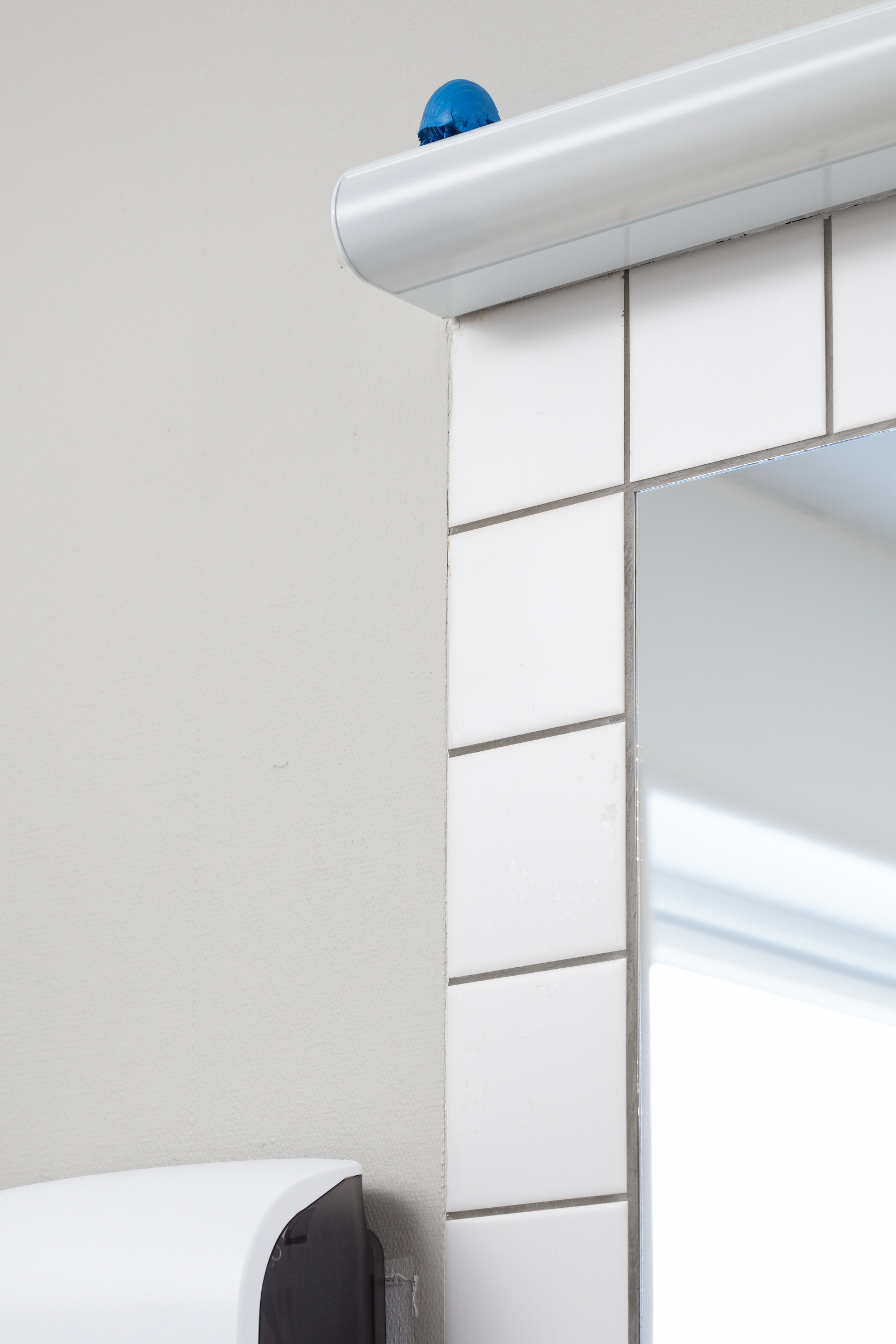
    → 9:40 PM, Jan 11
  • On pessimism

    Believing in the liberal utopia promised by post-war politicians is a form of cruel optimism; treating it as a guaranteed destination brings only disappointment and despair.

    However, that the situation appears hopeless should not prevent us from doing our best. Pessimism is not the opposite of action or solidarity.

    Instead, the pessimist wields utopia as a strategy for change and imagination, not as an end in itself. We use the image of a better world not because we expect to arrive there, but as a tool to expose the inadequacy of the present and to keep our capacity for difference alive.

    In this pursuit, we find a hope without hope. We require no paragons of virtue, no heroes of the revolution, and no demonstration of utility or worthiness. And even if there is no “we” that might act in solidarity with, we can still act—contingently, tenderly, locally, and temporarily—without needing to become legible or useful. Even the most isolated and lonely dreamer still dreams.

    We act simply because the imagination of a different world compels us to care for this one.t

    #stuffiwonderabout #tingjegspørgermigselvom
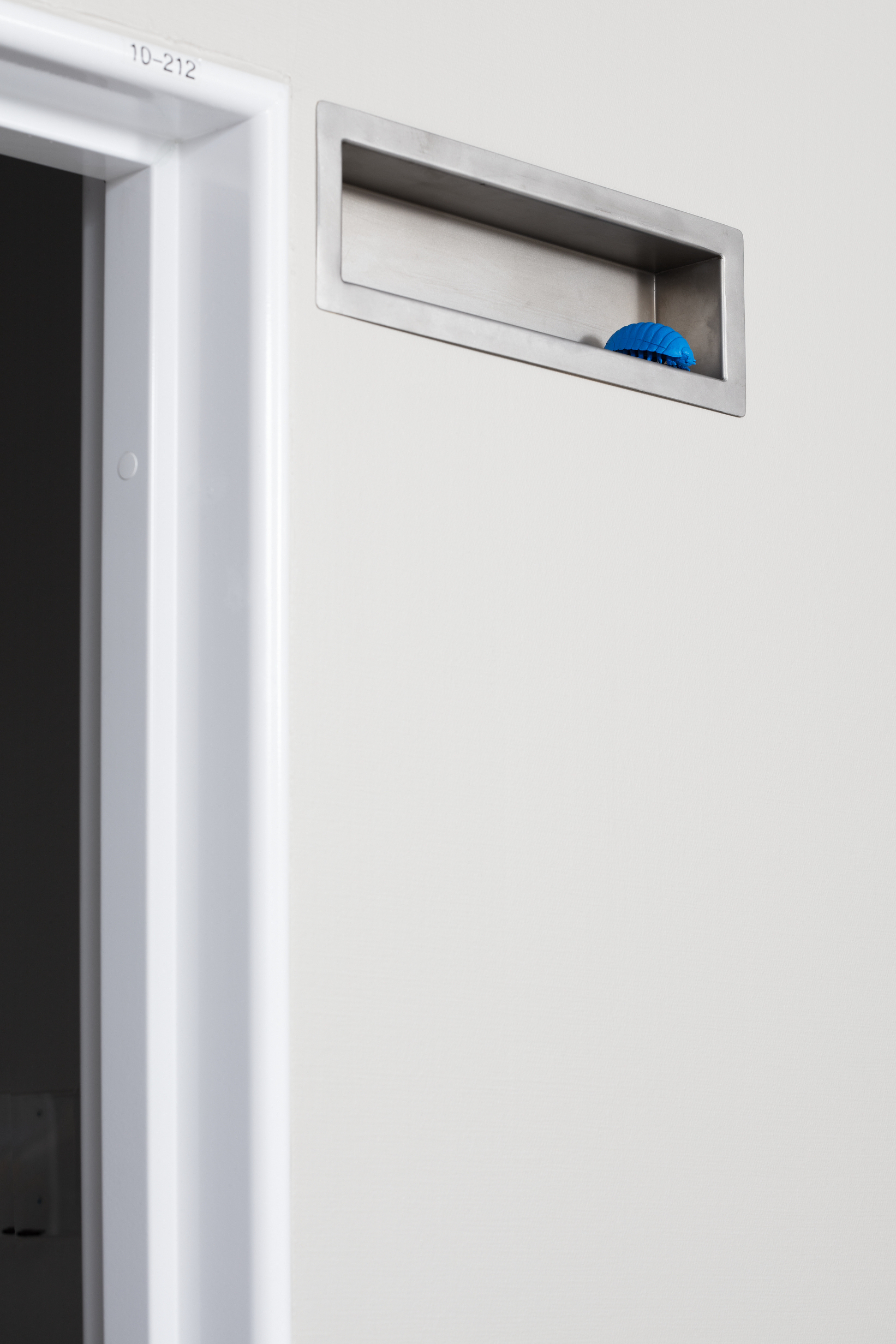
    → 5:22 PM, Jan 8
  • Leddyrsomsorg (Arthropod Care)

    Leddyrsomsorg is a video piece using WAN 2.2 that imagines a future Danish healthcare system where giant blue woodlice and other arthropods have replaced AI and automation. The work will be shown at Ringsted Galleri in February 2026, with elements installed at Ringsted Sygehus. This split location is deliberate: the hospital setting places speculative images of care within the institutional architecture where care is actually administered, while the gallery provides a context for the work’s more discursive claims. The work presents a welfare state utopia, a deliberately implausible scenario that sidesteps familiar debates about technology and care. It repurposes elements of “biophilic design,” where nature is organised to support recovery. But here, the organisms we rarely extend sympathy to have taken the place of therapy dogs or verdant parks. The woodlouse (Oniscus asellus) is taxonomically distinct from the insects usually associated with infestation. Belonging to the order Isopoda within the class Malacostraca, they are terrestrial crustaceans–closer kin to lobsters than to the houseflies or wasps that typically trigger revulsion in local domestic contexts. This biological nuance matters: we tend to normalise AI while immediately reading these crustaceans as alien. The work juxtaposes the high-trust, sterile aesthetic of Danish design–typically characterised by light woods and functional minimalism–with the chitinous, prehistoric movements of Isopoda. Both AI systems and these ancient crustaceans operate on logics that remain inhuman despite our attempts to domesticate them. WAN 2.2 is a video generation model developed by Wand AI, a Chinese startup founded in 2024 by former ByteDance researchers. The model utilises a Diffusion Transformer (DiT) architecture, an approach that combines diffusion processes with transformer networks designed for temporal coherence. The physical infrastructure underpinning this model is as significant as its software. Wand AI reportedly trained the model using thousands of NVIDIA H100 GPUs. Given strict US export bans on these chips, this represents a logistical feat involving the “grey market.” While the list price of an H100 is roughly $25,000 USD, reports from early 2025 indicate that prices within China fluctuate between $40,000 and $90,000 USD per unit. The volatility tracks sanction enforcement and supply-chain precarity. In that sense, every frame hints at infrastructure under pressure. China’s AI development occurs within a distinct strategic framework, aiming for global leadership by 2030. However, for artists outside China, using a Chinese model involves navigating a specific hegemony defined by ideological boundaries. These models are subject to strict regulatory oversight, specifically the “Provisions on the Management of Algorithmic Recommendations” (2022) and the “Measures for the Management of Generative AI Services” (2023). These regulations mandate that generative AI must not subvert state power, advocate the overthrow of the socialist system, or incite ethnic hatred. This creates censorship patterns distinct from Western commercial platforms. While US models filter content based on “brand safety” and legal liability, Chinese models filter for state-approved narratives. When prompting for complex social scenarios, one may find the model refuses to generate imagery suggesting civil unrest or specific political symbolism, not because of safety alignment, but due to Beijing’s stability mandates. The concentration of AI development in the hands of a few giants creates an “AI Desert,” where universal models perform poorly on anything outside the dominant cultural hegemony. In some analyses, images from the US and Western Europe appear overrepresented in major training datasets like LAION-5B by up to a factor of 10 relative to their population. In several widely used facial datasets, white subjects comprise around 60–70%, while Black and Hispanic subjects often fall into the single digits. The woodlouse, with its segmented body and multiple legs, is not well represented in these datasets either. It does not fit the templates. Linguistic bias is even more pronounced. The Common Crawl corpus, which underpins many foundation models, is approximately 45% English. Danish constitutes less than 0.1% of the total web corpus, and for smaller minority languages, representation drops below 0.01%, leaving them statistically marginal. A model trained on this data will struggle to render the specific spectral quality of the “blue hour” associated with the Skagen painters, or the precise cultural context of a local welfare centre, substituting them with generic, statistical averages derived from American or Chinese data. Most local artists will never consciously work with AI models. But their work will almost certainly pass through them: compressed, sorted, and subtly altered by systems baked into smartphone cameras, photo-editing software, and the content delivery networks through which nearly all images now travel. The question is not whether to engage with these systems but whether to do so knowingly. For those who choose to work with AI deliberately, the current situation demands a tactical manoeuvre: playing one hegemon against the other. Using a Chinese model like WAN 2.2 becomes a way of jamming the signal of American cultural dominance. If US models like Sora function as the default standard–seamless, brand-safe, and template-like–then the Chinese model, with its distinct artifacts and ideological blind spots, offers a productive displacement. Paradoxically, Chinese models often seem to render Danish landscapes more convincingly than their American counterparts. This is not because Wand AI trained on Vilhelm Hammershøi or the Skagen painters. The reason may be structural: northern China perhaps shares with Denmark a quality of flat, diffuse light, muted seasonal colour, and architectural scale that California simply does not possess. The brick and render of local residential buildings, the particular density of deciduous vegetation, the low horizons–these might find closer analogues in Heilongjiang or Shandong than in Los Angeles or Arizona. The American models, trained predominantly on data from a country where “good weather” means sunshine, tend to oversaturate and clarify excessively. They impose a Californian luminosity and default to timber-frame construction foreign to the local context. The Chinese models, perhaps inadvertently, may have absorbed a tonal range and built environment closer to the Baltic. The grey-green of a Danish beech forest in April, the particular flattening of depth on an overcast afternoon, the modest scale of welfare-state housing–these seem to emerge more readily from a model trained partly on images from northern China than from one trained on the American sunbelt. Both systems aspire to universalism. The difference is one of familiarity. For someone raised within the American cultural sphere–and this includes most Danes under sixty–Hollywood’s visual grammar now feels natural because it is everywhere. We do not notice when a model defaults to three-point lighting or golden-hour warmth because these conventions have structured our expectations of what images should look like. Chinese visual defaults, by contrast, remain legible as defaults: the China Central Television aesthetic, the particular palette of state-produced historical dramas, the compositional habits of Weibo image culture. The Chinese model is no less hegemonic–it is simply a hegemony we can still see. This is not to romanticise Chinese AI as a space of freedom. The constraints are real and different. When generating scenes of collective care, certain configurations of bodies trigger refusals; gatherings that might read as protest or unrest simply fail to render. But these constraints produce their own visual culture. Chinese internet platforms have long generated a rich tradition of mutating memes that circumvent censorship through visual substitution: Winnie the Pooh standing in for Xi Jinping, or the “Grass Mud Horse” (草泥马) whose name puns on a Mandarin obscenity. More recently, the character of Piglet has proliferated as a vessel for critique. His innocuous form carries meanings that evade algorithmic detection. These images thrive precisely because of the censorship apparatus, not despite it. Working within a Chinese model means inheriting something of this oblique visual logic, where meaning migrates into unexpected forms. The woodlice in Leddyrsomsorg function similarly: their innocuous, even repellent forms carry meanings the system was not trained to anticipate. For a local artist, this obliqueness might resonate with certain habits of indirect speech. Denmark’s twentieth-century history includes moments where images and symbols carried meanings that could not be stated directly: the occupation-era practice of wearing red, white, and blue King’s Badges as silent resistance, or the tradition of singing national songs as collective defiance. More recently, the Danish cartoon crisis demonstrated how images become sites of geopolitical friction, their meanings multiplying beyond any author’s intention. Whether or not there is a coherent local tradition of coded communication, working with Chinese AI–with its own regime of prohibited and permitted images–places the artist in a structurally similar position: navigating constraint through indirection, producing meaning in the gaps. The strategic value of this detour is temporary. It depends on the continued asymmetry between visual conventions that feel natural because they are everywhere and those that still register as foreign. As Chinese visual culture becomes more globally familiar–through TikTok, through the international circulation of Chinese cinema, through the sheer volume of AI-generated content flowing from these models–this window will close. The goal is not to remain permanently in orbit around Beijing any more than around San Francisco. It is to use the friction between these two gravitational fields to accelerate toward something else: local models trained on local archives, running on local infrastructure, producing images that do not need to be legible to either empire. Ultimately, this detour points toward a future of distributed capacity. If local practitioners–historians, community archivists, artists–could fine-tune smaller, open-source models on highly specific datasets, the outputs would shift from generic approximations to culturally situated artifacts. A Danish cultural institution could train a model specifically on the Royal Danish Library’s photo archives, ensuring that historical dress, architectural vernacular, and local idioms are preserved rather than smoothed into global tropes. What the detour through Chinese AI teaches, above all, is how dependence is produced at the infrastructural level. Running models locally forces smaller architectures and lower fidelity–consumer hardware with limited VRAM cannot support the trillion-parameter scale of the hegemonic models. But this constraint is also the condition of autonomy. Ivan Illich distinguished between tools that extend human capacity and those that create dependence on industrial systems and professional gatekeepers. A model requiring thousands of GPUs, procured through grey markets and cooled by data centres drawing megawatts, cannot be a convivial tool; it remains a service to which one submits. The local model, running on hardware one actually owns, recovers something Illich considered essential: the capacity to shape one’s means of production rather than consuming outputs defined elsewhere. The degraded image is the price of self-determination. In Leddyrsomsorg, WAN 2.2 produces its own instabilities. Woodlice begin as woodlice but drift into insects; faces rearrange themselves when backs are turned; rooms reorganise as the camera pans. The model cannot hold its categories stable. What begins as a crustacean becomes an arthropod becomes something else, taxonomies dissolving in real time. This is not a failure to be corrected but a condition to be inhabited. The fluidity of signifiers–bodies, species, architectures shifting while remaining loosely recognisable–produces a dreamlike space where the boundaries that structure our thinking about care, nature, and technology become similarly unstable. The model also produces bodies that depart from the norms of those who trained it: figures lacking arms, feet turned backwards, proportions that would be flagged as errors in any commercial context. But human bodies are wild and unruly. Our genetic mass produces extraordinary variation–variation that has been systematically excluded from the commercial photography these models learn to emulate. The training data encodes not human diversity but the narrow aesthetic of stock libraries and advertising campaigns. When the model “fails” to reproduce this narrowness, it inadvertently gestures toward the bodies that were never photographed, or never photographed approvingly. The so-called errors may sit closer to aspects of human variation than the polished outputs the model was trained to produce. The woodlice do not represent an alternative to AI; they emerge from the same generative instability, their alien forms vibrating with the noise of a system that cannot decide what it is looking at, and perhaps should not be forced to decide. We will have to live with AI systems as we live with woodlice in our basements: not as a choice but as a condition. The question is not how to avoid or eliminate them. Woodlice have been decomposing organic matter for three hundred million years; they will outlast our concerns about them. AI is now woven into the infrastructure through which images, text, and meaning circulate; it will not be uninvented. The question is how to inhabit these systems without letting them cause too much harm, and without causing too much harm through them. This is not a triumphant position. It is closer to the everyday pragmatics of damp management or repetitive strain: an ongoing negotiation with conditions that cannot be eliminated, only managed, mitigated, and sometimes resisted. Nam June Paik once said he used technology in order to hate it more properly. The formulation is useful because it refuses the fantasy of critique from a clean outside. To hate something properly requires knowing its textures, its tolerances, the places where it gives. This text was proofread and spell-checked with the assistance of a large language model. The video it describes was generated by another. The critique of hegemonic AI systems is produced through hegemonic AI systems. This is not a contradiction to be resolved but a condition to be acknowledged. Implication is the starting point, not the failure. In Leddyrsomsorg, the woodlice are the form this implication takes: creatures that thrive in the damp, doing necessary work in spaces we would rather not look at. Working tactically within hegemonic systems is how we learn to imagine building something else. The Danish welfare state itself emerged not from a sudden utopian rupture but from decades of compromise, negotiation, and the slow accumulation of small gains. If there is a future of local AI–models trained on local archives, running on local power, answerable to local needs–it will be built the same way: not by rejecting current systems outright, but by learning their textures and bias well enough to know where they give.

    #FirhedLighedOgSymptom #WelfarestateMyths #SurealSocialRealism #ringstedsygehus #ringsted Støttet at Statens Kunstfond

    → 4:39 PM, Jan 6
  • Leddyrsomsorg (Arthropod Care)

    Leddyrsomsorg is a video piece using WAN 2.2 that imagines a future Danish healthcare system where giant blue woodlice and other arthropods have replaced AI and automation. The work will be shown at Ringsted Galleri in February 2026, with elements installed at Ringsted Sygehus. This split location is deliberate: the hospital setting places speculative images of care within the institutional architecture where care is actually administered, while the gallery provides a context for the work’s more discursive claims. The work presents a welfare state utopia, a deliberately implausible scenario that sidesteps familiar debates about technology and care. It repurposes elements of “biophilic design,” where nature is organised to support recovery. But here, the organisms we rarely extend sympathy to have taken the place of therapy dogs or verdant parks. The woodlouse (Oniscus asellus) is taxonomically distinct from the insects usually associated with infestation. Belonging to the order Isopoda within the class Malacostraca, they are terrestrial crustaceans–closer kin to lobsters than to the houseflies or wasps that typically trigger revulsion in local domestic contexts. This biological nuance matters: we tend to normalise AI while immediately reading these crustaceans as alien. The work juxtaposes the high-trust, sterile aesthetic of Danish design–typically characterised by light woods and functional minimalism–with the chitinous, prehistoric movements of Isopoda. Both AI systems and these ancient crustaceans operate on logics that remain inhuman despite our attempts to domesticate them. WAN 2.2 is a video generation model developed by Wand AI, a Chinese startup founded in 2024 by former ByteDance researchers. The model utilises a Diffusion Transformer (DiT) architecture, an approach that combines diffusion processes with transformer networks designed for temporal coherence. The physical infrastructure underpinning this model is as significant as its software. Wand AI reportedly trained the model using thousands of NVIDIA H100 GPUs. Given strict US export bans on these chips, this represents a logistical feat involving the “grey market.” While the list price of an H100 is roughly $25,000 USD, reports from early 2025 indicate that prices within China fluctuate between $40,000 and $90,000 USD per unit. The volatility tracks sanction enforcement and supply-chain precarity. In that sense, every frame hints at infrastructure under pressure. China’s AI development occurs within a distinct strategic framework, aiming for global leadership by 2030. However, for artists outside China, using a Chinese model involves navigating a specific hegemony defined by ideological boundaries. These models are subject to strict regulatory oversight, specifically the “Provisions on the Management of Algorithmic Recommendations” (2022) and the “Measures for the Management of Generative AI Services” (2023). These regulations mandate that generative AI must not subvert state power, advocate the overthrow of the socialist system, or incite ethnic hatred. This creates censorship patterns distinct from Western commercial platforms. While US models filter content based on “brand safety” and legal liability, Chinese models filter for state-approved narratives. When prompting for complex social scenarios, one may find the model refuses to generate imagery suggesting civil unrest or specific political symbolism, not because of safety alignment, but due to Beijing’s stability mandates. The concentration of AI development in the hands of a few giants creates an “AI Desert,” where universal models perform poorly on anything outside the dominant cultural hegemony. In some analyses, images from the US and Western Europe appear overrepresented in major training datasets like LAION-5B by up to a factor of 10 relative to their population. In several widely used facial datasets, white subjects comprise around 60–70%, while Black and Hispanic subjects often fall into the single digits. The woodlouse, with its segmented body and multiple legs, is not well represented in these datasets either. It does not fit the templates. Linguistic bias is even more pronounced. The Common Crawl corpus, which underpins many foundation models, is approximately 45% English. Danish constitutes less than 0.1% of the total web corpus, and for smaller minority languages, representation drops below 0.01%, leaving them statistically marginal. A model trained on this data will struggle to render the specific spectral quality of the “blue hour” associated with the Skagen painters, or the precise cultural context of a local welfare centre, substituting them with generic, statistical averages derived from American or Chinese data. Most local artists will never consciously work with AI models. But their work will almost certainly pass through them: compressed, sorted, and subtly altered by systems baked into smartphone cameras, photo-editing software, and the content delivery networks through which nearly all images now travel. The question is not whether to engage with these systems but whether to do so knowingly. For those who choose to work with AI deliberately, the current situation demands a tactical manoeuvre: playing one hegemon against the other. Using a Chinese model like WAN 2.2 becomes a way of jamming the signal of American cultural dominance. If US models like Sora function as the default standard–seamless, brand-safe, and template-like–then the Chinese model, with its distinct artifacts and ideological blind spots, offers a productive displacement. Paradoxically, Chinese models often seem to render Danish landscapes more convincingly than their American counterparts. This is not because Wand AI trained on Vilhelm Hammershøi or the Skagen painters. The reason may be structural: northern China perhaps shares with Denmark a quality of flat, diffuse light, muted seasonal colour, and architectural scale that California simply does not possess. The brick and render of local residential buildings, the particular density of deciduous vegetation, the low horizons–these might find closer analogues in Heilongjiang or Shandong than in Los Angeles or Arizona. The American models, trained predominantly on data from a country where “good weather” means sunshine, tend to oversaturate and clarify excessively. They impose a Californian luminosity and default to timber-frame construction foreign to the local context. The Chinese models, perhaps inadvertently, may have absorbed a tonal range and built environment closer to the Baltic. The grey-green of a Danish beech forest in April, the particular flattening of depth on an overcast afternoon, the modest scale of welfare-state housing–these seem to emerge more readily from a model trained partly on images from northern China than from one trained on the American sunbelt. Both systems aspire to universalism. The difference is one of familiarity. For someone raised within the American cultural sphere–and this includes most Danes under sixty–Hollywood’s visual grammar now feels natural because it is everywhere. We do not notice when a model defaults to three-point lighting or golden-hour warmth because these conventions have structured our expectations of what images should look like. Chinese visual defaults, by contrast, remain legible as defaults: the China Central Television aesthetic, the particular palette of state-produced historical dramas, the compositional habits of Weibo image culture. The Chinese model is no less hegemonic–it is simply a hegemony we can still see. This is not to romanticise Chinese AI as a space of freedom. The constraints are real and different. When generating scenes of collective care, certain configurations of bodies trigger refusals; gatherings that might read as protest or unrest simply fail to render. But these constraints produce their own visual culture. Chinese internet platforms have long generated a rich tradition of mutating memes that circumvent censorship through visual substitution: Winnie the Pooh standing in for Xi Jinping, or the “Grass Mud Horse” (草泥马) whose name puns on a Mandarin obscenity. More recently, the character of Piglet has proliferated as a vessel for critique. His innocuous form carries meanings that evade algorithmic detection. These images thrive precisely because of the censorship apparatus, not despite it. Working within a Chinese model means inheriting something of this oblique visual logic, where meaning migrates into unexpected forms. The woodlice in Leddyrsomsorg function similarly: their innocuous, even repellent forms carry meanings the system was not trained to anticipate. For a local artist, this obliqueness might resonate with certain habits of indirect speech. Denmark’s twentieth-century history includes moments where images and symbols carried meanings that could not be stated directly: the occupation-era practice of wearing red, white, and blue King’s Badges as silent resistance, or the tradition of singing national songs as collective defiance. More recently, the Danish cartoon crisis demonstrated how images become sites of geopolitical friction, their meanings multiplying beyond any author’s intention. Whether or not there is a coherent local tradition of coded communication, working with Chinese AI–with its own regime of prohibited and permitted images–places the artist in a structurally similar position: navigating constraint through indirection, producing meaning in the gaps. The strategic value of this detour is temporary. It depends on the continued asymmetry between visual conventions that feel natural because they are everywhere and those that still register as foreign. As Chinese visual culture becomes more globally familiar–through TikTok, through the international circulation of Chinese cinema, through the sheer volume of AI-generated content flowing from these models–this window will close. The goal is not to remain permanently in orbit around Beijing any more than around San Francisco. It is to use the friction between these two gravitational fields to accelerate toward something else: local models trained on local archives, running on local infrastructure, producing images that do not need to be legible to either empire. Ultimately, this detour points toward a future of distributed capacity. If local practitioners–historians, community archivists, artists–could fine-tune smaller, open-source models on highly specific datasets, the outputs would shift from generic approximations to culturally situated artifacts. A Danish cultural institution could train a model specifically on the Royal Danish Library’s photo archives, ensuring that historical dress, architectural vernacular, and local idioms are preserved rather than smoothed into global tropes. What the detour through Chinese AI teaches, above all, is how dependence is produced at the infrastructural level. Running models locally forces smaller architectures and lower fidelity–consumer hardware with limited VRAM cannot support the trillion-parameter scale of the hegemonic models. But this constraint is also the condition of autonomy. Ivan Illich distinguished between tools that extend human capacity and those that create dependence on industrial systems and professional gatekeepers. A model requiring thousands of GPUs, procured through grey markets and cooled by data centres drawing megawatts, cannot be a convivial tool; it remains a service to which one submits. The local model, running on hardware one actually owns, recovers something Illich considered essential: the capacity to shape one’s means of production rather than consuming outputs defined elsewhere. The degraded image is the price of self-determination. In Leddyrsomsorg, WAN 2.2 produces its own instabilities. Woodlice begin as woodlice but drift into insects; faces rearrange themselves when backs are turned; rooms reorganise as the camera pans. The model cannot hold its categories stable. What begins as a crustacean becomes an arthropod becomes something else, taxonomies dissolving in real time. This is not a failure to be corrected but a condition to be inhabited. The fluidity of signifiers–bodies, species, architectures shifting while remaining loosely recognisable–produces a dreamlike space where the boundaries that structure our thinking about care, nature, and technology become similarly unstable. The model also produces bodies that depart from the norms of those who trained it: figures lacking arms, feet turned backwards, proportions that would be flagged as errors in any commercial context. But human bodies are wild and unruly. Our genetic mass produces extraordinary variation–variation that has been systematically excluded from the commercial photography these models learn to emulate. The training data encodes not human diversity but the narrow aesthetic of stock libraries and advertising campaigns. When the model “fails” to reproduce this narrowness, it inadvertently gestures toward the bodies that were never photographed, or never photographed approvingly. The so-called errors may sit closer to aspects of human variation than the polished outputs the model was trained to produce. The woodlice do not represent an alternative to AI; they emerge from the same generative instability, their alien forms vibrating with the noise of a system that cannot decide what it is looking at, and perhaps should not be forced to decide. We will have to live with AI systems as we live with woodlice in our basements: not as a choice but as a condition. The question is not how to avoid or eliminate them. Woodlice have been decomposing organic matter for three hundred million years; they will outlast our concerns about them. AI is now woven into the infrastructure through which images, text, and meaning circulate; it will not be uninvented. The question is how to inhabit these systems without letting them cause too much harm, and without causing too much harm through them. This is not a triumphant position. It is closer to the everyday pragmatics of damp management or repetitive strain: an ongoing negotiation with conditions that cannot be eliminated, only managed, mitigated, and sometimes resisted. Nam June Paik once said he used technology in order to hate it more properly. The formulation is useful because it refuses the fantasy of critique from a clean outside. To hate something properly requires knowing its textures, its tolerances, the places where it gives. This text was proofread and spell-checked with the assistance of a large language model. The video it describes was generated by another. The critique of hegemonic AI systems is produced through hegemonic AI systems. This is not a contradiction to be resolved but a condition to be acknowledged. Implication is the starting point, not the failure. In Leddyrsomsorg, the woodlice are the form this implication takes: creatures that thrive in the damp, doing necessary work in spaces we would rather not look at. Working tactically within hegemonic systems is how we learn to imagine building something else. The Danish welfare state itself emerged not from a sudden utopian rupture but from decades of compromise, negotiation, and the slow accumulation of small gains. If there is a future of local AI–models trained on local archives, running on local power, answerable to local needs–it will be built the same way: not by rejecting current systems outright, but by learning their textures and bias well enough to know where they give.

    #FirhedLighedOgSymptom #WelfarestateMyths #SurealSocialRealism #ringstedsygehus #ringsted Støttet at Statens Kunstfond

    → 4:37 PM, Jan 6
  • RSS
  • JSON Feed
  • Micro.blog